Displaying TCG cards and reducing light damage
On this page
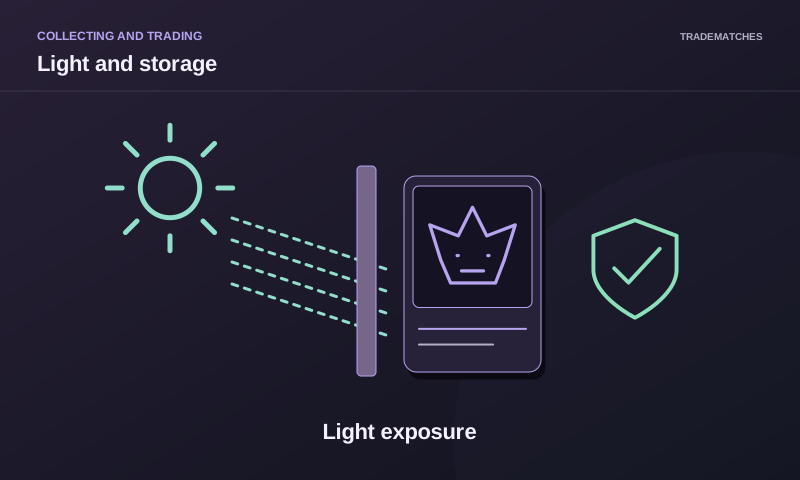
Displaying a TCG card exposes it to light, and a UV-filtering holder does not remove all light damage. Visible light can also fade paper and colourants. Reduce brightness and exposure time, avoid direct sunlight and heat, and consider displaying a copy while keeping a valuable original stored away.
The Canadian Conservation Institute's paper-care guidance and light guidance explain why exposure is cumulative. They are conservation references, not a certification that a particular Pokémon, Magic or other TCG card can safely remain in your display indefinitely.
Light damage accumulates
A card can look unchanged after a short display period while still having received exposure. Fading and changes to materials can accumulate over time. Waiting for an obvious visual difference before reducing the light is therefore a poor way to prevent damage.
The dose depends on both brightness and duration. A dimmer location used for fewer hours generally reduces exposure compared with a brighter location used continuously. Darkness between display periods reduces additional exposure, but it does not reverse fading already caused.
As a relative arithmetic example, 100 lux for ten hours and 200 lux for five hours both represent 1,000 lux-hours. This illustrates the relationship between intensity and time. It is not a safe-exposure limit for trading cards, whose inks, stock and coatings are not all identical.
UV filtering answers only part of the problem
A product advertised as UV-filtering may reduce ultraviolet exposure within its stated performance range. It does not follow that the enclosed card is immune to visible-light fading or to heat. “UV protection” and “permanent protection from all display damage” are different claims.
Read the manufacturer's actual specification. Check what is filtered, what test or range is described, and whether the claim applies to the assembled display you intend to use. An unexplained marketing percentage is less useful than a clear statement of the material's documented performance.
Even where the UV claim is well supported, choose the location and display duration carefully. The holder is one part of a preservation plan. It should not encourage placing a valuable original in a sunny window because the packaging uses the word “protected.”
| Display decision | Useful question |
|---|---|
| Near a window | Does direct sunlight reach the card during any part of the day or year? |
| Under a lamp | How bright is the light at the card, and how long is it on? |
| In a UV-filtering holder | What exposure does the specification actually reduce? |
| Above a radiator or near a hot device | Can the card or enclosure become warmer than the room? |
| Rotated with stored cards | Is total exposure recorded for each original? |
Choose the place before the frame
Check the proposed wall, shelf or cabinet at different times of day. A spot shaded in the morning can receive direct afternoon sun. Seasonal changes can also alter the path through a window, so one quick inspection does not describe the entire year.
In Spain, the useful distinction is the room's actual conditions, not a country-wide assumption about climate. A shaded interior shelf, a sunny balcony-facing wall and a room beside a radiator can have very different exposure patterns within the same home.
Avoid direct sunlight and sources of concentrated heat. Consider glare and reflected light as well as the lamp immediately above the card. A beautiful position that receives prolonged bright light may suit a reproduction better than the original you most want to preserve.
Reduce the hours, not just the brightness
A display does not need to be lit when nobody is looking at it. Switching a lamp off outside viewing times can reduce exposure without changing the card's appearance during use. A cabinet that remains illuminated day and night adds hours even when the room is empty.
Rotation can distribute exposure among several objects, but it does not make each object immune. Record when a particular original is displayed and return it to suitable storage between periods. Repeatedly rotating the same few cards still adds to each card's lifetime exposure.
If the card is central to a permanent display, a good reproduction can solve the conflict between continuous viewing and preserving the original. Keep the original clearly documented and stored; identify the display copy so it cannot later be mistaken for the collectible itself.
A holder should not stress the card
The mounting system should support the card without bending, compressing or scraping it. Avoid attaching adhesive directly to the card. An arrangement that looks secure but traps an edge under pressure can create a different kind of damage from light exposure.
Check the fit before leaving the card in place. A card with existing warping, a special thickness or an unusual format may not behave like the standard example shown in the holder's advertising. Do not force it flat to make a frame close.
Use removable, appropriate protection and materials with clear specifications. If you cannot identify the materials touching a valuable piece, do not infer conservation suitability from appearance alone. For an unusually valuable or fragile original, a qualified conservator can assess the proposed mounting system.
Foil and graded cards still need a plan
A foil finish can make a card striking under directional light, but the attractive reflection is not evidence that the underlying materials tolerate prolonged exposure. Avoid choosing a much brighter lamp solely to maximise the foil effect during every hour of the day.
A grading holder provides encapsulation and identification, but it should not be treated as a universal guarantee against fading. Check the relevant holder's actual information and maintain sensible location and duration choices. Grading does not reset the card's earlier exposure history.
When photographing a graded or foil card, temporary controlled lighting is a different use from permanent display. Once the photograph is taken, return the card to its intended environment rather than leaving the photography lamp running as a display fixture.
Monitor without waiting for a failure
Take baseline photographs under consistent lighting before beginning a display period. Record the printing, date, location and mounting arrangement. Those records help identify changes, though a photograph cannot prove that no chemical or microscopic change has occurred.
Inspect the holder and card periodically for obvious movement, pressure, surface contact or other changes. If you detect a problem, remove the original from that arrangement and investigate the cause. Do not respond by applying tape or pressure directly to the card as an improvised repair.
Remember that dust and handling introduce additional risks when repeatedly opening a frame. Plan a mounting arrangement you can manage carefully. Reducing light while increasing abrasion through constant careless removal would exchange one problem for another.
Compare two practical display plans
When evaluating a replacement lamp, compare its effect at the card's position rather than only its advertised electrical wattage. Distance, direction and the surrounding enclosure influence what reaches the object. A lower-power lamp placed much closer may not create the reduction you intended. If you use a light meter, treat the measurement as information about that setup, not as proof that every card material is safe at that reading. Document any change so the exposure history remains understandable.
Imagine a collector wanting a favourite card visible on a desk beside a window. The first plan uses the original in a holder facing the window all year. Its attractive appearance does not answer the exposure question. Direct light and long duration remain relevant even if the holder filters UV.
The second plan uses a reproduction in that bright position and reserves the original for occasional viewing in a shaded location. This changes both the original's dose and its handling schedule. It also allows the collector to enjoy the image without relying on an unsupported promise of permanent protection.
A third option is limited original display in a suitable interior cabinet with lighting used only during viewing. Document the schedule and check the fit. The choice depends on how much original viewing you want and which risks the actual setup can reduce.
Frequently asked questions
Does UV protection prevent all fading?
No. Visible light can also cause damage, and exposure accumulates. Read the holder's specification while also controlling brightness, duration and location.
Is there one safe number of hours for every TCG card?
No universal figure is established here. Materials and conditions vary. Lux-hour arithmetic compares exposure; it does not certify a safe threshold for every printing.
Will storing the card in darkness repair earlier fading?
No. Reducing further exposure helps limit additional damage, but it does not reverse fading already caused. Preserve the original before visible change becomes the reason to act.