Lorcana Sealed: packs, ink colours and 40-card decks
On this page
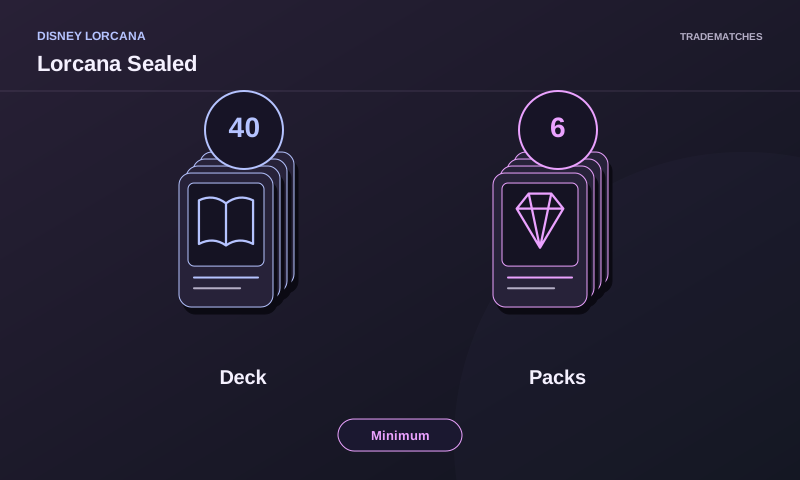
In Disney Lorcana Sealed, you build a deck of at least 40 cards with the event booster packs. You can use more than two inks and more than four copies of a card if they are in your pool. The 2026 tournament rules set a minimum of six booster packs per participant for Sealed. Do not automatically apply the 60-card Core Constructed rules.
Sealed is a specific limited format
Lorcana distinguishes several limited formats, including Preconstructed, Sealed, Pack Rush and Draft. Their sizes and procedures are not identical. A launch session can use one of them, so the word ‘prerelease’ or ‘booster pack event’ is not enough to know the construction. Ask what mode is played before opening the product.
This guide treats Sealed according to the revised tournament rules in July 2026. Draft has another minimum deck and a shared choice procedure; Pack Rush uses two booster packs and its own rules. If someone tells you that "Limited always uses 40 cards", check whether it refers to Sealed or is generalizing one modality to all others.
What booster packs form the pool
The organization provides a number of closed booster packs, at least six in Sealed, of the sets it has chosen. Each participant must start with the same amount of booster packs from each selected collection. The open set is the material you build with. Do not expand it with copies you brought from home or trading with the player next door during preparation.
Confirm which promotional cards, if any, can be used. Receiving a participation promo does not prove that it is part of the building pool. Save your belongings and event cards separately. If registration of the set is required, complete that process before selecting the list, following the instructions on order, presentation and delivery.
Forty is the minimum deck
The Sealed list must contain at least 40 cards and does not have a maximum independent of the material available. Still, adding loose cards just to use the whole pool often reduces the frequency with which you draw the most useful cards. If you start with 40, each incorporation should have a function. The cards you leave out don't disappear: keep the pool sorted according to the event's policies.
Count the complete list after sleeving and after each change allowed. A card that seems "accessory" can still be a game card, while promotional or marketing pieces are not necessarily part of the deck. Check the identification and avoid shuffling code cards or advertising inserts with the selected cards.
You can combine all the inks in the pool
Sealed is not limited to two inks. That allows you to choose cards per function instead of automatically discarding a third color. However, the absence of such a limit does not eliminate other needs: costs, characters available in the first turns, ability to gain lore and cards that can go to the inkwell. A combination of six inks can be legal and poorly balanced.
Sort the cards first by cost and function. Then watch which characters can act soon, which produce lore reliably, and what answers you have for the rival table. Inks continue to recognize synergies, but are not the construction barrier they represent in Core Constructed. The goal is to build a list that works with what you opened.
The inkable symbol continues to matter
Being able to use more inks does not allow any card to be converted into ink. You should check which cards can be placed in the inkwell by the normal procedure and what effects create exceptions. If you choose too many uninkable cards, a hand can have powerful moves and have no resources to execute them. This situation is not fixed by attributing inkability to a card because of its color.
Before closing the deck, separate inkable and uninkable cards and test some hands out of competition. See if you can develop resources and play during the first turns. There is no universal ratio to ensure success with all pools. Use the test to identify cards that compete for the same turn or hands that depend on drawing a particular piece.
More than four copies can be legal
In Sealed you can use copies you have received from the same card without the ordinary limit of four in Constructed. If you open five, all five can belong to the limited deck according to this rule. That doesn't allow you to get a sixth out of the pool or turn that group into a legal list of Core Constructed.
The utility depends on the function of the card. Five copies of a high-cost card can jam your hand even if the number is legal. Evaluate curve, resources and plan, not just the possibility of including them. If you then reuse those cards for construction, re-check the full name, inks, quantity and legality of the format.
Prioritize characters and a lore plan
You need a way to move towards the win condition and respond to the rival table. A character with useful lore can have a function other than another designed to challenge. Actions and items must support that set. A list full of answers without enough characters can control part of the table and not get to close the game.
As a building exercise, imagine a pool with several cheap characters, two high cost cards and few ways to win lore. Don't select the two expensive cards just because they are rare. Compare what they contribute to the plan and if you can afford them. The deck may need more early presence or quest characters, even if those cards have less collection interest.
Changes between games and registration
The chances of changing the list depend on the level of the event and its policies. Ask if the deck is registered, whether you should maintain an initial configuration, and how the rest of the pool is used. Do not carry the procedure from a casual tournament to a competitive one. An improvement discovered during a round should only be done when the rules allow.
Keep the cards off the list in a separate box. If you prepare another configuration, count again and record what changed when the event requires that information. Physical separation also prevents a drawn card from being accidentally mixed during quick deck reassembly.
Prepare a session in Spain
Consult fee, product language, places, construction time and approximate duration of rounds directly with the store. The manufacturer's documentation defines the format, but does not guarantee that all stores offer the same event. Bring sleeves, boxes and counters, and asks what platform the organization uses to record participants and results.
If you want to swap later, keep a list of cards you are looking for and a binder separate from the pool. Wait until you finish any obligations of the tournament before separating copies for someone else. A card you did not use may still be part of the registered material. The right time to negotiate avoids confusion about what belonged to your construction.
Cut five cards without removing the plan
If your initial selection contains 45 cards, choose cuts according to function and usability. Start with cards that require uncommon situations, expensive plays competing for the same turn and uninkable cards that might accumulate before you can play them. No universal count of each category guarantees a good deck. Check what your particular pool can do.
Then recount the remaining early plays and genuine ways to gain lore. Cutting cheap characters simply because they look less appealing to collectors can preserve the flashiest cards while weakening your opening. Removing every answer may leave you unable to contest an important opposing character. Review the deck as a sequence of turns: what you can play first, how you develop ink and which cards sustain the plan later. This cannot guarantee a favourable draw order, but it reveals incompatibilities that rarity alone misses. Keep the five removed cards with the rest of the pool so you can consider alternatives whenever the event's rules allow changes.
Frequently asked questions
Can I play six inks in Sealed?
Yes. Sealed does not apply the two-ink limit of Core Constructed. Still, you need to build a cost, resource and lore plan that works.
Is the minimum 40 or 60 cards?
For Sealed described in the 2026 tournament rules, the minimum is 40. Other limited modalities have their own conditions.
Can I add a promo delivered by the store?
Only if it belongs to the authorized construction material. Confirm your inclusion with the organizer; receiving it does not automatically mean that you can play it.