Magic manifest and cloak: handling face-down cards
On this page
Manifest and cloak put a card onto the battlefield face down as a colourless 2/2 creature. Cloak also gives that face-down creature ward {2}. If the underlying card is a creature card, you can normally turn it face up by paying its mana cost when you have priority. A manifested or cloaked land is still a face-down creature; it cannot be turned face up through that creature-card permission.
A hidden card with a public game state
Your opponent can see that a face-down creature exists, its current position and relevant public modifications. They cannot simply look at its hidden face to decide whether to block it. You, as its controller, can check the underlying card. Keep the physical arrangement consistent so both players can track which creature is which.
The Murders at Karlov Manor mechanics article explains cloak and its relationship to manifest. Both can use a card that is not originally a creature. The ability creating the face-down permanent tells you which card to use and from where; do not assume every effect takes the top card of the library.
A face-down permanent produced this way has the characteristics assigned by the rules and effects, not the visible properties of its secret front. You do not use the hidden creature's printed abilities while it is face down. A hidden legendary name, colour or mana cost is not silently active on the board just because you know what the card is.
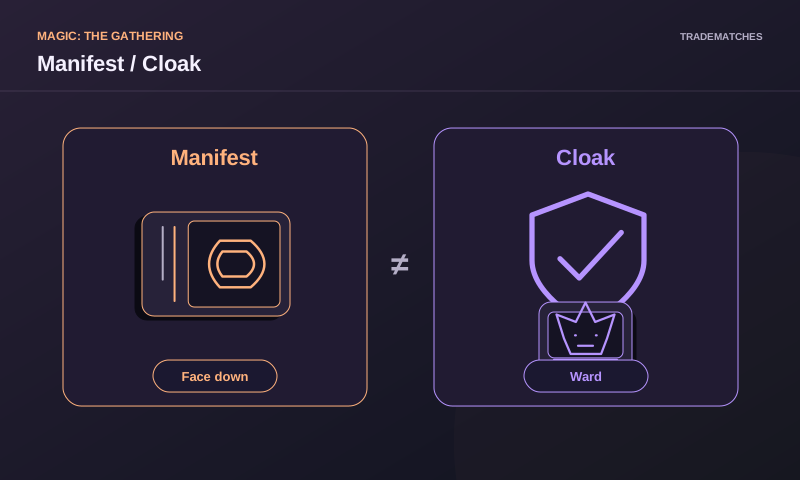
The practical difference is ward
A plain manifested creature does not receive cloak's ward {2} merely for being face down. A cloaked creature does. Ward affects an opponent's spell or ability that targets the permanent; it is not a general damage shield and does not prevent an ordinary combat block. Check any additional effects modifying the creature separately.
For example, suppose you have one manifested creature and one cloaked creature, with no other modifications. Their basic 2/2 size is the same, but targeting the cloaked one can create the ward trigger. If you mix them up physically, you can incorrectly demand a payment for the wrong creature. Put a small reminder beside the cloaked copy rather than marking the card itself.
| Feature | Manifest | Cloak |
|---|---|---|
| Basic face-down form | Colourless 2/2 creature | Colourless 2/2 creature |
| Ward from the procedure | No | Ward {2} |
| Can underlying noncreature cards be used? | Yes, if the creating effect uses them | Yes, if the creating effect uses them |
| Ordinary face-up permission | Pay a creature card's mana cost | Pay a creature card's mana cost |
| Is it an ordinary creature token? | No: there is a real card underneath | No: there is a real card underneath |
Turning face up is a special action
The current comprehensive rules define the permission and the face-down handling. When the underlying card qualifies, reveal it as required and pay its mana cost to turn the permanent face up. This procedure is a special action rather than a spell or activated ability placed on the stack.
That timing matters during combat. You need priority, but you do not need to wait for your own main phase simply because the hidden creature would normally be cast at sorcery speed. Conversely, “no stack” does not mean you may interrupt the middle of another spell's resolution or skip the required priority window.
An opponent cannot respond to the special action itself between the payment and the card turning face up. Once the action is complete, applicable triggers and later priority still exist. Explain the complete operation clearly so the table does not treat the hidden creature's reveal as a spell that can be countered in the usual way.
A land or sorcery does not use the creature permission
Suppose an effect manifests a land. While face down, that card is the assigned 2/2 creature. You cannot pay the nonexistent creature mana cost of the land to turn it face up under manifest's ordinary permission. Nor can you play the land from the battlefield as though it were still in your hand.
The same caution applies to a sorcery or instant underneath the face-down form. The creating procedure can make it a creature while hidden, but that does not supply a new way to cast the hidden spell. A different effect may move or reveal the card, and that effect needs its own instructions. Do not invent a conversion because the card would be useful face up.
This creates an interesting decision when an effect lets you choose among cards. A creature underneath may give you a future face-up option, while a noncreature may remain a 2/2 unless another effect changes the situation. That distinction concerns the card's function after the choice, not permission to alter the instruction that generated it.
Morph and disguise can provide other routes
A card with a suitable morph or disguise ability may have another permission for turning face up. Read that ability and its cost. The fact that the card entered through manifest or cloak does not require you to ignore every other valid face-up procedure the actual card provides.
Keep the costs separate. The ordinary manifest or cloak procedure uses the underlying creature card's mana cost. A morph or disguise procedure uses the relevant specified cost. Some costs are not simple mana payments. You must establish that the chosen route is available before treating the alternatives as a menu.
The official discussion of manifest's design explains why the creature underneath matters to its play pattern. For an actual game, however, use the current rules and current card text rather than relying on a remembered explanation from a different set's preview season.
Face up does not mean newly entered
Turning the same permanent face up does not make it leave and re-enter the battlefield. An ordinary enters-the-battlefield ability on its front does not trigger merely because that front becomes visible. A specific ability that triggers when turned face up is a different matter and must be read on the actual card.
Likewise, do not remove damage or counters because the visible form changes. Track the same permanent and apply any relevant changes to its characteristics. If a 2/2 carrying damage becomes a creature with a different toughness, the new characteristics and the existing damage can produce an important state-based check. The reveal is not an automatic healing effect.
Consider a creature that has been under your control since your last turn began. Turning it face up does not restart that control history. Conversely, a face-down creature that entered this turn does not escape summoning sickness simply by revealing its front. Its time under your control, not the direction in which it faces, answers that question.
Keep multiple face-down cards distinguishable
If you have several face-down creatures, maintain a clear order and do not shuffle their positions to obscure their histories. Players need to know which was played or created when, which attacked, which was targeted and which carries a counter. Those facts are public even when the identities remain hidden.
Use neutral numbered reminders or consistent positions on the playmat. Put counters directly with the correct permanent. After an attack, return the same card to its identifiable place rather than swapping it with another hidden card. A tidy board is more useful than asking opponents to remember an undocumented rearrangement.
When a face-down card leaves the battlefield or when the game ends, follow the required reveal rules. This lets the other player verify the relevant face-down information. Do not hide the real card by putting a decorative helper on top and then forget to show the underlying copy when the rules require it.
Keep identity and visibility separate
For practice, put three reminder slips beside a face-down card: its visible characteristics, the information its controller may inspect, and the permission that could turn it face up. Those are separate questions. Knowing privately that it is a creature does not reveal that identity to the opponent, and knowing its identity does not eliminate the required payment.
Now imagine the card is a land. Its controller may know that fact, but the ordinary creature-cost permission does not turn it face up. A different explicit effect could change the situation. State which permission you are using before revealing information, so that an illegal attempt does not unnecessarily expose a hidden card.
Frequently asked questions
Can I turn a manifested creature face up in my opponent's turn?
Yes, when you have the required priority and a valid procedure with its cost. The ordinary creature-card permission is not restricted to your own main phase, but it still cannot interrupt an effect's resolution.
Does cloak stop all damage to the face-down creature?
No. Its ward concerns targeting by opponents' spells and abilities. Combat and effects that do not target need their own analysis, and ward is not a blanket reduction of damage.
Does the hidden card count as a token?
No. A real card is on the battlefield face down. A helper or reminder used above it represents that card; it does not replace the permanent with an ordinary creature token.