Radiant Pokémon: the one-card limit and identification
On this page
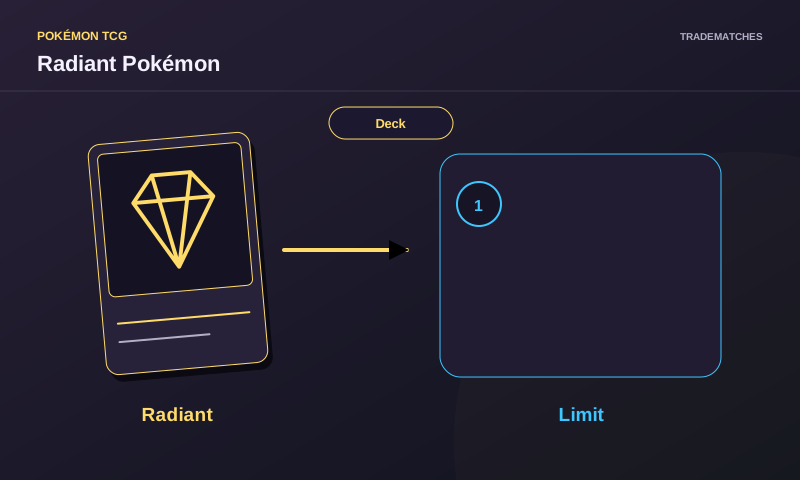
You can include only one Radiant Pokémon in a Pokémon TCG deck, across the whole category. One Radiant Greninja and one Radiant Charizard would already exceed that limit. The restriction is not one copy of each name. To recognise these cards, look for the Radiant name and the printed Radiant Pokémon Rule, rather than treating any shiny illustration as a Radiant.
The limit applies to the whole deck
The official Pokémon rulebook describes Radiant Pokémon as Basic Pokémon with a Rule Box and a shared one-card deck restriction. That gives you a simple first check when copying a list: count every card whose actual name identifies it as a Radiant Pokémon, then add those quantities together.
Suppose a draft list contains one Radiant Greninja for its Ability and one Radiant Hawlucha for a different role. The list fails this check even though neither name appears twice. Removing a second copy of Greninja would not solve anything because the problem is the two different Radiants. You need to choose which of those roles your deck will support and fill the other slot with a legal alternative.
This restriction also survives changes of language and printing. An English copy and a Spanish copy do not create different allowances. When checking a bilingual collection, use the card identity behind the translated name. Separate rows in a collection spreadsheet are useful for ownership, but they must not conceal the combined quantity in the playing deck.
Radiant is part of the name
Radiant Greninja is not simply an ordinary Greninja with a cosmetic label. The official card entry for Radiant Greninja identifies the actual card and displays its special rule. This distinction matters when sorting names, searching databases and reading other cards that specify a Pokémon by name.
The general name limit and the Radiant restriction therefore answer different questions. A deck can contain ordinary cards named Greninja within their normal allowance while also including its single Radiant Greninja, provided the format and every other restriction permit those cards. It cannot contain four Radiant Greninja just because the usual same-name allowance is four.
Avoid translating this into a rule about species. You are not restricted to one illustration of a frog, dragon or bird. Different Pokémon card names can refer to the same species, and the Radiant rule governs a printed category. Read the complete name, including its identifying modifier, before grouping cards for a deck check.
How to identify a physical Radiant card
Start with three visible details: the complete name, the stage and the Rule Box. Then record the expansion and collector number. A sparkling surface is useful supporting evidence when comparing a copy with the official image, but the finish alone does not establish the category. Other Pokémon cards also feature shiny Pokémon or elaborate holographic treatments.
The illustration represents a Pokémon in its Shiny coloration. That is a feature of the Radiant concept, not a universal definition of every Shiny Pokémon card ever printed. A collector who searches only for “shiny Charizard” can be shown cards from several unrelated families. Add “Radiant”, the expansion and the number when you need one specific printing.
For a remote purchase, request a front photograph sharp enough to read the Rule Box and a view of the identifying line at the bottom. An angled photograph helps inspect the finish, while a straight photograph is better for the lettering. Neither should replace a photograph of the back and any disclosed damage. Identification and condition are separate checks.
Basic does not mean an evolution shortcut
Radiant Pokémon are Basic Pokémon. You can use an eligible Radiant as a Basic during setup, following the ordinary setup procedure. You do not place Radiant Greninja on Froakie or Frogadier because the species normally has an evolution line in the video games. The stage printed on the TCG card controls its entry into play.
Likewise, Radiant Pokémon do not evolve from or into another card under their category rules. Buying the entire species line does not create a special Radiant evolution package. If you want an ordinary evolution line alongside a Radiant, evaluate the ordinary cards independently: their evolution requirements, their names and their role remain their own.
This is especially helpful when teaching a new collector to play. Put the ordinary and Radiant versions side by side and point to the stage line before discussing their attacks. “Both depict Greninja” explains the collecting connection; it does not explain how either card enters the playing area. That small physical comparison prevents an otherwise plausible mistake.
One Radiant in the deck is not one use per game
The restriction is a construction limit. It does not say that the Radiant's Ability can be used only once during the entire game, and it does not give its attacks a shared global counter. The card's actual text determines when and how often an Ability works. Apply that wording separately from the deck limit.
If the only Radiant is Knocked Out, determine its destination and any later recovery using the rules and effects involved. The construction restriction does not itself send it to the Lost Zone or prohibit every recovery. Do not import the special discard rule of Prism Star cards, or the one-per-game rule of VSTAR Powers, simply because all three involve unusual limitations.
| Question | Check that answers it |
|---|---|
| Can I put two different Radiants in my deck? | No: the category has a combined limit of one |
| Can I use an Ability again next turn? | Read that Radiant's Ability and any applicable effects |
| Does the card evolve from the ordinary species? | Radiant Pokémon are Basic and do not evolve |
| Is a shiny-looking card necessarily Radiant? | Read its full name and Rule Box |
| Can I play it at a particular event? | Check the event's format and current eligibility |
The printed category does not prove current legality
Knowing the one-card restriction does not establish whether a Radiant belongs in the format you intend to play. The examples in early Sword & Shield rulebooks explain the category; they are not a promise that every old card remains legal in Standard years later. Check the current regulation and the exact event before buying a missing deck component.
For a casual evening in Spain, agree on the allowed card pool with the other players. An older deck profile may still be a useful teaching example while being unsuitable for a current sanctioned event. Save the format beside your list so that a future reader does not mistake an archived list for a present recommendation.
If your aim is collecting rather than competition, make that distinction explicit. A card can fit a Radiant collection perfectly even when it does not fit a current tournament deck. This helps you compare offers without treating reduced competitive use as a physical flaw or assuming that past competitive popularity guarantees a future price.
Choosing the single slot without guessing
Write down what the deck needs from its Radiant: extra cards, a particular attack, a supporting Ability or a backup plan. Then check the resources and board conditions needed to obtain that benefit. A card that performs well in someone else's deck may ask for Energy types, discard resources or supporting pieces that yours cannot provide reliably.
Try several opening situations with the candidate. What happens if it is in your initial hand, remains in the deck, or occupies a Prize card? What ordinary play still functions without it? These questions expose dependence on a single physical copy. They do not produce a universal best Radiant, but they show whether your chosen slot strengthens the deck you actually own.
When reviewing the final list, keep a separate “Radiant total” line rather than checking names from memory. That makes late substitutions easier: replacing one Radiant with another should change the choice without increasing the total. Carrying several Radiants in a trade binder is harmless; accidentally moving two into the deck is the avoidable problem.
Frequently asked questions
Can I collect several Radiant Pokémon in one binder?
Yes. The one-card restriction concerns the playing deck, not ownership or collection size. You can collect different Radiants, several languages and multiple copies while keeping your playable deck within its separate limit.
Does a Radiant Pokémon give extra Prize cards automatically?
The Radiant category does not by itself add an extra-Prize rule. Resolve the Knock Out using the card text and effects involved. A Rule Box is not a universal instruction to award two or three Prizes.
Can a new printing create another Radiant allowance?
No. A different image or expansion does not restart the shared construction limit. Identify both copies correctly, then count their contribution to the same Radiant total.