Union Arena required energy versus Action Points
On this page
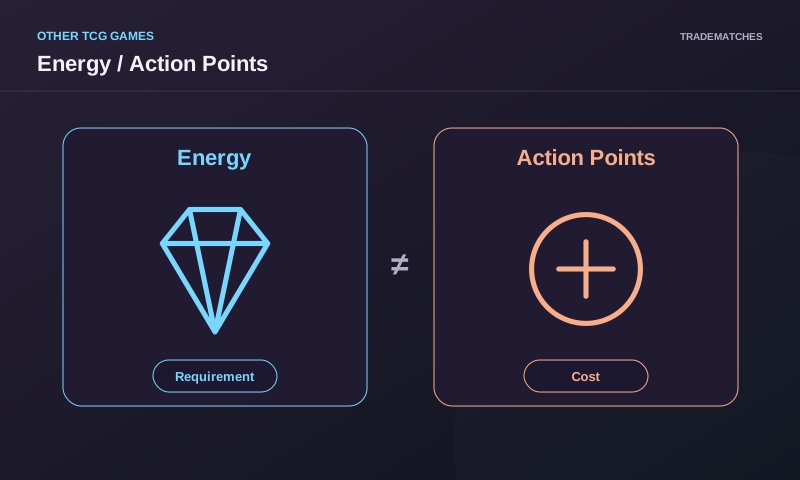
Union Arena's required energy is a condition you meet; Action Points are a cost you pay. Your energy line must generate enough of the required colour, while paying AP rests the corresponding active AP cards. Meeting a four-energy requirement does not normally mean spending four energy-line characters. Each player prepares three AP cards outside the 50-card deck.
Read two different numbers on the card
The official Union Arena manual labels required energy and AP cost separately. Required energy specifies the colour and amount that your energy line must generate. AP cost indicates how many active Action Point cards you must rest to use the card. A card can therefore have a high energy requirement and an AP cost of one.
Do not substitute a payment system from One Piece or Lorcana. In this procedure, verifying generated energy and spending AP are different operations on different components. A legal play needs both checks as well as any other printed conditions.
For a hypothetical character requiring four blue energy and one AP, verify at least four generated blue energy in your current energy line and one available active AP. Rest the AP card as payment through the correct procedure. You do not automatically rest four blue energy-line characters merely because the requirement displays four.
The same energy can qualify several plays
If the energy line continues generating the relevant amount, it can satisfy another card's required-energy check later. The requirement is not a one-use purse that becomes empty after the first card. Your remaining AP, hand and available legal spaces can still limit how many cards you play.
Imagine an original teaching board generating four blue energy with three active AP. You play a hypothetical one-AP card requiring four blue energy. You have two active AP left. If the energy generation remains four blue and the next hypothetical card requires three blue and one AP, that second card may still satisfy both resource checks.
Now imagine the first play changes the energy line so that only two blue energy remains generated. The second card's three-blue condition no longer qualifies, even though you have enough AP. You must re-evaluate the actual current line before each play. A requirement being reusable does not mean the generated amount can never change.
| Hypothetical current resources | Intended card | Resource check |
|---|---|---|
| Four blue energy, one active AP | Four blue, one AP | Both resource tests met |
| Four blue energy, zero active AP | Four blue, one AP | AP missing |
| Three blue energy, two active AP | Four blue, one AP | Required energy missing |
| Four energy of a different colour, two AP | Four blue, one AP | Colour requirement missing |
| Four blue energy, two active AP | Three blue, two AP | Both resource tests met; other rules still apply |
Colour and quantity are separate filters
A line generating a large total of the wrong colour does not satisfy a coloured requirement. Add the relevant generated energy, not merely the number of characters in the line. Some cards generate more than one energy or have abilities modifying that value; read their current information.
For a hypothetical line containing two characters each generating one blue and one character generating two red, total generated energy is four. A requirement of three blue is still not met: only two blue is present. “I have three characters” and “I have four energy” are both incomplete descriptions for that check.
Use coloured columns in a practice inventory: blue generated, red generated and other required colours as needed. Enter the actual values after current modifiers. This makes a mixed-colour list's resource problem visible before you buy cards that require a colour your intended energy line rarely supplies.
Moving a character can change the next play
The movement phase and cards that alter the lines have their own permissions. Moving a generating character out of the energy line can reduce the energy available for subsequent required-energy checks. Do not continue counting it as though its old position still produced the same qualification.
The official FAQ also distinguishes moving between lines from placing a new card and explains that an unrestricted move from the front line back to the energy line is not generally available; the relevant Step ability matters. You cannot repair every energy shortage by freely moving any chosen attacker backward at any time.
For a teaching exercise, start with four generated blue energy. Move a one-blue generator to the front through a legal procedure. Recount the line at three blue. A four-blue card that was playable before that change can now fail its requirement. This does not refund or invalidate a different play that was already completed while the requirement was met.
AP recovery and first-turn differences
The manual's start procedure sets how many AP become available, including its opening-turn adjustments. Do not assume that preparing three AP components means all three are usable at every moment. Keep active and rested cards visually distinct and follow the phase's specified availability.
An AP card used to pay a cost is not removed from the game or inserted into the main deck. It is a reusable component whose state changes. A special effect that changes AP availability must be read explicitly; unspent energy qualification does not automatically recover rested AP.
If you need to learn the first-turn sequence, run it with the official manual beside the playmat rather than applying a memorised three-play shortcut. The core distinction in this guide remains stable: energy qualifies cards and AP pays for their use. The number of currently active AP comes from the actual phase and effects.
Events still need the same resource discipline
Event cards have required energy and AP costs as shown by the official manual's card diagram. Resolving an event's effect is separate from satisfying those play checks. An appealing draw effect cannot be declared simply because you want a new hand card if the resources to use that event are missing.
Consider a hypothetical event requiring two blue energy and one AP. With only one generated blue, having three active AP does not compensate for the missing required energy. With enough blue but no active AP, the condition is met but payment is unavailable. Both failures prevent the proposed normal play for different reasons.
When building a list, count resource demands by role. Early generators, cards requiring the developed line and events competing for AP should be visible as separate categories. This is a structural review, not a competitive deck prescription or a claim about a particular franchise's win rate.
Frequently asked questions
Do I spend generated energy when meeting a requirement?
Not through the ordinary required-energy check. Verify that the line generates the required colour and amount, then pay the separate AP cost through its procedure.
Are my three AP cards part of the 50-card deck?
No. The official FAQ says to prepare them in addition to the main deck. Keep component and deck counts separate.
Can enough AP compensate for the wrong energy colour?
No. AP availability and required energy are independent checks. Meeting one does not pay for or replace a missing other condition.