Wet TCG cards: first steps and when to stop
On this page
Stop the water if safe, move unaffected collection materials away and avoid heat, pressure and forced separation. Stuck surfaces, lifting finishes, contaminated water and valuable cards are reasons to seek conservation advice before attempting recovery yourself.
Archival paper guidance provides response principles, but trading cards can combine board, inks, adhesives and laminates with different behaviour. This is a containment and documentation procedure, not a promise to restore a card or its previous market condition.
Identify the incident first
A drop on a box exterior is different from a submerged binder. Establish where water reached, what remains dry and whether dirt or contamination presents another risk before handling the whole collection.
Prioritise people if the location is unsafe. Do not enter a dangerous area or treat contaminated materials like clean-water dampness. Emergency services, specialist cleaning or a conservator may need to advise first.
An unaffected nearby box can be moved unopened to a safe dry area. This avoids exposing more cards during a rushed inspection. Work with identifiable groups instead of combining everything on one table.
Record identity before references are lost
Photograph affected containers and visible damage. Note the date, known water source and groups stored in each box. For a shipping incident, retain packaging and service details for a possible claim.
Do not delay urgent containment for perfect photographs. Useful quick images and simple notes can be expanded later. Keep personal documents and address labels out of pictures shared publicly.
Assign temporary group identifiers such as box A, binder B and stack C. Maintain the relationship if pieces can be moved without resistance. This helps a professional understand what happened and avoids relying on vague memories of valuable cards somewhere in the boxes.
Observe without forcing surfaces
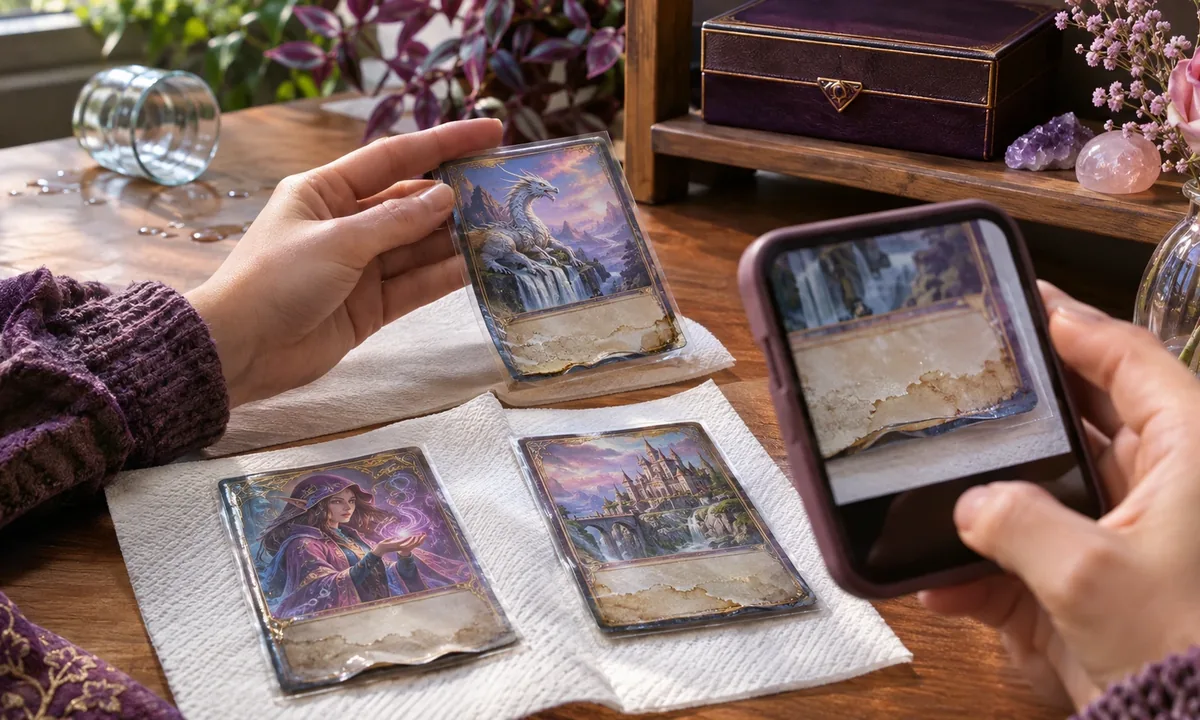
Check whether water stayed outside a protector or entered it. A clean-looking sleeve does not prove its contents are dry. Without bending the card, look for trapped liquid, adhesion, surface changes or distortion.
| Observation | Cautious response | Avoid |
|---|---|---|
| Wet exterior, apparently dry interior | Separate and inspect by groups | Discarding evidence or assuming everything is wet |
| One separate, lightly damp piece | Minimal handling and suitable dry conditions | Heat to speed drying |
| Card stuck to sleeve, page or card | Stop and seek guidance | Pulling at an edge |
| Lifting ink or laminate | Reduce handling and consult | Rubbing, pressing or flattening |
| Contaminated water or suspected mold | Isolate and obtain appropriate help | Mixing with clean cards |
These are limits for observation, not a certain material diagnosis. Photographs cannot guarantee how a finish will respond to treatment.
If you would rather go case by case with your phone in hand, the wet cards triage asks what you see (wet box exterior, damp piece, stuck card, lifting ink or dirty water) and returns the cautious response for that row and what not to do.
Avoid trapped moisture without forced extraction
Protectors can retain water. A card removable without resistance is different from an adhered piece. Avoiding enclosed moisture must not become an instruction to extract every card regardless of damage.
In an air-drying case documented by the National Archives, staff completely removed plastics such as shrink wrap and polyester sleeves from the wet sheets so that drying would work. That is a reason to take out a card that slides free of its sleeve, not to pull at one that resists.
Stop when adhesion appears. Separation can lift fibers, ink or finish layers. Do not insert tools between plastic and card to force the surface free without professional direction.
Do not peel stuck binder pages apart simply to count cards quickly. Keep the group identifiable and explain its materials to a conservator. Temporarily losing access to the image can be preferable to tearing it during inspection.
Air drying is a principle, not a universal recipe
National Archives describes air drying small quantities of paper on clean absorbent material in cool, dry conditions with air circulation. It also recognises distortion and differences between materials.
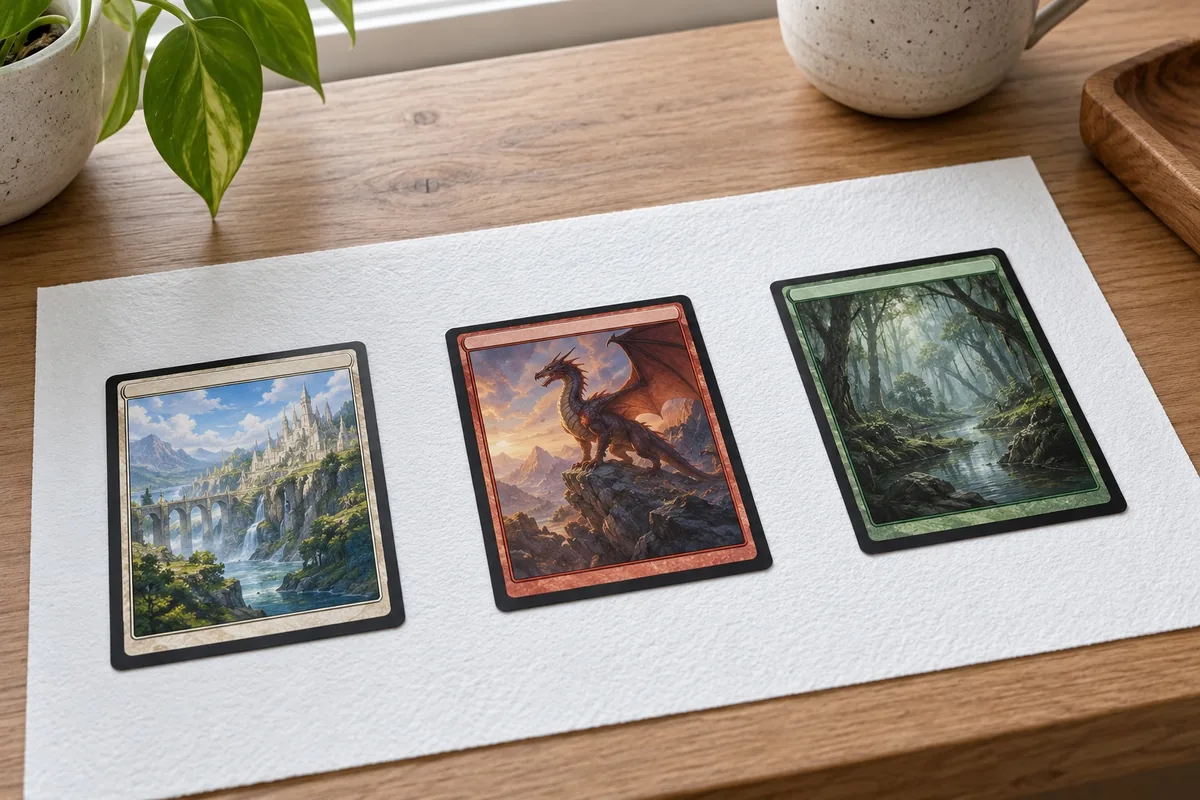
That does not certify the same treatment for every foil, laminated or adhered card. For a separate piece that can be handled safely, avoid dirty, colored or sticking contact materials. Seek advice before choosing a method for complex or valuable pieces.
Do not leave a thick wet pile enclosed in a box expecting it to dry by itself. Equally, avoid a strong airflow that scatters or bends cards. Control the environment rather than introducing another physical stress.
The figures archive guidance gives
These figures are meant for paper and records, not for laminated or foil cards. They help you plan your time; they do not guarantee an outcome.
| Figure | What the source says | What it means for cards |
|---|---|---|
| 48 hours | National Archives: anything that cannot be dealt with in the first 48 hours is frozen, to be dried later or sent to a professional service. | If you cannot dry the wet material within two days, call a conservator before that time runs out. |
| Two days | Library of Congress: if newly wet paper cannot be air dried within two days, it is prepared and frozen. | The same window, stated by another institution. |
| Two days of drying | In the National Archives case, sheets and card stacks were turned periodically during the two days of air drying. | A loose piece does not dry in an hour; check and turn only what moves without resistance. |
| 35–55% relative humidity | Library of Congress: for items with mold stains, keep ambient humidity in that range to prevent regrowth. | Store stained cards separately in a place that is not damp and check them regularly. |
Heat and pressure do not restore original condition
Do not use an oven, microwave, iron, hot hair dryer or intense sunlight as a quick fix. Conservation guidance warns that high heat and harsh sun can permanently damage archival materials.
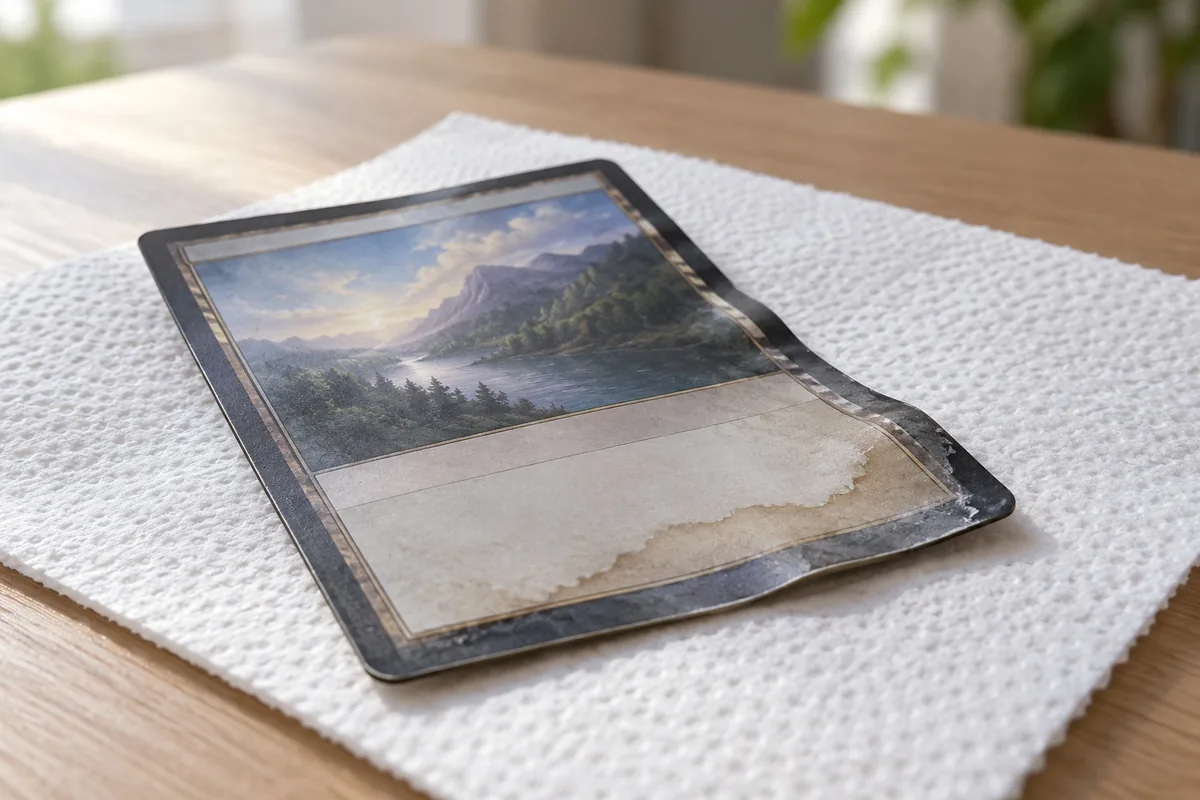
Pressing a wet card between books is not a proven restoration either. Pressure and contact can introduce adhesion or transfers. A flatter surface does not establish that internal layers, ink or finish are unchanged.
Rice, household chemicals and improvised treatments offer no card-specific guarantee. Do not add substances or abrasives while trying to remove water. Silica used for storage maintenance is not a universal repair for soaked cards.
Do not freeze cards from an isolated instruction
Professional conservation can use freezing and specialist drying for particular materials and circumstances. General archival guidance is not a blanket instruction to put trading cards into a domestic freezer.
The 48-hour rule is real, but in that guidance freezing is a way to buy time before later drying or a professional service, and the National Archives names materials that may be exceptions. Neither source covers laminated or foil cards, so the time limit is a reason to ask for help early, not a recipe.
Material, packaging, condition and the subsequent drying method matter. Contact a professional when a large quantity requires a prompt decision. Do not transfer archival response times into a guaranteed recovery window for unknown card finishes.
This is especially important for stuck cards. Freezing does not mean later separation by pulling is safe. Treatment goals and risks need assessment for the actual material.
Isolate and describe the outcome honestly
Keep affected pieces separate from the healthy collection while evaluating moisture and possible mold. A surface feeling dry is not enough to justify immediately resleeving and mixing everything together.
Record distortion, stains, adhesion and visible alterations. If a card is later sold or traded, disclose what is known and its actual condition. An improved appearance after drying does not automatically restore Near Mint status.
To name that condition without guessing, the card condition assistant asks you to measure each defect with a ruler, curl and dirt included, and gives the grade on the TCGplayer and Cardmarket scales from the worst one.
Retain evidence for insurance or shipping claims and follow the contracted process. A photograph documents the incident but does not create coverage or a particular payout. Do not promise financial recovery based only on rarity.
Worked case: a dry box beside a wet binder
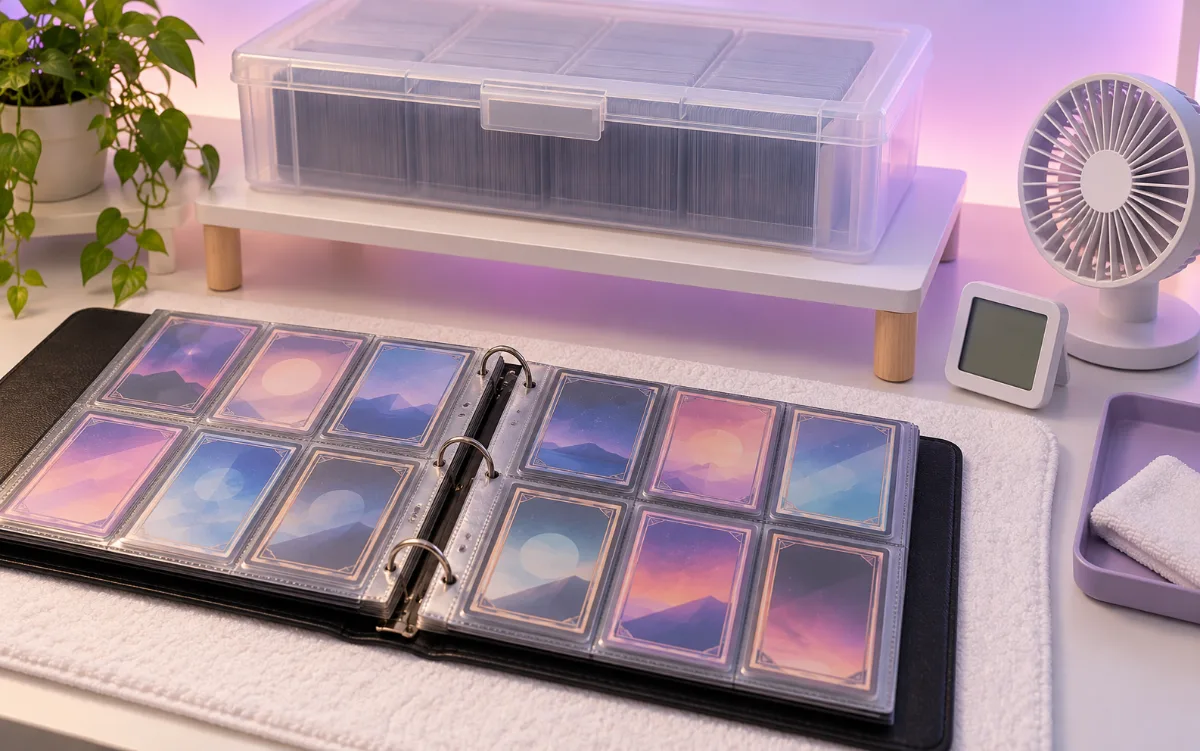
A leak reaches a binder and the outside of a nearby storage box. Do not begin by emptying both into one pile. Move the apparently dry box to a safe place and inspect its interior separately. Keep the affected binder identified as its own group.
Without forcing anything, you notice one page adhering to a card while other pieces appear separate. This is a reason to stop before inspection becomes attempted peeling. Photograph what is visible and tell a conservator which surfaces are stuck and what materials are involved.
Do not use improvement in one piece to justify the same treatment for the whole binder. Finish, water exposure and adhesion can differ within a single group. Likewise, an apparently unaffected box still needs checking for moisture that may have entered through a seam or opening.
Create three categories for the response record: apparently dry and checked, visibly affected, and awaiting assessment. These are working observations, not final condition grades. A card awaiting assessment should not be offered as undamaged because its surface looks better than a neighbouring piece. The useful outcome may be preserved treatment options rather than cards that all look dry straight away.
Frequently asked questions
Must I treat the card if only its sleeve got wet?
First establish whether water entered and the card remains dry, without forcing it. Do not add treatments to a dry card just because the exterior was wet.
Can I gently separate stuck cards?
Do not peel adhered surfaces yourself. Slow pulling can still remove fibers and finishes. Seek conservation guidance.
Does a dry card automatically regain its previous condition?
No. Drying and preservation of condition are different outcomes. Distortion and surface damage can remain and must be reflected in descriptions.
How long do I have before it is too late?
Archive guidance from the National Archives and the Library of Congress gives a window of about 48 hours, or two days, to air dry wet paper before moving to freezing. For cards, treat it as a deadline for getting professional advice, not as a guarantee.
Sources and checks
On 27 October 2026 we reread the National Archives guidance on wet records (air drying, heat and sun, the 48-hour rule, professionals for valuable items), its air-drying case (two days, turning pieces, removing plastics) and the Library of Congress answer on wet or moldy items (two days, 35–55% relative humidity, safety).