Can you play Yu-Gi-Oh! OCG cards in Spanish TCG tournaments?
On this page
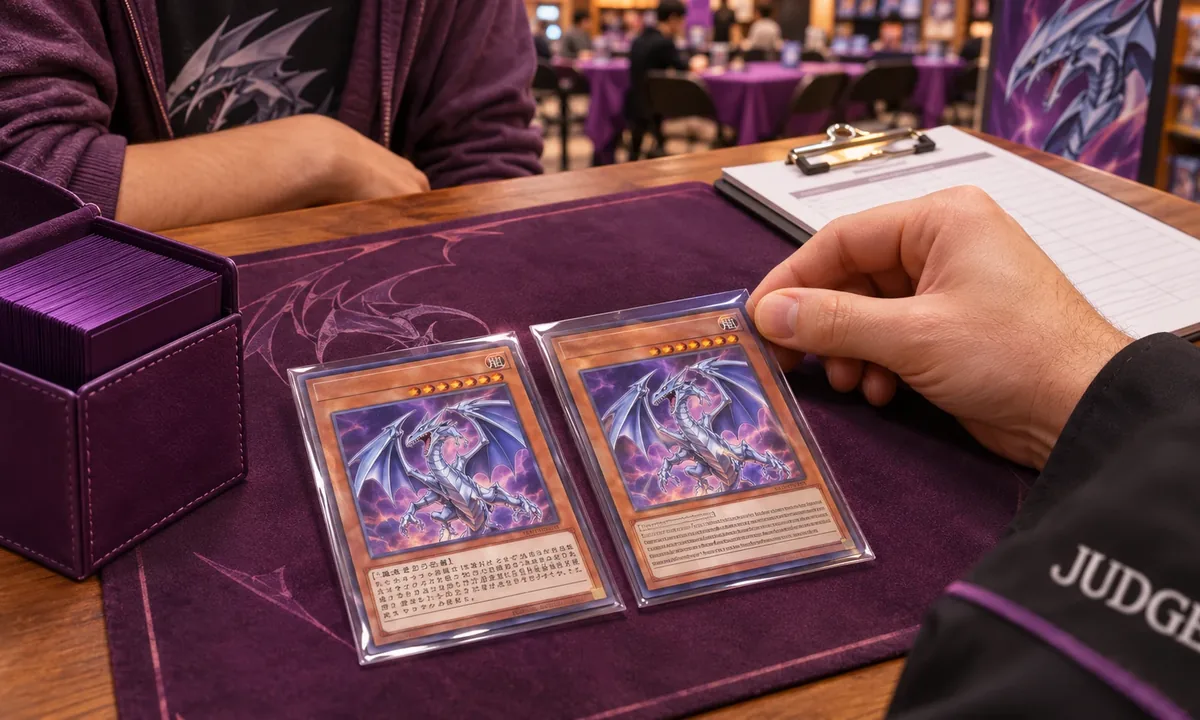
No: an OCG card cannot be played at an official Yu-Gi-Oh! TCG tournament in Spain, even when its effect also exists in the TCG and even if you bring a translation. Konami's European policy accepts cards printed for the TCG market in six languages, but cards printed for Asia, “Asian English” included, are only playable in Asian territories.
Check the product, not just the language
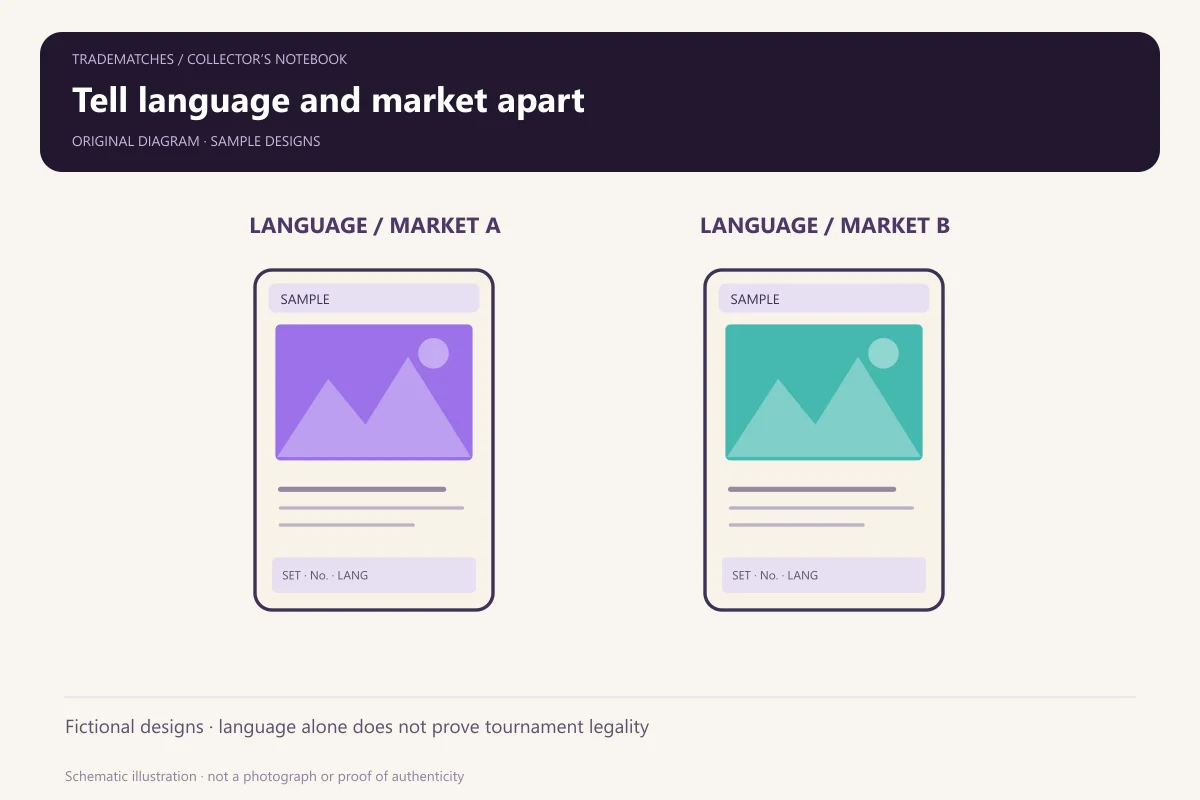
Konami's European legality page says cards printed in English, French, Italian, German, Spanish and Portuguese can be played in any TCG territory. Japanese, Korean, Chinese and “Asian English” printings are OCG and are not legal at Yu-Gi-Oh! TCG events. Language is a clue, but what decides is which game and market the card was made for. The Regional Qualifier FAQ sums it up with three logos: the TCG logo is legal, while the Japanese OCG and Asian-English logos are not.
| Printing | Spanish TCG event |
|---|---|
| Spanish TCG card | Allowed if the card and format are legal |
| English, French, Italian, German or Portuguese TCG card | Allowed if the card and format are legal |
| Japanese, Korean, Chinese or Asian English OCG card | Not allowed, not even with a translation |
Three checks before buying for play
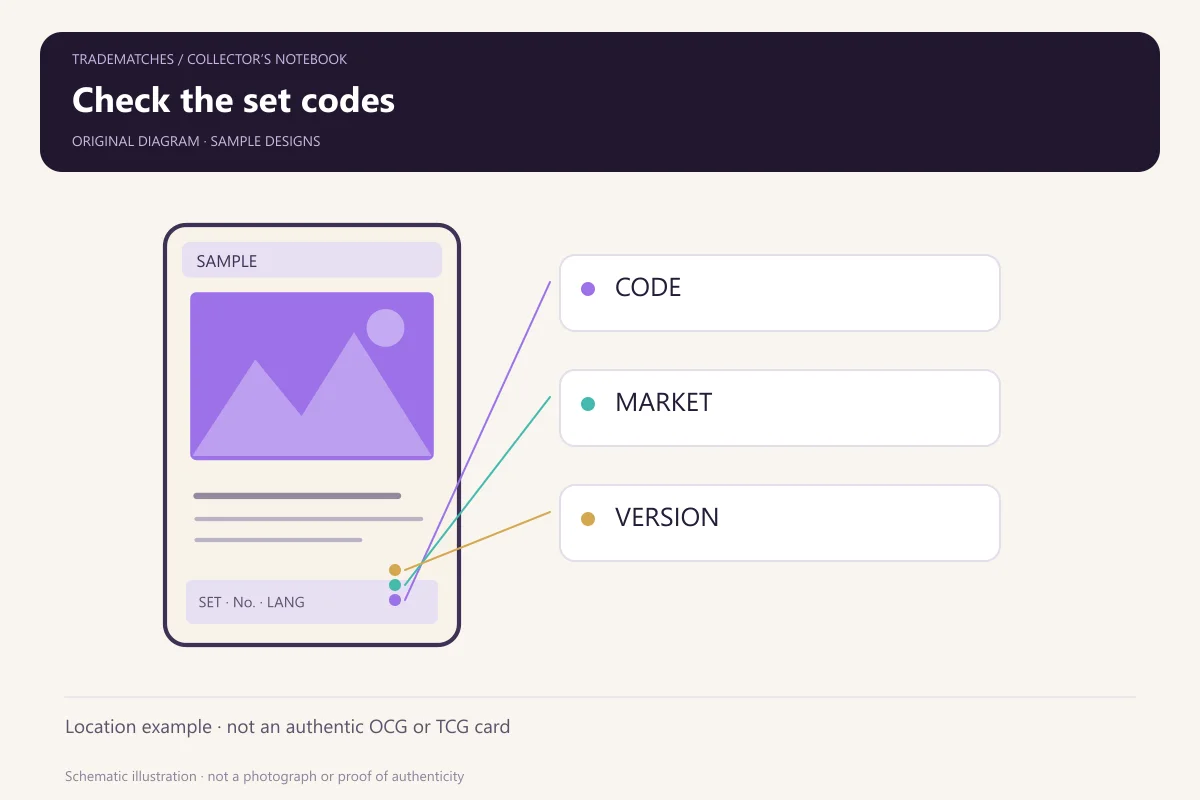
- Ask for readable front and back photos of the actual copy; a catalogue image is insufficient.
- Check its code and release in Konami's European legality page or official database. Some promos have separate conditions.
- Read the current Forbidden and Limited list and the event FAQ. A genuine TCG card may still be restricted in a particular format or event.
For the third step, the card legality checker looks a card up by name and tells you whether it is forbidden, limited or semi-limited on the TCG list, which is the one events in Spain use. It does not look at the back or the code: that is still the job of the first two steps.
If an opponent or judge cannot read the language of your TCG card, ask the organiser beforehand how they want you to show its text. The Konami pages we checked do not set a translation format for TCG cards in another language, so the event's answer is the one that counts.
TCG cards that are not legal in Europe either
Being TCG is necessary but not enough: some English TCG cards are not legal in Europe because they were never released in a product distributed here. Konami's European legality page lists these cases:
- Six specific cards with no European product: JMPS-EN001 (Troposphere), JUMP-EN006 (Unity), JUMP-EN007 (Yu-Jo Friendship), JUMP-EN008 (Judgment of Pharaoh), YAP1-EN008 (Shiba-Warrior Taro) and YZ09-EN001 (Gagaga Head). Some may become legal if reprinted.
- Speed Duel cards: every card shown in Speed Duel GX: Midterm Destruction and Speed Duel: Battle City Finals is not legal in the EMEA and Oceania regions.
- Prize cards: not legal in a region until an event awarding them has taken place there.
- Promos: legal on the day their product becomes available in the region; when a promo is reprinted, the new product's release is what counts.
- Regional dates: some products launch on different dates by region, so a card already legal in North America may not yet be legal in Spain.
Worked example: three offers of the same card
You want Unity for a deck and three copies turn up. This is how the rules above decide each one:
| Offer | What you check | Playable at a TCG event in Spain? |
|---|---|---|
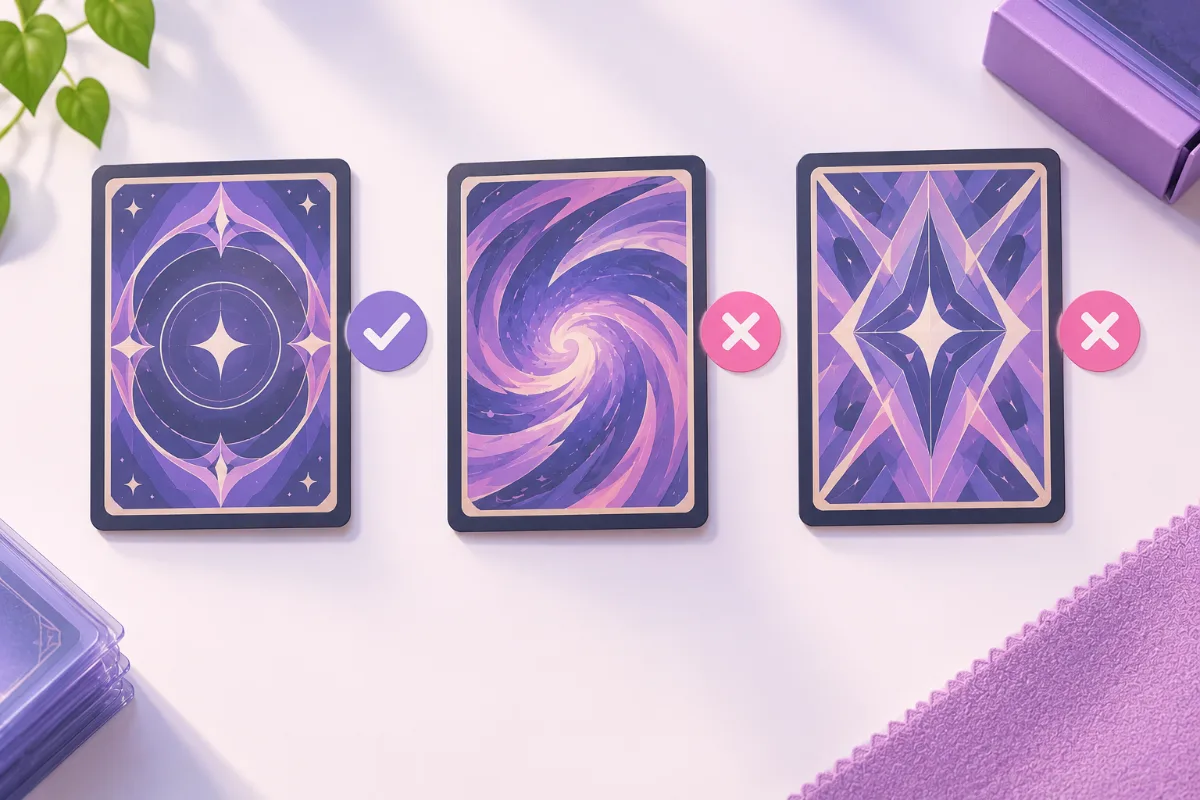
| “Unity, English”, back with the Asian-English logo | Card back | No: it is OCG even though the text is in English |
| Unity with code JUMP-EN006 | Code on the European list | No: it is TCG, but that printing is on the list of cards not legal in Europe |
| Unity in Spanish or English from a European product | Code, product date and the Forbidden and Limited list | Yes, if its product is already legal and the current list allows it |
The example uses a card from the official list because that is where the trap is clearest: name and language match in all three offers, and only the back and the code separate the useful copy from the other two.
Format and registration: two more checks
The Forbidden and Limited list applies to the Advanced format. If the event is Genesys, the Regional Qualifier FAQ explains that the list is not used: Genesys has its own points list with a cap of 100, and Link and Pendulum Monsters are not allowed. A legal TCG card can cost points in Genesys even when it is unrestricted in Advanced.
To register you need the NEURON app: since July 2024 Konami only accepts the player ID shown in that app, and at Regional Qualifiers the deck list is built and submitted in NEURON, with no paper lists. The 2027 Regional Qualifier season began in July 2026 and runs until summer 2027.
For collecting and trading
An OCG card can be a legitimate collectible while being unsuitable for a TCG deck. State “OCG” or “TCG” explicitly, along with its code, language, edition and condition. If the other collector needs it for tournament play, confirm that before agreeing a trade.
If you take your cards to a shop or event, the printable trade list lets you write each copy's code and language on its line, so whoever reads it knows whether it suits a tournament deck before asking you for it.
The misleading English-language case
An “English” listing does not distinguish TCG from Asian English OCG. Request the back and full code, identify the product and consult European policy. A translation does not make an OCG copy legal in an ordinary TCG tournament.
An OCG copy may still suit a collection, but describe it as OCG rather than a Spanish tournament card. For play, also check regional release and the applicable list: genuine TCG identity and full legality are separate checks.
Frequently asked questions
Is a Japanese-language card automatically OCG?
Do not decide from language alone. Check the back, code and product against official event guidance.
Can I use an OCG card if I bring a translation?
No. Konami's FAQ says so in plain terms: cards printed for Asian markets, Asian English included, are not legal in TCG tournaments even if you have a translation.
Is an English TCG card always legal in Spain?
Nearly always, but not every one: the European legality page excludes six cards with no European product and the cards from two Speed Duel products, and promos and prize cards depend on their release in the region.
Sources and checks
On 27 October 2026 we checked, on Konami's European pages, the accepted TCG languages, the exclusion of OCG and Asian English cards, the list of cards not legal in Europe, the Regional Qualifier season FAQ (Genesys and NEURON deck lists) and the notice on registering with the NEURON ID.