How to decline a card trade offer politely
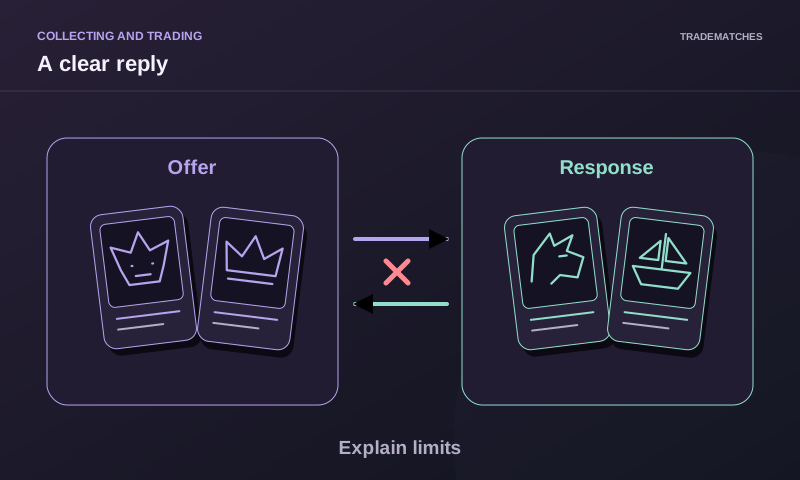
When the offer includes a complete lot
A lot may contain one card that interests you and several that do not. You do not need to accept the group because one piece fits. Separate the conversation: “I am interested in Y, but I would not trade X and do not need the rest of the lot. If Y is still available, we can consider that card alone.” This makes partial interest clear and stops the other person reading a question as acceptance of everything.
If the lot was built to balance another deal, you do not need to invent substitutes immediately either. Ask for time to review your lists or say you would rather not expand it. A small transparent trade can be better than a large group neither person completely understands.
If you change your mind after replying
While checking a binder, you may discover an alternative is no longer available or that your card’s condition differs from memory. Say so as soon as you know: “I checked the copy again and prefer not to offer it; sorry for the change.” You do not need a long explanation. An early correction lets the other person use their cards again rather than wait for a deal that will not happen.
You can also reopen a conversation if an option you initially declined now fits your goal. Do so with a new specific proposal, accepting that the card may no longer be available. The point is not to preserve implicit reservations; each message should describe the current situation.
Set boundaries when someone persists
If someone persists after a clear no, repeat one simple limit: “Thanks, but I will not trade that card.” Then you do not need to debate or share personal details. A swap needs both people’s willingness; do not accept a meeting to resolve pressure or justify your priorities.
A closing routine that releases cards
- Reply when you know the deal does not fit or you need one specific check.
- If it is no, release any card you had mentally reserved.
- Correct the entry if the offer revealed an error or an unstated preference.
- Store the available lot and return to real priorities.
Treating refusal as a normal part of trading keeps lists useful. A clear no leaves room for a compatible proposal.
On this page
Direct answer: Decline a proposal with a short, clear message and no invented excuse: thank the person, say that it does not fit your current goal and, only when it is genuinely available, offer a specific alternative. You do not have to justify a card’s sentimental value or accept a trade merely to avoid seeming impolite.
Start with the decision, not the reply
A well-worded no protects two things: your collection and the chance of speaking with that person again. The issue is not saying no; it is leaving a proposal in an ambiguous state where the other person does not know whether to wait, push or seek another match.
First decide what does not fit: the card you would receive, printing, condition, quantity, timing or the fact that yours is reserved. The more specific that answer is for you, the less text you need to send.
A pause is a valid option
When a card, lot or balancing item cannot be described clearly, there is no need to close quickly. Asking for another photo, checking inventory or speaking another day does not break the conversation. Avoid promising a card you still need to review or accepting an agreement simply because you have already spent time discussing it.
Let the other person verify the proposal
A useful proposal need not be long, but it must be verifiable. Include name, set or code, number, language, finish, condition and availability. When one of those details is missing, a conversation that seemed simple can end up comparing two different cards or a copy you can no longer deliver.
Current photos are especially helpful for glare, bends, edges and surface. Take them when you prepare the offer, not at the start of the week. If there is a relevant mark, write it beside the photo. Honesty does not require you to devalue your card: it lets the other person decide with the same context you have.
Review before you close
When reviewing a proposal, separate three decisions. First confirm what the cards are. Then check physical condition and quantity. Finally ask whether the result meets both people’s goal. That sequence prevents discussing a balancing item before you know whether the copies are the ones each side expected.
| Field | What to clarify |
|---|---|
| Copy identity | Set, number, language, finish and quantity. |
| Condition and photos | Current photos and any visible mark. |
| Availability | Available, reserved, under review or delivered. |
| Trade goal | Which gap, deck or page it helps complete. |
Before you send the message
Check the physical card, not only your inventory. Confirm that the copy is still in your binder, does not belong to a deck or pending agreement and that the photo shows the same set and condition. If you are preparing a lot, count cards one by one. The aim is not to make a hobby bureaucratic; it is to stop a conversation starting from something you can no longer fulfil.
Write down your acceptable outcome too. It may be receiving one specific card, reducing duplicates, completing a page or simply learning what the other person has. Knowing this lets you decline politely, suggest a reasonable lot or leave a value difference for another time without inventing an explanation.
When a question comes up
Treat a question as information, not an attack. If someone asks for a back photo, asks about a version or does not understand why a card is reserved, answer with the detail you have. If you do not have it, say so and check. The best response is not the fastest; it is the one that lets both people decide from the same card description.
Do not use partial screenshots, memory or urgency to settle a difference. References can guide, but they do not replace inspecting the copy or agreement between the two people. When there is no shared basis, the useful decision is to pause and make a new proposal with cards you can both identify.
The sign that an agreement is ready
Before putting anything away, both sides should be able to summarise the trade in one sentence: “I give these copies, in this condition, and receive these others.” If the sentence does not come out the same way for both people, something still needs confirmation. Repeating it takes seconds and stops a cordial negotiation becoming a later discrepancy.
Make the next step easy
Once an agreement closes, confirm which card changed state: available to delivered, wanted to received or review to reserved. If you do not close the trade, record only what is genuinely useful for a later conversation, such as an accepted version or alternative card. Keeping those boundaries avoids repeated pressure and preserves a list other people can trust when they consult it.
Clarity does not reduce opportunities: it makes the matches you receive easier to review, accept or decline without losing time or trust.
A process you can repeat
- Thank them and use one sentence that closes the proposal.
- State the limit behind your decision without turning it into a valuation.
- Offer another card or a later conversation only when you can honour it.
For example: “Thanks for the proposal. I am keeping that copy because it is in my deck, so it is not available. If you are interested in these two duplicates from the same set, I can send photos.” The message closes one door and, when appropriate, opens another that is real.
After the trade
Avoid calling an offer “bad” as a judgement of the other person. Describe your decision: “it does not cover what I need”, “I would rather wait for a copy in another condition” or “I am not trading that card”. A difference in goals does not mean anyone did something wrong.
Update your inventory on the same day and physically separate received cards from cards you still offer. That small action prevents a future match from relying on an old list. It also lets you return to a conversation with a real detail rather than trying to remember which copy you delivered or reserved.