How to organise your TCG collection: have, duplicates and wants
On this page
An organised collection does not need sophisticated software. It needs to answer three questions in seconds: what do you own, what do you have spare and what are you looking for?
The most useful system separates your personal collection from your trade inventory and keeps a want list you can update.
Choose a structure you can maintain
Sort by game and then by expansion. Within each expansion, use the collection number, which is usually more stable than sorting only by name. Separate variants, languages, promos and cards for play.
- Binder: for cards you want to show or preserve.
- Trade box: for available duplicates.
- Play box: for decks, testing and frequently used cards.
- Digital list: for missing cards, reservations and matches.
Use simple labels: Have, Trade and Want
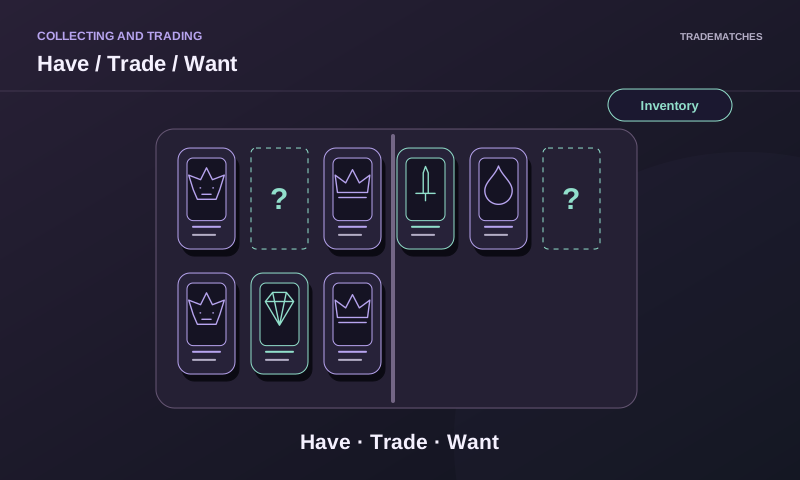
Have means cards you own; Trade means cards you would give away; Want means cards you are looking for. A card can be in Have but not Trade because it has sentimental value or belongs to a deck.
TradeMatches uses this separation directly: the more precise your lists, the more useful a match with another collector becomes.
Record the details that prevent mistakes
Note expansion, number, language, condition, finish, quantity and physical location. Mark cards that are loaned or reserved. For valuable cards, a current photo helps you remember condition and prepare a transparent trade.
Review once a month
After a release, opening session or tournament, spend ten minutes updating everything. Remove traded cards, add new ones and check whether your priorities changed. An outdated inventory creates messages that can never become trades.
Protect what matters, not only what is expensive
Use suitable sleeves, avoid moisture and store boxes away from sharp temperature changes. Your system should let you remove one card without bending the rest and carry only what you need when meeting someone.
Downloadable template: one row per version
Download the TCG inventory CSV template. This empty file contains spreadsheet headers; it is not automatically imported into TradeMatches. Separate finishes, languages and conditions even when the name is identical.
A physical location can be “Box A, divider 3” without a home address. Owned, reserved and available quantities are separate. Check that available ≤ owned − reserved. Reserved copies include cards you have chosen to keep in decks.
A reconciliation example
You own six copies: four for a deck, one promised to another collector and one free. Record six owned, five reserved and one available. After trading the free copy, five remain owned, five reserved and none available. Do not subtract the outgoing copy again during a later stock review.
Try a small box first and keep a backup before editing many rows. Never publish contact details, addresses or private notes about other collectors with your inventory.