Flesh and Blood fatigue: playing with an empty deck
On this page
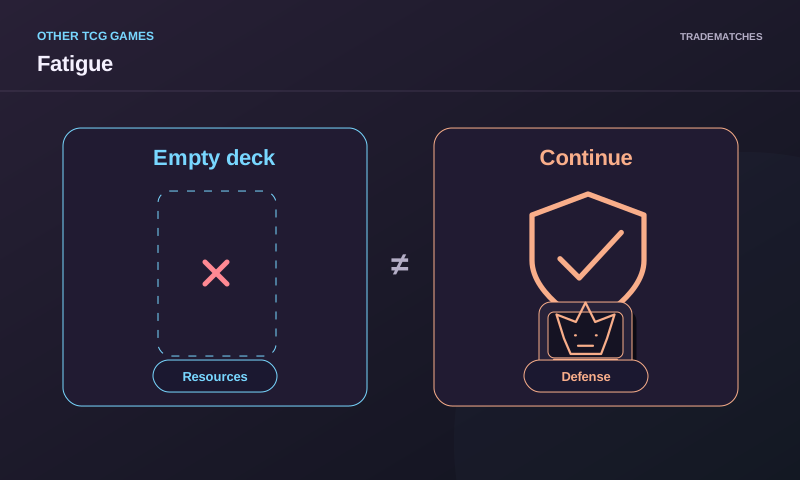
In Flesh and Blood, an empty deck does not automatically cause defeat. You can continue to play with available cards and permanents. Fatigue describes a strategic plan that seeks to exhaust the rival's useful resources; it is not a keyword that triggers a special condition when it reaches zero cards. To win you still need to fulfill a real win condition.
What fatigue means in a game
A fatigue strategy tries to get the rival to spend cards and options faster than it can turn them into decisive damage. It then seeks to maintain a pressure source while the other player no longer has enough answers. It's not just about counting who's got the most cards in the deck. It matters what cards are left and what function they can perform.
Two players with eight cards can have very different resources. One retains a combination of attack and financing; the other has cards they cannot pay for or that do not interact with the current threat. Counting cards helps to detect the duration of the plan, but evaluating its usefulness decides whether exhaustion is an advantage or a false sense of security.
The defeat depends on the game conditions
The rules contemplate defeat for the life of the hero, by effects that establish it and by other express conditions such as conceding. They do not include a general defeat for not being able to refill the hand from an empty deck. If there are no cards available, you don't get those cards; that doesn't amount to zero life.
For example, you can start a turn with the empty deck, a handy card in hand, and an equipped weapon. Your ability to act will depend on that card, how you finance the abilities and restrictions in play. The empty deck rule allows the game to continue, but does not add resources or replacement cards. You must work with the state you really have.
Pitch keeps cards in circulation differently
The cards used for pitch pass through that area and return to the bottom of the deck during the end-of-turn procedure. A card used to play or defend may end up in another area according to the applicable rules. That difference in destinations is central to understanding why a game can have several passes through the deck without all its resources returning.
Suppose you use a blue card to fund one action and another card to defend. The first one can return to the deck by pitch; the second one does not return by the same procedure if it ends up in the graveyard. Do not describe both as “used up permanently”. Don't count every card used as a recyclable. Record their actual destinations and you'll know what resources will appear again.
More cards don't always mean more useful turns
If you keep a lot of cards but can't fund your attacks, your amount advantage may not turn into pressure. If you only retain funding, you may be able to use a weapon, but you must check its cost and utility. A fatigue plan needs a sustainable relationship between defense, resources and damage, not a large pile to which to attribute an automatic victory.
One way to analyze it is to separate funding cards, threatening cards, and cards that avoid relevant damage. Some perform several functions and choosing one gives up the others. This classification helps plan the end without attributing an identical value to each remaining card. It also shows why a seemingly cheap defense can consume the last threat you needed.
The weapon needs a real payment.
Having a weapon in the arena does not imply having unlimited free attacks. Read its ability, cost, usage restrictions and any additional resources required. If you need resource points, you must generate them legally. If you need an action point, you must have it, too. An empty deck does not suspend any of these requirements.
You can test the plan with a specific question: which card will return by pitch and what attack will I be able to pay with it in the next cycle? Then check how much damage you can inflict against the remaining rival defenses. If the attack does not result in damage or requires a resource that you have already exhausted, your supposed permanent engine may not close the game.
When blocking damages your plan
Blocking protects life, but you can remove from the cycle a card that you would have used as a resource or threat later. It is not a reason to let damage through indiscriminately. It's a decision on what loss you can assume. Compare the avoided damage now with the future function of the card you are going to commit.
If an attack threatens an on-hit effect that destroys your resource structure, avoiding it can be worth much more than your damage points. If it does not contain an additional consequence, you may be able to keep a piece and accept some of the damage. The context of life and subsequent turns matters. Fatigue does not turn “always block” into a universal recipe.
Pressure during exhaustion
A rival without a deck can still retain equipment, arsenal, hand or relevant abilities. Check those areas before announcing that you no longer have any answers. Equipment could absorb a key attack and a card stored in an arsenal could alter the final defense. You should also check for effects that return cards to a useful area.
In preparing the last exchange, calculate the defense possible with public information and recognise what remains hidden. Don't claim a certain victory because their hand looks small. A well-evaluated fatigue plan identifies which specific resource is missing from the opponent and how you will take advantage of that deficiency. ‘Has zero cards in the deck’ is one fact, not a complete demonstration.
Draws and states without a way to advance
The rules distinguish situations where no one can legally advance towards the end of the game and others where players refuse to do so. Don't suppose that any table with two empty decks is automatically a draw. If someone can still inflict damage or produce a win condition, there is a material difference with a state without a path of progress.
In competition, the time rules and procedure of the event add another dimension. Check the applicable policy and play at an appropriate pace; a long strategy does not grant permission to delay decisions. This guide explains resources and defeat by deck, does not replace the official resolution of a game that reaches the time limit.
How to study a second pass
After a practice game, separate the cards that came to the graveyard from those you used for pitch. Look what threats disappeared and what resources kept coming back. Ask yourself if the funding sequence you retained could sustain real attacks. This review detects more concrete errors than simply concluding "I ran out of deck".
Don't memorize a perfect order without taking into account defense decisions. The rival can force you to spend a card you hoped to keep. Study alternatives: which engine still works if you lose a threat, if you have to block with a blue resource, or if the arsenal changes. The goal is to recognize the limits of the plan before relying on them at an event.
Assess a hand by its ability to keep playing
During a fatigue game, compare a card's possible uses before choosing. Defending with it and sending it to the graveyard may prevent damage now while reducing the material that can return later. Pitching it may finance an action and let it follow the relevant return procedure. The better use depends on your life total, threats and future legal actions. Preserving every card at the cost of losing the game is not a useful fatigue plan.
Distinguish possessing a card from being able to use it. A card that cannot supply the required payment or enable a relevant action may provide less continuity than a resource compatible with your weapon. Count actions you can finance and damage you can prevent rather than treating every remaining card as a guaranteed extra turn.
After testing, review which cards were permanently spent and which sequence returned to the deck. If your second pass lacked a suitable resource source, earlier blocking or payment decisions may explain it. That specific review is more useful than adding cards merely through fear of an empty deck without identifying what they contribute.
Frequently asked questions
Do I lose if I cannot draw from an empty deck?
There is no general defeat for that fact in Flesh and Blood. The game continues until a win condition, defeat or tie applies.
Do all the used cards go back to the deck?
No. The pitch return does not automatically return cards from the graveyard or other areas. Each card follows its procedure and effects.
Does a weapon guarantee to win by fatigue?
No. You need to be able to pay for its abilities and produce pressure that exceeds the remaining answers. Having the permanent isn't enough.