Flesh and Blood Silver Age: rules and 40-card decks
On this page
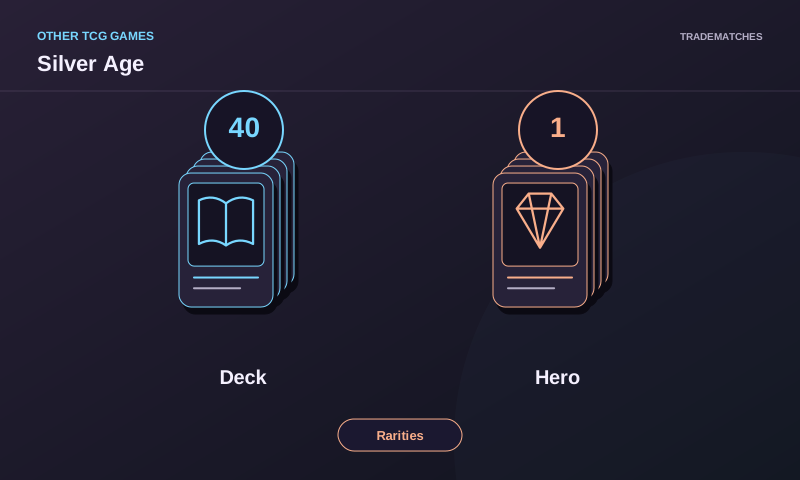
Flesh and Blood Silver Age uses one young hero, a combined maximum of 55 arena and deck cards, and exactly 40 cards in the starting deck. The hero is separate from that maximum. Both the hero and other cards must satisfy the format's common or rare classification and legality policy.
The ordinary copy limit is two per unique card, with name and pitch defining the relevant identity. Do not build by automatically borrowing quantities from another format. These requirements were checked against the current Constructed rules on 2 October 2026.
Separating the three numbers
One number concerns the hero: exactly one, and young. Another concerns the combined arena and deck pool: at most 55. The third concerns the deck at the start of a game: exactly 40, rather than simply a minimum of 40.
The official Constructed policy lists the hero in addition to the combined pool, not as a deduction from 55. Preparing 55 eligible arena and deck cards plus the hero follows that ordinary counting structure.
The 55-card maximum is not permission for a 55-card draw deck. Weapons, equipment and available deck options share that combined allowance. Before starting, select the appropriate configuration and retain exactly 40 in the deck alongside the arena components used.
| Preparation component | Ordinary quantity | Meaning |
|---|---|---|
| Young hero | 1 | Separate from the combined maximum |
| Arena and deck cards | At most 55 together | Includes equipment, weapons and deck options |
| Deck at game start | Exactly 40 | Exceeding a minimum is insufficient |
| Copies of a unique card | Up to 2 | Check name and pitch |
Meta-static abilities can modify construction rules when they expressly do so. This is not broad permission to ignore the quantities. Identify the applicable card exception and its scope; without one, use the ordinary limits.
An example allocation
Imagine 40 cards starting in the deck, five arena cards and ten additional options within the pool. Those total 55 combined cards, with the hero separate. This illustrates counting rather than recommending that every list use precisely that allocation.
If you prepare only 40 deck cards and five arena cards, the combined pool is 45 and below the maximum. You are not obliged to fill it to 55 merely because space exists. Additional options are useful when you understand the problem they solve and the corresponding adjustment.
Arena cards can occupy different slots or hands under their own rules, but the combined card count remains physical. A two-handed weapon does not become two cards for this calculation. Its chosen arena configuration must also satisfy its separate restrictions.
When replacing a starting-deck card with an available alternative, preserve the initial 40. Leaving the removed card inside and adding the replacement can create 41 accidentally. Check pool size and starting-deck size independently after each change.
Common and rare depend on printing history
Silver Age does not classify a card solely by the finish or rarity symbol on your particular copy. The rules consider it common if it has ever been officially printed at basic or common rarity. It is rare if officially printed at rare and not already classified as common through that criterion.
That explains how a special-finish printing can represent an eligible game card. Shine alone does not establish the gameplay category. Investigate the official printing history and format classification rather than accepting or rejecting the card only through appearance.
The requirement also covers the hero. Being young alone is insufficient without the required classification and applicable legality. Choosing a character first does not make every printing or version of that character an eligible Silver Age hero.
Eligible rarity does not pass every remaining filter either. The card may be restricted or banned, or fail the class and talent requirements of your hero. Review those conditions before treating its admission to the pool as complete.
For a purchase, separate the game card's eligibility from the collectible premium of a specific printing. You may prefer the premium version, but it does not supply an extra construction permission. A less elaborate printing of the same eligible card can serve the same gameplay identity.
Two copies: name and pitch
Pitch versions can be different identities for Flesh and Blood's copy limit. Where a card has eligible red, yellow and blue versions, the ordinary rule allows up to two of each relevant version rather than two across all colours combined.
In that example, two red, two yellow and two blue copies total six physical cards sharing a name, distributed across three pitch identities. Those versions must actually exist and be legal. Do not invent a colour version to complete a supposed cycle.
Changing artwork, release or finish of the same pitch version does not create another identity. Two nonfoil copies plus one foil of the same name and pitch are three copies for the ordinary limit. The collectible treatment does not create an additional deck slot.
Check the complete pool rather than only the starting 40. An extra copy kept as an alternative can exceed the card's limit even when it does not begin inside the deck. Preparation legality extends beyond the cards you expect to draw.
Hero class, talent and strategy
Selecting common and rare cards does not remove the connection to the hero. Normal class, talent and other permissions still apply. A cheap or low-rarity card does not automatically become usable by every young hero.
Generic cards can provide useful tools when eligible, but evaluate their role in the plan. An apparently accessible cost can still complicate a sequence if its resource or condition requirements fit the deck poorly. Rarity eligibility and functional compatibility remain different questions.
Before buying, identify what the hero wants to do and which eligible cards enable it. You may prioritise actions supporting its mechanics, pitch resources, defence or equipment. The format does not require an expensive list, but no universal list serves every hero equally.
Building the 40 around functions
Count actions producing pressure, cards sustaining resources and defensive options. Review costs and pitch together. A hand of attractive threats may fail if it cannot pay for them, while resources without suitable actions can fail to apply pressure.
Consider actual turn sequences. If an action consumes resources or an action point, establish how the rest of the plan proceeds. Do not evaluate every card in isolation with all resources available, because the hand needs to operate as a combination.
Cards outside the starting 40 should have a concrete purpose. An alternative can address a matchup or change arena configuration, but needs a substitution plan. Carrying it “just in case” does not explain what leaves to preserve a legal, coherent deck.
Test changes before the event and recount afterwards. An adjustment can affect both balance and quantity. A clear list organised by name and pitch helps detect duplicates and prevents replacing one pitch version with another inadvertently.
Current legality and event instructions
Consult the official card legality policy for the format. Do not reuse another mode's banned list without checking. Silver Age has its own context, and policy updates can alter eligibility.
Compare guides by date and by the document they cite. Formats can change quantities and restrictions. A historical Blitz explanation does not establish current Silver Age rules simply because both use young heroes and 40-card decks.
Read any particular event instructions before travelling. Round timing, registration and procedures should not be inferred solely from the format name. Satisfy ordinary construction first, then follow the requirements published for that specific competition.
When another player offers advice based on memory, verify the relevant point against the current policy. This is particularly helpful for distinguishing the 55 combined cards from the 40-card starting deck. A small counting error can survive several otherwise sensible deck-building discussions.
Using a collection or buying from Spain
Start by reviewing common and rare cards already owned and their compatibility with the hero. Identify pitch before looking for replacements. A listing with the correct name but wrong pitch can be a functionally different inclusion despite a nearly identical appearance.
For equipment and weapons, check required classification and valid configuration. A premium finish does not change eligibility. If you choose that printing for collecting reasons, keep that preference separate from the deck's actual requirements.
The final preparation should make hero, combined maximum, starting 40 and copy counts verifiable without reconstructing the list from memory. Use a clear physical arrangement for selected and remaining cards. Organisation reduces mistakes when making authorised configuration changes between games.
Frequently asked questions
Does the hero count within the 55?
No. Policy specifies one young hero plus a combined maximum of 55 arena and deck cards. Count the hero separately, then check exactly 40 in the starting deck and the legal arena configuration.
Does a foil common become ineligible?
Finish alone does not decide. The format uses official rarity history along with its other restrictions. Verify the game identity and legality rather than treating foil as an automatically incompatible category.
Can I start with 41 because the pool maximum is 55?
Not under the ordinary rule. Fifty-five concerns the combined arena and deck pool. The starting deck must contain exactly 40 unless an express applicable construction modification provides otherwise.