How to ship trading cards safely for a remote trade
On this page
Remote trades give you many more options, but a card can arrive damaged even when the agreement was perfect. The goal of packaging is to keep the card from moving, pressure and moisture throughout the journey.
Agree on shipping before the trade
Decide who sends first, which method you will use, whether tracking is included and what happens if the package is delayed. For higher-value cards, do not choose a method that neither person can verify.
Protect the card in layers
- Put the card in a clean, correctly sized sleeve.
- Add a rigid or semi-rigid holder without forcing the card in.
- Use an inner bag or envelope to protect against moisture.
- Secure the package between firm cardboard to prevent bending.
- Place everything in a strong outer envelope.
Do not put tape directly on the sleeve or holder. The card should be removable without cutting near it.
Document what you send
Photograph the front, back, finished packaging and label before shipping. Keep the receipt and tracking details. This evidence does not replace trust, but it helps resolve a wrong address, damage or a disagreement about the contents.
What to do when it arrives
Open the package carefully and check that the card matches the agreement before confirming receipt. Photograph any packaging damage and contact the other person promptly. Do not throw the envelope away until the trade is complete.
When shipping is not worth it
If the cards have little value, shipping cost and risk may outweigh the benefit. Look for a local trade instead. TradeMatches helps you prioritise nearby matches and reserve shipping for trades that genuinely expand your options.
Packing and opening diagram
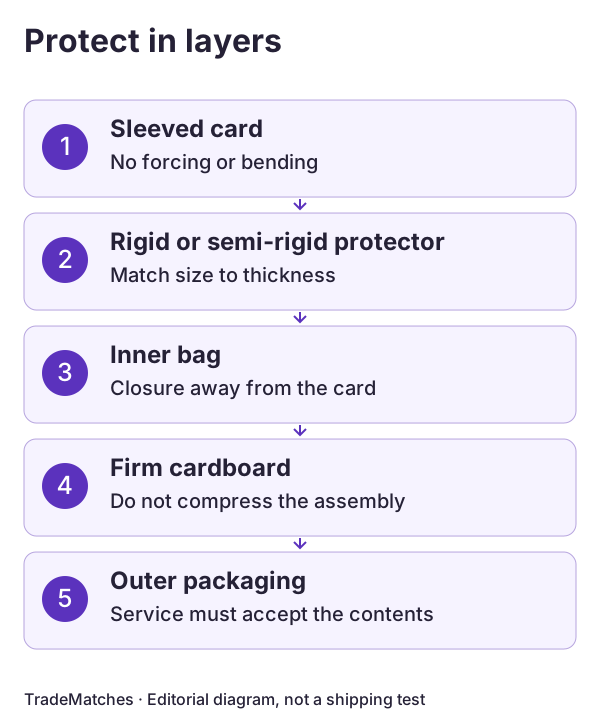
Test opening before inserting the card: no blade should be needed next to the contents. Do not tighten the cardboard or wrapping until the assembly bends. Split a larger lot when a protector cannot accommodate its thickness rather than forcing multiple cards into a slot designed for one.
Before buying a shipping service
Ask whether the carrier accepts collectible cards as goods, what coverage applies and what claim evidence is required. Tracking and insurance are different. Confirm declared value, exclusions and deadlines for the actual service; photographs cannot create coverage that was not purchased.
For international delivery, read the specific linked guide. Suitable services depend on contents and destination. Do not describe a physical traded card as documentation to bypass goods restrictions.
New related guide: Ship TCG cards abroad from Spain in 2026