How to sing Songs in Disney Lorcana
On this page
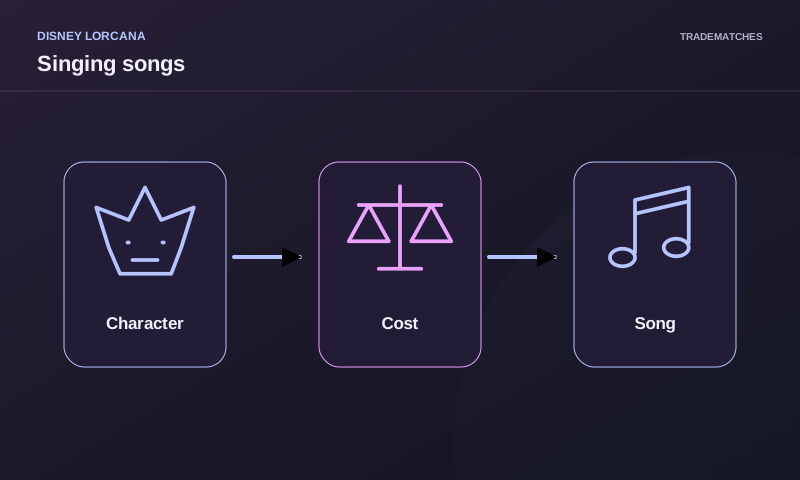
A Disney Lorcana song is an Action that you can play by paying its ink cost or singing: you exhaust a character that is suitable whose cost is at least that of the song to play it without paying ink.
Compare printed costs
If the song costs 4, a character with a cost of 4 or higher can sing it. The number of lore that you get from a quest does not matter for this comparison. The character must be able to exhaust to sing; one that is already exhausted cannot be exhausted again as payment for this action.
Sing uses the character that turn
A character that has just been played is usually drying and cannot exhaust to sing until it is ready according to the rules. If you exhaust it for the song, you will not be able to use that same exhaustion for a quest or challenge. Paying the song with ink is the alternative if you need to keep the character.
Sing Together changes the calculation
A song with Sing Together allows exhausting multiple characters and adding their costs until the indicated requirement is met. Do not apply this rule to a normal song: there must be one character that meets the threshold. For example, for a normal song costing 5, two characters costing 3 do not replace one costing 5.
Two ways to play the same song
A song is an Action card with a special way to pay for it. You can exhaust ink from your inkwell to cover its cost, as you would with other Actions, or you can exhaust a prepared character to sing it without paying that ink cost. They are not two different effects: the song you play is the same and you resolve its text. What changes is which resource you consume. The first method spends ink and leaves the character available; the second uses the character and reserves ink for other plays during your turn.
Before choosing, identify the cost of the song and the cost of the character you want to exhaust. These numbers are not the character's strength, will, or the amount of lore it gains from a quest. A character with a cost of four can sing a song costing four or less, if it can exhaust. If the song costs five, a regular character with a cost of four does not meet the threshold even if it has five strength points. The comparison uses the costs of the cards, except if a specific ability like Singer modifies what cost counts for singing.
What does "a suitable character" mean
The character must be in play, ready to exhaust, and subject to the rules that allow this action. One that is already exhausted cannot pay again for exhaustion. A character you just played is usually drying and cannot exhaust to sing during that turn. Also check if there are any additional restrictions from the card or the game state. If you don't have a suitable character, you can always consider the ink payment method when you have enough ink and playing the song is legal.
Exhausting a character to sing has an opportunity cost. That character will not be ready for a quest or challenge again, unless an effect reprepares it. If it was going to produce two lore points from a quest, singing can delay your path to victory. On the other hand, the song's effect might give you a greater advantage or save several characters. The rule allows you to choose; it does not assume that singing is optimal by not spending ink. Compare what the character would do with what you could do with the ink you save.
The high cost of the singer does not generate extra ink
A character with a cost of five can sing a song costing two, but the difference of three does not turn into usable ink. Singing pays the song through an alternative method, not converting the character into an ink well that produces its numerical cost. If another ability asks to pay extra ink when playing a song, you need to obtain it through the method indicated by that ability. Official Lorcana notes specifically address this case with Ursula's Shell Necklace: singing a cheap song with a more expensive character does not leave "change" to pay another effect.
Therefore, it is important to read all the costs of a sequence before exhausting the singer. You can sing the song without spending its ink cost and, yet, still need ink for a skill that activates later or for another card. Reserving ink is an advantage, but it does not equate to gaining ink. If you exhaust all your ink first for another play, then sing and a optional skill asks for ink, you might not be able to pay it. Order your actions with the complete effect in mind.
Singer: the cost that counts only for singing
Some characters have the Singer ability followed by a number. The official card Ariel – Spectacular Singer, for example, has a printed cost of three and Singer 5: for singing, it counts as if it had a cost of five. This allows it to sing a song costing five when it can exhaust, without its printed cost becoming five for all other rules. Do not change the number on the card in your collection or use Singer to pay for an Action that is not a song. The ability indicates a specific calculation for this method of play.
If you are unsure between a high-cost singer and one with Singer, look at which one you want to keep ready after. Two characters can reach the same song threshold through different routes, but one might have a skill that is useful for another action. Singer expands options for deck building: a cheap ink character can allow playing more expensive songs without exhausting the ink well. Its practical utility depends on surviving, stopping drying, and remaining ready when you want to sing.
Sing Together is not the rule for all songs
A song with Sing Together allows exhausting multiple characters and adding the costs that count for singing until the indicated number is reached. If the song requires six, for example, two suitable characters with a cost of three can add to six. In a normal song without this ability, you cannot split the requirement between multiple characters; you need one character whose cost counts as sufficient. Look for the word Sing Together on the card before attempting a combination. The fact that two characters sing in Disney's story does not create this ability in the game.
The opportunity cost also increases. To sing together, you exhaust all the used characters and give up other actions that required them to be ready. Sometimes paying ink is better than losing two or three quest opportunities. Other times, the song's effect justifies the sacrifice greatly. If a character has Singer or a text that modifies how it counts for singing, check the current rules and exact wording before adding costs. The sum must be done with characters that can actually participate.
Six examples of decision in a game
1. Song costing four and singer costing four
You have a song costing four, a ready character costing four, and four inks available. You can sing by exhausting the character or pay the ink. If singing leaves you with four inks to develop another character, this path may accelerate your board. If the character was going to do a quest for several lore points, paying ink and keeping it ready might be more valuable. Both are legal ways to play the song; the choice depends on your turn plan.
2. Two characters costing three against a song costing five
If the song does not have Sing Together, you cannot add three plus three to sing it. You need a single suitable character that reaches five, a sufficient Singer ability, or ink to pay the cost. If the card did have Sing Together with a requirement that both sum, you could consider exhausting them together. The example shows why you first look for the key word and then add numbers.
3. A newly played singer
You just played a character costing five and have a song costing five in your hand. Although the numbers match, the newly played character is usually drying and cannot exhaust to sing now. You can wait for a later turn, use another ready character, or pay five inks if you have them. A plan that requires singing immediately with the newly played character fails due to the character's state, not the cost comparison.
4. Ariel with Singer 5
A ready Ariel – Spectacular Singer can sing a song costing five despite its printed cost of three, because Singer 5 modifies the threshold for singing. If it is exhausted or still drying, the ability does not eliminate those restrictions by itself. The example distinguishes three independent checks: what number counts, if the card is ready, and if it can exhaust this turn.
5. Song costing two with a singer costing five
The more expensive character exceeds the threshold and can sing the song without paying its ink cost. You do not gain three inks extra or a reduction for the next card. If you had planned to pay an additional ability with that supposed difference, you need to redo the sequence and locate available ink in the inkwell. Singing saves the cost of that song, not creating new resources.
6. A Sing Together song costing six
Two suitable characters whose costs add to six can sing together a card showing Sing Together 6. Both are exhausted. Before doing so, calculate how much lore you would have gained from quests with them and what immediate effect the song provides. It might be more beneficial to pay ink and keep them ready if the lore race is near its end; in another game, the collective effect might justify exhausting both.
A table routine to avoid mistakes
Read the song and decide whether you will use ink or singing. If you choose singing, check the relevant cost of the character, including a possible Singer ability. Check if it is ready and can exhaust; a drying character is not suitable for this payment. If the song says Sing Together, calculate the sum of suitable characters before exhausting them. Announce the choice, exhaust the correct cards, and resolve the song's effect. Keep decisions to pay, choose targets, and resolve the text separate: a song is still an Action even after being sung.
When playing in an event, keep in mind that the rules and legality of the format can update. For interactions with Singer, Sing Together, or abilities that trigger when playing a song, consult the current text of the card and the complete rules. The main question is always resolved with visible data: the cost of the song, the cost that counts for the singer, the ready or exhausted state, and the availability of ink. Avoid assumptions about "free singing" to plan your turn without discovering you are missing a resource halfway through the sequence.
FAQ
Can I sing with an exhausted character?
No. Singing requires exhausting it as part of the action.
Should I sing all songs?
No. You can pay the ink cost normally instead.