Ward vs Resist in Lorcana: the difference
On this page
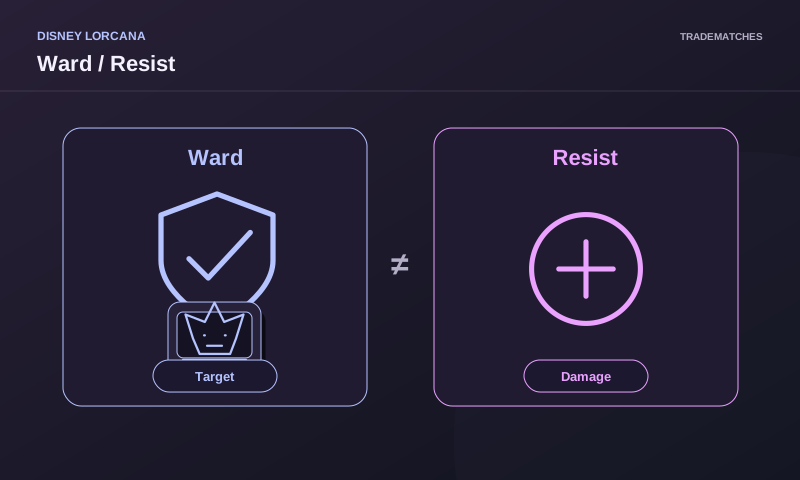
Ward and Resist protect in different ways. Ward prevents the opponent from choosing that card when resolving an effect; Resist +N reduces by N the damage that was about to be inflicted.
Ward limits the choice, not all effects
If an opponent's effect asks to choose a character, it cannot select one with Ward. An effect that affects everyone without individually choosing still can reach it. Ward also does not itself prevent a tired character from being challenged: the challenge is not the choice of an effect that the ability refers to.
Resist reduces damage
Resist +2 reduces by two the damage that was about to be inflicted on that card. If an attack or effect attempts to do two points of damage, the normal result is zero. Resist does not prevent the card from being chosen or participating in a challenge. The regulation distinguishes inflicting damage from placing or moving damage counters: Resist does not reduce these latter ones.
Example with both abilities
A tired character with Ward and Resist +1 can be challenged normally; the damage it receives in the battle is reduced by one. If an opponent's action says to choose a character and do three points of damage, Ward blocks the choice before calculating Resist. Read the verb of the card first.
The correct question is «What protects?»
Ward and Resist appear on defensive cards, but they do not solve the same problem. Ward restricts the choice the opponent makes for their effects; Resist reduces an amount of damage that was about to be inflicted. Therefore, the first step when facing an opponent's card is not to ask which of the two abilities is «stronger». Read the specific instruction and determine if it requires choosing a target, if it inflicts damage, or if it does something else. An effect can attempt to choose and then damage: then Ward is checked before reaching the damage calculation. Another can damage without choosing: Ward does not stop that part, but Resist can reduce it. A rule of two lines becomes much easier when separating both controls.
Ward does not mean invulnerability
The text of Ward prevents the opponent from choosing that character except for challenging it. The decisive word is «choose». If an opponent's action says «choose a character» and requires selecting one when resolving it, a character with Ward is not a valid option for that choice. The opponent must choose another legal target if one exists. This protection does not remove the character from the table or grant it immunity to everything the opponent does. A card that affects all characters without requiring an individual choice can affect it. The same happens when a rule or effect applies to a complete category and does not require pointing out a specific card.
To check this on the table, read the card's phrase from the verb. «Choose» signals a point of Ward's control. «To each character» or «all» suggests that the card can function without choosing one by one, although you must read the full text and the specific rules of the ability. Do not rely solely on the illustration or on the opponent pointing a card physically with a finger: pointing to the table during an explanation does not equate to the choice required by an effect. If a card has several instructions, analyze each one separately. The restriction matters where the instruction actually requires choosing.
A challenge remains possible
Ward explicitly includes the exception of a challenge. If the character with Ward is tired and meets the normal conditions for being challenged, the opponent can attack it through a challenge. Ward does not protect it simply because it is tired or exposed. This creates a strategic decision: a character with Ward that remains prepared can avoid directed effects, but once it is exercised for a quest, it can expose itself to challenges. The character's status and the specific way the opponent interacts with it matter more than a generic label of «protected».
Imagine that an opponent has a character exercised with Ward. You want to remove it from the table. An action that orders to choose an opponent's character cannot choose it if Ward prevents that selection. A character of yours that can be challenged can go against it during the challenge action. The result of the battle is calculated with the statistics and other relevant abilities. If it is not exercised, you cannot infer from mere Ward that the usual rules of the challenge have changed; review the table's situation and any additional text.
Resist reduces damage inflicted
Resist +N modifies an amount of damage that was about to be inflicted on the card: subtract N and not go below zero. With Resist +2, a source that inflicts two points does not leave damage from that source; a source that inflicts five leaves three, except if other effects change the calculation. The ability does not say that the character cannot be chosen, challenged, or affected in other ways. It only responds to a damage event. If the opponent's effect returns the card to the hand, exercises it, or applies another instruction without inflicting damage, Resist does not convert that instruction into zero. Read what is being done, not just the large number in the text.
When there is a challenge, the character with Resist can still receive less damage from the opponent while participating in the battle. This does not automatically give it more strength or reduce the damage it causes: it modifies the damage that is inflicted on it. If the attacker was going to do three and the defender has Resist +1, the usual amount that would reach the defender is reduced to two. If the defender already had damage, Resist does not heal the counters that were placed; it only affects a new attempt to inflict damage. Resistance and healing are different operations.
Inflicting damage and placing counters is not the same
The distinction matters when a card moves or places damage counters. Resist reduces damage that was about to be inflicted; it does not automatically erase counters that are placed by another mechanism. Suppose an instruction indicates placing two damage counters on a character with Resist +2. Do not do the subtraction just because there is a number two: first ask if the instruction «inflicts damage» or «places counters». If it places counters, you are not facing the event that Resist modifies. The same reading avoids errors with effects that move counters from another card. If the text is new or ambiguous, consult the complete rules and the official notes of that card.
This control is also useful when buying cards for a deck. A strategy based on Resist can be effective against small and repeated sources of damage, but you should not evaluate it as universal defense against any interaction. If the environment you play in uses effects that do not inflict damage, the word Resist may contribute less than expected. In contrast, Ward can protect against directed actions without reducing a single point of damage from a challenge. Before evaluating a card, identify the specific interactions it defends against.
What happens if a card has both
A character with Ward and Resist +1 can be challenged when the challenge conditions are met; the damage it receives is reduced by one. If an opponent's action says «choose a character and do three points of damage», Ward prevents choosing it and never reaches the calculation of Resist for that choice. If another card does three points to all characters without individually choosing, Ward is not enough to save it; Resist +1 can reduce the damage intended for it to two. The order is important: first identify if the interaction can reach the character, then calculate what the damage does.
Do not add both abilities as if they were a single armor. One avoids certain choices; the other changes the result of certain damage events. If an effect has chained steps, resolve them according to the text and do not invent a general shield. For example, an instruction that damages and then does something else may require analyzing the damage and the other instruction separately. Annotating «Ward: choice» and «Resist: damage» next to the card helps new players not to mix the windows.
Quick cases to resolve on the table
Case one: the opponent wants to choose your character with Ward for a directed effect. Check if the card requires an opponent's choice; if it does, that card is not an option. Case two: the opponent challenges that tired character. Ward allows the choice for the challenge, so the rest of the challenge rules continue. Case three: an action damages all characters. There is no individual choice Ward can block; calculate the damage and apply Resist if applicable. Case four: a card places counters. Do not substitute that verb with «inflict»; Resist does not automatically reduce those counters. Resolving four distinct situations teaches more than memorizing that both abilities are defensive.
Errors that appear when reading a print
The most common error is saying that Ward prevents attacking. Its text allows a challenge, so that conclusion is false. Another is using Resist as if it prohibits choosing: the opponent can choose a card with Resist for a directed effect if there is no other restriction. A third error consists of subtracting Resist from the old damage, healing without permission. The fourth is subtracting it from counters placed. To correct them, point out the exact verb of the card that acts and the exact phrase of the defensive ability. If a card has several abilities or a recent version changes its text, use the gallery and the current official rules.
In a competitive game, explain the calculation with visible numbers: «three damage, Resist +1, remain two». For Ward, explain the choice: «that instruction asks to choose and this character is not eligible by your effect». This way of communicating allows the opponent to check the interaction without memorizing. If the result depends on a specific rule of the card, pause and find the official reference before moving pieces. A clear resolution prevents the error from carrying over to the next turn.
Frequently Asked Questions
Does Ward protect from an effect that damages all?
Not necessarily. An effect that does not choose that card can affect it.
Does Resist prevent placing damage counters?
No. Resist modifies damage inflicted, not counters placed or moved by other effects.