One Piece 2026: block numbers, Standard and Extra
On this page
Since April 2026, One Piece Card Game distinguishes Standard Regulation and Extra Regulation using a block system. To know if an old copy is still playable, it is not enough to look at its expansion: check the block, its card number, possible block updates and the list of format restrictions. There are exceptions that allow the use of old illustrations.
What is the block number
The block is an identifier printed on the bottom right of the cards. It's not the collection number or the cost of the Character. Bandai uses it to define sets of cards in certain competitions. The system groups product periods and allows renewal of the available set without the verification being dependent solely on memorizing booster pack names.
Record block and card number in different fields. The number identifies the card for purposes as the limit of copies and updates; the block participates in the legality of the format. Two illustrations can share numbers even if they come from different products. If you mix the data, you could rule out a legal copy or purchase a reprint without need.
Standard and Extra do not use the same set
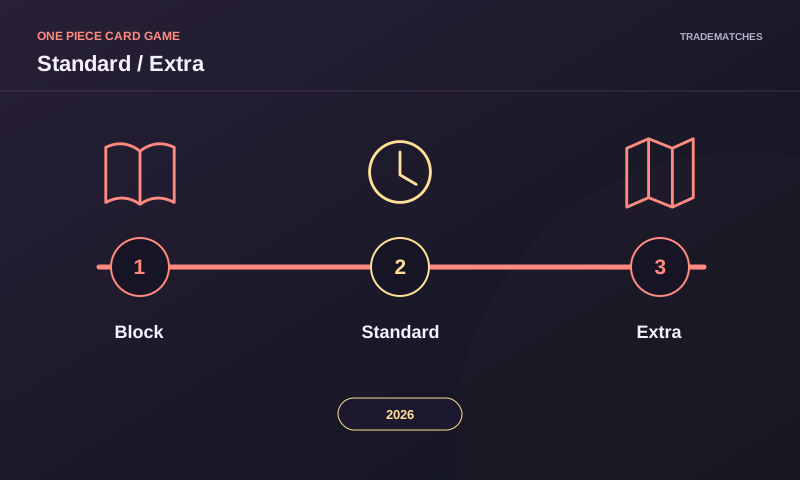
The official announcement describes Standard as a set of approximately three years of recent cards. For the period April 2026 to March 2027, it shows blocks 2 to 5; block 1 is left out by the general rule. Extra allows you to use from block 1 to the most recent, subject to your own conditions and restrictions.
This difference requires reading the event details. A list prepared for Extra does not automatically become a Standard list because it has a recent Leader. In Spain, confirm the rules of the specific event, especially when a store offers casual activities or special formats. The name "One Piece Tournament" alone does not explain which set of cards it uses.
A block 1 printing is not always excluded
Bandai includes updates for certain card numbers. When the block of a card is updated according to those rules, the previous illustrations of that number can also be used. That is why you should not sell or remove an old copy solely because of its printed block. First check the official list of cards subject to update.
The procedure is to search for the exact number, check which update is applied to it and confirm if it affects your illustration. Do not extend an exception to all cards of the same character or product. The fact that a block 1 card is still available does not authorize all of that block, and that a new illustration appears does not imply that any older version of the character shares the same number.
What the exception of Super Parallel Rare means
The ad includes an exception for Super Parallel Rare and cards with the same number. Bandai indicates that they remain usable in Standard and that new copies of that category since April 2026 will carry block X. It is a concrete rule of the block system, not a general permission to play any alternative rarity or any face card.
Check that the card really belongs to the category indicated and that the number matches. Do not use “parallel”, “expensive” or “premium” as interchangeable labels when the official standard uses a specific category. If the ad or the record of a store is ambiguous, look for the classification in the official base and documentation of Bandai before paying a premium for alleged legality.
Rotation and prohibition are independent filters
Meeting the block requirement does not guarantee that a card can be included in the ordinary amount. The list of banned and restricted cards may set another limit. A recent card may be banned and an old copy with an updated block may remain authorized. The system is not reduced to ordering the collection per year.
Do two separate checks: first the set supported by Standard or Extra; then the list of restrictions corresponding to the format and date of the event. If an ad is published before it enters into force, retain both dates. The date of reading the article does not advance the application of a measure that Bandai has announced for later.
Check a deck with mixed copies
Write the numbers of all cards, grouping illustrations representing the same card. Check the Leader and colors, the total deck and copies by number using the construction guide. Then add columns for printed block, applicable update and current restriction. This table allows you to review a mixed list without forcing you to replace everything with new prints.
If you detect a card outside the allowed set, look for a substitution by function. You may need another search effect or removal effect with a similar threshold, not another card from the same character. Try the adapted list before the tournament: replacing a piece can change costs, counters or turn sequence even if the total remains 50.
What to Save as a Reference
Keep the official regulating page, the list of updates and the date on which you reviewed your construction. For a dubious interaction, point out the card number and the specific rule that you think is applicable. That helps consult the organizer without sending an incomplete photo or an argument based on the fact that "another player used it last week".
The documentation saved is a reference, not an authorization that prevails over a later change. Check it again near the event. If the store applies a casual variant, distinguish that local agreement from the rules of an official competition. An exception that your group accepted does not automatically travel with you to another tournament.
Reorganise collection after rotation
Separate cards you need for Standard, cards you want to keep for Extra and collection pieces. Leaving a format does not force you to get rid of an illustration that you like or determine a price by itself. Nor does staying legal guarantee constant demand. Competitive use, rarity and collection preferences are different factors.
If you offer older copies, describe number, illustration, language, and status. You can add a note about the block check you have done, with its official date and link. Avoid announcing "legal forever" on the basis of a current exception. The buyer should be able to review the data and understand what format it refers to.
What to review in a future season
The announcement shows how the set moves to 2027, but the specific application and its updates should be checked in the current documentation when that period arrives. This guide is revised on October 1, 2026. Use these steps to review the following season, rather than treating these numbers as a permanent list. Exceptions by number and restrictions may require maintenance.
Three older copies can have three different outcomes
Practise the review with three hypothetical cases, without treating them as claims about named cards. Copy A has block 1, and its card number appears in an update applicable to Standard. Copy B also has block 1, but you find no update or exception for its number. Copy C has an accepted block, yet a current restriction prevents its inclusion in your list. Each needs a different check; age and artwork alone do not settle the result.
For A, save the update reference and confirm that the card numbers match exactly. For B, decide whether you want it for Extra or collecting before replacing it. For C, look for a permitted alternative that performs the required job. Buying a newer printing of the same banned card identity does not fix a ban. This exercise is also useful for second-hand lots containing cards from several products and years.
If a seller describes a lot as Standard-ready, ask for its list and review date. A broad claim does not show which exceptions they relied on. You may still want the cards for other reasons, but separately identify the pieces usable at your intended event. That prevents an apparently complete competitive deck from becoming an unexpected replacement project.
Frequently asked questions
Should I replace all my block 1 cards?
Not before you check their numbers. Some may benefit from updates or the official Super Parallel Rare exception and cards with the same number.
Is a parallel automatically legal in Standard?
Not merely because it is called parallel. You must identify their category and number, and apply the specific exception if applicable.
Does Extra allow banned cards?
Do not assume it does. Expanding the available blocks and lifting a ban are different decisions; review the Extra restrictions.