One Piece On Play and When Attacking: trigger timing
On this page
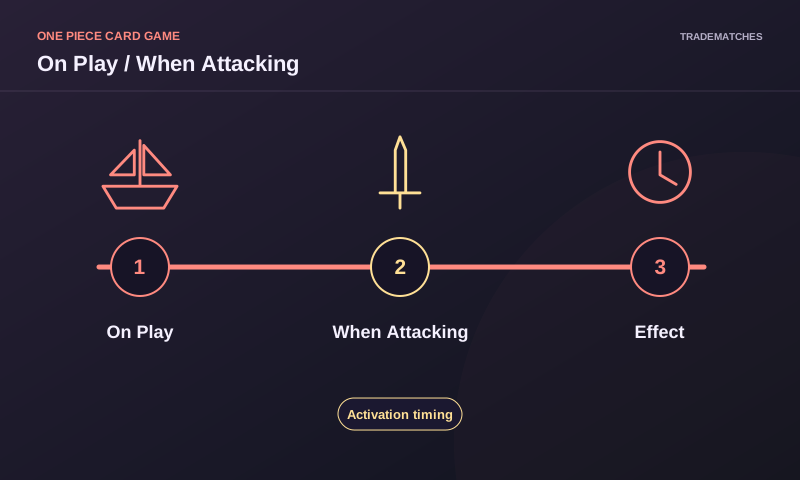
In One Piece, On Play is linked to the card being played, while When Attacking is linked to that card declaring an attack. Playing a Character does not automatically activate its When Attacking effect, and attacking with a Character does not repeat its On Play effect. Read the event, conditions and any activation cost as three separate parts of the instruction.
Two different events, not two interchangeable bonuses
The official comprehensive rules define both keywords by their activation timing. On Play responds when the card is played. When Attacking responds when the card with that effect declares an attack during the Attack Step. That wording identifies which action you must complete before expecting the effect.
For a simple comparison, imagine a Character with an On Play effect that helps your hand. Its entry may provide that benefit even if it cannot attack that turn. A different Character whose similar benefit says When Attacking needs a legal attack first. The similarity of the resulting benefit does not make their practical timing equal.
Do not trigger the second Character merely because your Leader attacks. The keyword on that Character concerns its own attack unless the rest of the text explicitly identifies another event. The official basic rules Q&A directly distinguishes the attack of the card itself from an attack by another card.
On Play can follow play by an effect
An effect may tell you to play a Character rather than requiring you to pay its ordinary cost from hand. If the instruction genuinely plays the Character, its On Play timing can become relevant. Read the effect that brought it into play and any restrictions on the new Character before resolving its own text.
However, setting a Character active, giving it DON!! or changing one of its values is not playing that Character again. The card already on the field has changed state or properties. It has not automatically generated another On Play event. Say the operation aloud when learning: “set active” and “play” should lead to different expectations.
The source instruction also determines the state in which the Character enters. Entering rested does not by itself mean that it was not played, and entering active does not grant permission to attack immediately. State, play event and attack eligibility are different checks. Resolve each using its own instruction instead of inferring all three from the orientation of the card.
Resolve an On Play sequence before continuing
After playing a Character, process the relevant automatic effects before starting an unrelated action. If the effect looks at cards, selects a permitted card and orders the remainder, finish that entire procedure. Do not pause midway to play another Character based on what you saw and later return to the unresolved instructions.
For a verified card-specific illustration, the OP01 Q&A explains the outcome of Nami's On Play search when no eligible card is found: the looked-at cards are put at the bottom in the prescribed way. The search does not become an unrestricted draw, and an unsuccessful selection does not authorise you to keep an ineligible card.
When teaching this sequence, separate the new Character from the looked-at cards and complete the search before moving anything else. This physical organisation makes it clear which card caused the effect and which cards are temporarily being examined. It also reduces the risk of accidentally mixing a looked-at card into the hand without revealing an eligible choice.
When Attacking happens before the result of the battle
Declaring a legal attack creates the timing for the attacker's When Attacking effect. You do not wait to see whether the attack deals damage or defeats its original target. Follow the battle sequence, including relevant Attack Step effects, before proceeding through blocking and counter decisions.
Suppose a hypothetical attacker has a When Attacking effect that increases its power for the battle. Resolve the permitted effect at its timing, then use the resulting current power for later battle decisions. Applying it only after the defender commits Counter would give the defender the wrong information when choosing a response.
A change caused later in the battle does not retroactively erase the fact that an attack was declared. At the same time, a declared attack does not promise damage: a Blocker, Counter or another applicable effect can change the eventual outcome. Keep “the trigger happened” separate from “the attack succeeded”.
| Action or situation | Keyword timing to check |
|---|---|
| Play this Character legally | Its On Play effect |
| Declare an attack with this card | Its When Attacking effect |
| Another card attacks | No automatic trigger of this card's own When Attacking |
| Set this Character active by an effect | Not another On Play by itself |
| Attack is later stopped or redirected | The earlier trigger is not defined by dealing damage |
Conditions and costs still have to be satisfied
A timing keyword identifies an event; it does not remove the rest of the effect's requirements. A condition can demand attached DON!!, a particular Leader or another stated game state. An activation cost might require returning DON!!, resting a card or another payment. Check the actual text before assuming the effect is available.
The basic Q&A explains that an On Play effect must be activated when possible, while a player can decline a required activation cost and play the Character without activating that effect. Also respect any explicit optional wording in the effect itself. This prevents the oversimplified assumption that every On Play outcome is either always optional or always unavoidable.
For a hypothetical cost of returning one DON!!, decide whether the effect is worth that payment in the present state. If you do pay legally, follow the effect; if you do not, do not take its benefit anyway. Keep the payment visible, especially when the DON!! total will affect later cards in the turn.
A second attack is another event
If an effect legally sets the Character active and it can attack again, another declaration can create another When Attacking timing. Whether the ability can be used again depends on its additional restrictions. A plain timing keyword should not be silently given a once-per-turn restriction that the actual text does not contain.
Conversely, an effect explicitly limited by Once Per Turn does not become available again merely because the same Character becomes active. The new attack event and the usage limit answer separate questions. Review the applicable text and any zone changes rather than assuming that “another attack” always means “another copy of every benefit”.
The OP06 Q&A includes card-specific questions about attacking again after setting a Character active. Use such rulings for the named card instead of generalising an answer to every attacker. The useful habit is to identify both the event and the relevant limitation before announcing the repeat attack.
Order multiple effects using the real board
Some plays create additional Characters and several pending effects. Follow the game's ordering procedure and the exact card rulings. Do not stop at “they all entered” if another part of the sequence removes one of them before its effect can activate. The OP06 questions about Gecko Moria demonstrate why the complete sequence matters.
For practice, write a short event log: the first card is played; its effect plays another Character; that Character is still present when its pending effect is checked; the effect resolves. If a different Character must leave to make room, add that departure to the log. This exercise reveals missing assumptions more clearly than memorising an isolated combo description.
You can also evaluate cards for purchase using this timing difference. An immediate On Play effect and an effect requiring a later attack may occupy different roles even if their printed numbers look alike. Compare what you can realistically obtain from the card on the turn it enters, then what must survive or be arranged for a later turn.
Frequently asked questions
Does Rush also activate When Attacking when I play a Character?
No. Rush concerns permission to attack on the turn of play. When Attacking still needs an actual legal attack declaration. Playing the card and subsequently attacking are two different events.
Can an On Play Character be played if the effect cannot help?
Do not assume that an unavailable result prohibits the play. Check the specific effect and its costs. The basic Q&A and card-specific rulings distinguish playing the Character from successfully carrying out every possible benefit.
Does giving a Character more DON!! repeat its On Play?
No. Giving DON!! changes its resources and may satisfy other conditions, but it does not by itself replay the Character. Only the appropriate event creates the relevant timing.