One Piece Trigger: what to do when Life is lost
On this page
When you receive damage to your Leader, the top card of your Life area may have a Trigger. If it does, you usually choose between revealing it to activate that effect or adding it to your hand without activating it.
Look at the card that comes from Life
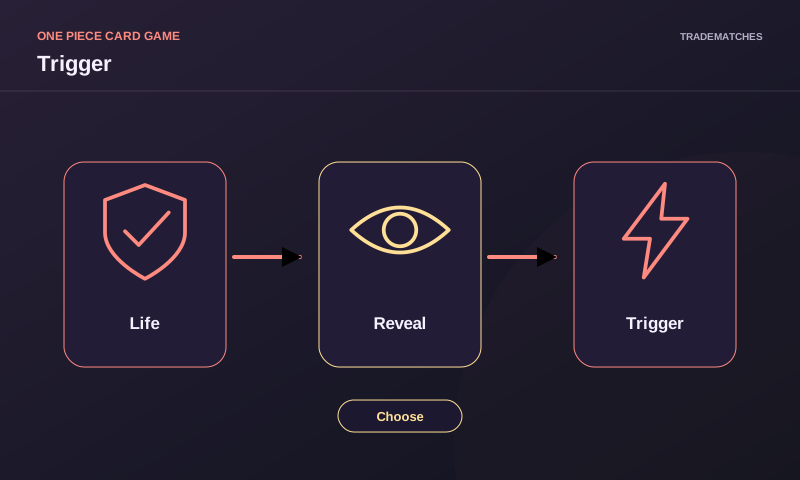
Damage to the Leader makes you take the top card of Life. If it has a Trigger, you can show it and resolve its instructions at that moment. It does not activate automatically just because the word is printed: the choice belongs to the player who loses Life and the card must leave through the indicated rule.
Choosing not to activate it is also valid
If the ability is not convenient for you or you cannot take advantage of it, you can choose not to reveal it and add the card to your hand. A Trigger that allows you to play a card or deal damage is resolved according to its exact text; not all do the same. Avoid explaining a card to the opponent before deciding whether you will activate it.
Attention to Banish
Banish changes what happens with the damaged Life card: it is sent to the Trash instead of being added to the hand and it does not activate its Trigger. For example, you cannot count on a Life surprise defense if the attacker has Banish. This interaction is different from the Counter you play from your hand before the damage.
When does the Trigger option appear?
Trigger is not a defense you announce when the opponent declares an attack. First, the battle is resolved: the opponent chooses a target, there may be a Block Step, the defender uses Counter if they want, and in the Damage Step, powers are compared. If the attack wins against the Leader and causes damage, then you take a Life card. That card can offer a Trigger. The temporary separation is important because you cannot wait to see which Life card comes out to decide later how much Counter to use in the battle that has already been resolved.
When looking at the top Life card, do not show it immediately. If it has a Trigger, read its text and decide whether you want to reveal it to activate the effect. The usual alternative is not activating that Trigger and adding the card to your hand without revealing it. If the card does not have a Trigger, follow the normal damage resolution and add it to your hand. The choice belongs to the player who loses that Life; the attacker cannot force you to use a ability just because it would be convenient for the card not to reach your hand.
The sequence of a Life card, step by step
First, confirm that the Leader actually receives damage. If a Blocker redirected the attack or the defender's power exceeded the attacker's, you do not reach the Life card taking of that battle. Second, take the corresponding card from the top of your Life area. Third, look at it privately and check if it has the Trigger label. Fourth, if it has it, choose between the activation as per its text and adding it to your hand. Fifth, fully resolve the chosen option before moving on to another Life card or the next battle.
In a learning table, it can help to announce "now I receive damage; I look at Life" and stop for a moment. It is not necessary to reveal a card to the opponent whose Trigger you decide not to activate. If you choose to activate it, show it when appropriate and follow its instructions literally. Some texts may include conditions or choices of their own. The name Trigger defines when the possibility opens, but it does not substitute the specific effect of the card. Read all its requirements before assuming it allows you to play a Character, remove a target, or gain power.
Activating the effect or keeping the card in the hand
The decision is not always "activating is better". Think what the card does now, what value it would have in your hand during the next turn, and what resources the effect needs. If the Trigger offers an immediate advantage that changes the table before another rival attack, it may be worth it. If its condition is not met, its result may not matter in this situation or you may need the card for your next play, it may be better to add it to your hand. The comparison must be made with the card's actual text and the current game.
Life functions here as a source of cards for the player who receives damage. Choosing not to activate Trigger means keeping that card as a hand resource without having to explain to the opponent why you wanted it. That hidden information can be useful. However, do not sacrifice a crucial defense just for imagining a perfect future turn: if the opponent is preparing more attacks or you are near losing, an immediate effect can be very valuable. The guide is to identify the specific problem each option solves, not to establish a universal priority for all Triggers.
When an effect causes two or more damages
The official manual indicates that, if the Leader receives two or more damages, the Life procedure is repeated for each unit of damage. Do not take two cards at once, reveal them together, and choose at the end. Resolve the first Life card, including its possible Trigger choice, before moving to the second. This keeps the table clear if the first effect changes something relevant. The order also avoids looking at a subsequent card before deciding what to do with the previous one.
Imagine that an attack with a multiple damage effect causes you to lose two Life cards. The first has a Trigger and you decide to activate it; follow its instructions. Then take the next Life card and check separately if it has a Trigger. If it does not, add it to your hand normally. If it also has a Trigger, make a new choice. Do not conclude that the first Trigger "covers" automatically both cards or that the second is forced to repeat the first choice. Each damage opens its own path according to the official sequence.
Banish: the exception that changes the fate of Life
Banish matters when the attack with that ability causes damage to the Leader. The corresponding Life card is sent to the Trash instead of being added to the hand and it cannot activate its Trigger. The result deprives the defender of the card as a resource and the possibility of obtaining the surprise effect of Trigger. Do not confuse this loss of Life with a regular attack that simply wins by power. Before the damage, you can still use the legal defensive options in their windows; once Banish is applied to Life, the usual choice between effect and hand does not appear.
If you see Banish on a rival attacker, check your defense before the Damage Step. A Counter that raises power above the attacker or a legal Blocker can prevent that specific attack from taking Life from the Leader. Do not assume Blocker or Counter guarantees a result: it depends on the final objective and the power comparison. Nor should you try to reveal a Life card with a Trigger after sending it to the Trash by Banish. The special rule has precisely changed how that card leaves the Life area.
Five examples with different decisions
1. Ordinary damage and a useful Trigger
Your Leader loses a Life card by a normal attack. You look at it and it has a Trigger. The effect can influence the table before the opponent uses another attacker, so you choose to reveal it and apply it. You do not need to have announced the Trigger at the beginning of the battle. You also do not go back to compare the attack's power since it has already been resolved: the effect opens as a consequence of the damage and is resolved in its own moment.
2. You prefer the card in the hand
The Leader receives damage, you look at the card and see a Trigger whose effect does not add much now. You can choose not to activate it and add the card to your hand without showing it. Later, you can use that card through its normal means if its rules allow it. Having had the option of Trigger does not require you to reveal it. The decision protects information and can prepare your next turn, but it does not eliminate the damage you have just received.
3. Two damages, two decisions
The opponent inflicts two damages. The first Life card shows a Trigger and you decide to use it; you complete the effect. The second Life card also has a Trigger, but this time you prefer to add it to your hand. You can make different decisions because the process is repeated for each damage. If the first card had not had a Trigger, you would have added it to your hand and then continued with the second. The order is part of the resolution, not an administrative detail.
4. Attack with Banish
The attacker has Banish and manages to cause damage to your Leader. The Life card you lose goes to the Trash, even if it had a Trigger that would have been valuable in an ordinary battle. Do not add it to your hand and do not resolve that Trigger. This example shows why it is important to identify Banish before deciding whether to use Counter: the cost of accepting the damage may be greater than the loss of a normal Life.
5. The Life area is empty
When there are no more Life cards, another damage to the Leader causes defeat according to the general rule. There is no hidden card from which a Trigger could save you. In this situation, useful decisions are before the damage: preventing the attack from winning, redirecting it when legal, or using a previous effect that changes the situation. Having a possible Life surprise without available Life cards is a planning error.
Common mistakes and how to avoid them
The first mistake is revealing the Life card before deciding whether to activate its Trigger. The second is treating activation as mandatory. The third is resolving two Life cards simultaneously when the damage is multiple. The fourth is trying to activate a Trigger from a card that Banish sent to the Trash. The fifth is using Trigger as if it were a Counter played before comparing power. Each of these is corrected by placing the card in the correct area and naming the step of the battle you are in.
A practical check consists of asking: "Did the Leader actually receive damage? How does this Life card leave? Does it have a Trigger? Do I want and can I use its text now?" If there is Banish, the second answer changes everything. If there is no Trigger, there is no choice to activate. If the card's text has a condition, read it before showing it by mistake. In tournaments, if a multiple damage or special text interaction is unclear, stop the sequence and consult a judge before moving the next Life card. Keeping the order is simpler than reconstructing it later.
Common Questions
Is it mandatory to activate Trigger?
No. If the card allows it, you can choose not to activate it and keep it in your hand.
Does Banish allow using the Trigger?
No. The rule specifies that the Life card sent to the Trash by Banish does not activate it.