Pokémon Prism Star cards: symbol, limits and discard
On this page
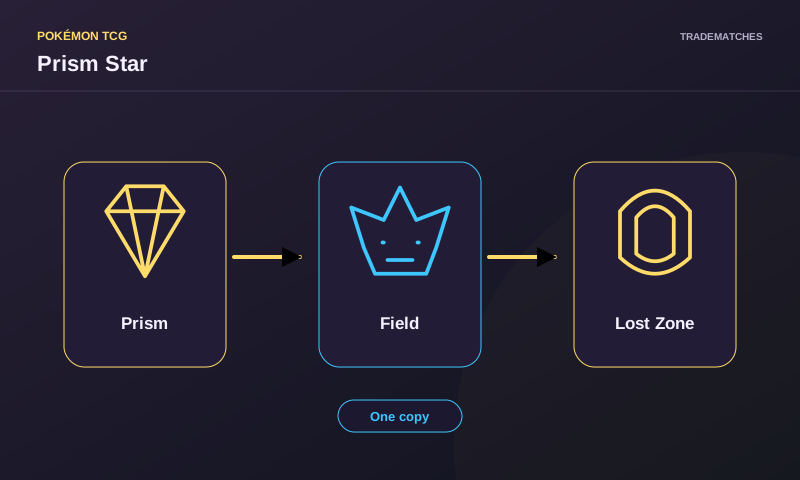
A Prism Star Pokémon card is identified by its diamond symbol and its printed Prism Star rule. You may include one Prism Star card of each name in a deck, so different names can coexist. If a Prism Star card would go to the discard pile, it goes to the Lost Zone instead. That is different from the single combined allowance for Radiant Pokémon or ACE SPEC cards.
Read the diamond with the complete name
The diamond is part of the identification of a Prism Star card. Do not confuse it with the ordinary diamond rarity symbol used on other Pokémon cards. Its placement by the name and the dedicated rule distinguish the category. A listing that says only “diamond rare” is too ambiguous to establish that you are buying a Prism Star.
The official introduction from Pokémon Japan shows the category through Pokémon, a Supporter and Special Energy examples. That breadth is important: Prism Star is not the name of a single Pokémon species, and it is not limited to creatures that attack. Read the entire card before assuming how it fits into a deck or collection.
For catalogue purposes, record the name including the diamond, the card type, expansion, number, language and finish. You can write “Prism Star” in a separate category column if your spreadsheet cannot display the symbol reliably. Keeping the category explicit avoids mixing it with an ordinary card whose species or character name looks similar.
One per name, not one across the family
The official Pokémon glossary describes the same-name restriction and the replacement of discard with the Lost Zone. A deck with one Solgaleo Prism Star and one Lunala Prism Star is not invalid merely because it contains two Prism Stars. A second copy of the same Prism Star name is the relevant construction problem.
Think of the deck check as a set of small counters. Each different Prism Star name has its own quantity, and each of those quantities must stay within one. This is a different model from adding all Radiants into one total. Labelling both categories simply “one-of cards” hides the distinction that decides whether a list is legal.
Suppose a collection contains two languages of the same Prism Star. You might correctly keep them in separate binder slots, but they remain copies of the same card for the name limit. Two languages, two artworks where applicable, or separate marketplace rows do not permit a second playing copy. The collection record and the construction record serve different purposes.
The card type still matters
A Prism Star Pokémon follows its Pokémon text and printed stage. A Prism Star Supporter is played as a Supporter with the relevant turn restrictions. A Prism Star Special Energy is an Energy card with its own effects. The common category does not turn all those cards into interchangeable resources or give them identical timing.
For example, Super Boost Energy Prism Star is a Special Energy card. Its effect must be read as an Energy effect, including the conditions printed on that specific card. Its diamond does not make it a Pokémon, and the restrictions of an Energy attachment still need to be considered separately.
Before buying a playset advertised as “Prism Star support”, list which names and types it actually contains. A group of four different useful cards may be a sensible collection lot; four copies of one name will not all fit into one deck under the Prism Star rule. Sellers can own and offer multiples without implying that those multiples constitute a legal deck package.
The discard replacement follows the card
When a Prism Star card would go to the discard pile, put it in the Lost Zone instead. This is a destination rule, not a choice to make after comparing recovery options. If an instruction discards the card, you do not put it in ordinary discard first and later move it when you notice the symbol.
Consider a hand-discard instruction that includes a Prism Star among the cards being discarded. Identify the special card while carrying out the instruction and place it in the correct destination. The fact that it was never played does not create an ordinary-discard exception. The practical point is to recognise the category in hidden-zone decisions as well as on the board.
If a Prism Star Pokémon is Knocked Out, its destination likewise needs this replacement. Separate any other cards attached to it and resolve their destinations individually. The Prism Star rule belongs to the Prism Star card; it does not automatically transform every attached Energy or Tool into a Prism Star or send an entire bundle to the same place.
Returning a card is a different operation
The special rule names the discard pile. It does not say that every movement of a Prism Star card must become a trip to the Lost Zone. An effect that returns an eligible card to the hand or shuffles it into the deck describes a different destination. Check that effect's permissions and the card involved instead of replacing every movement by intuition.
This distinction can change a play decision. If an available effect returns your own Pokémon to hand, you should evaluate that legal return separately from letting it be Knocked Out. The diamond tells you about the discard replacement; it does not tell you which other recovery or movement effects you have available in a particular format.
Once the card actually reaches the Lost Zone, ordinary discard recovery cannot retrieve it. Keep that explanation brief at the table: “this copy is in the Lost Zone, not discard.” If you want to study recovery and access in more depth, use the dedicated Lost Zone guide rather than treating Prism Star as a separate general rule for that zone.
| Situation | What to identify first |
|---|---|
| Two different Prism Star names in a list | Each name has its own one-copy limit |
| Two languages of the same Prism Star | They still share the same name limit |
| A Prism Star would be discarded from hand | Its discard destination is replaced |
| An eligible effect returns it to hand | Read the return effect; this is not discard |
| Other cards are attached to a Prism Star Pokémon | Resolve each card's destination separately |
Recognising the family in a collection
Use an official image to check the name symbol, the dedicated rule and the collector number together. A holographic field can help you compare the printing, but a photograph that catches only a rainbow reflection is not enough. It may hide exactly the text and symbol that resolve the identification question.
Create a collection target before filling a binder page. You could aim for one of each international Prism Star design, particular Pokémon, or copies from a chosen expansion and language. Those are different projects. Writing the target prevents a later purchase from quietly changing “one design” into “every language and printing” without a corresponding budget decision.
When buying a mixed older lot in Spain, ask for the actual cards rather than relying on a generic product image. Photograph the name and bottom number on any uncertain copy. A clear missing-list entry might specify “the Prism Star version, this expansion and number, Spanish, acceptable with light edge wear”. That is more actionable than asking for an unspecified rare Solgaleo.
Legality and value need separate checks
Prism Star belongs to an older era of the game. Recognising the category correctly does not establish current Standard eligibility. If a deck profile uses these cards, note when it was made and which format it addresses. For an organised event, consult the current format documentation and any restrictions before purchasing the card as a playable component.
The one-per-name rule also does not measure a card's market rarity. A construction restriction says how many copies you may use, not how many copies were printed or how much collectors must pay. Compare the exact printing and observed condition with comparable completed transactions where available. Do not infer an investment case from the diamond itself.
Frequently asked questions
Is the ordinary uncommon diamond the Prism Star symbol?
No. Identify the dedicated Prism Star category through the full name and printed rule. A normal rarity diamond alone does not give the card the Prism Star construction or destination rules.
Can I keep extra copies outside my playing deck?
Yes. Ownership is unrestricted by this construction rule. Extra copies can stay in your collection or trade stock; only the registered playing deck must respect the applicable allowance.
Does a Prism Star become recoverable if another card counts the Lost Zone?
Counting cards in a zone does not move them. A card that checks the Lost Zone total does not grant ordinary access to those copies or place them back in the discard pile.