When can you evolve a Pokémon in the TCG?
On this page
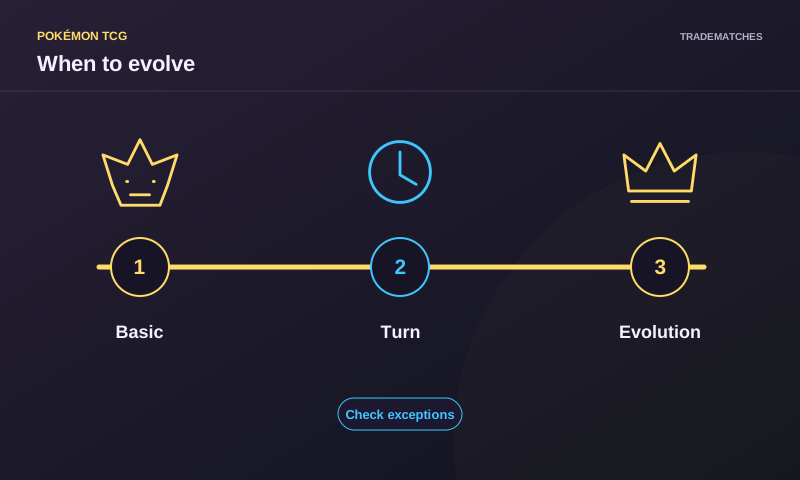
In the Pokémon TCG, you normally cannot evolve a Pokémon on the turn it enters play. You also cannot evolve on your first turn unless a card effect specifically allows an exception.
The timing test: was it in play at turn start?
To put a Stage 1 on a Basic Pokémon, that Basic normally needs to have been in play at the start of your turn. A Basic you bench from your hand now must wait. The test applies to Active and Benched Pokémon alike. Holding the evolution card does not change when you may play it.
One evolution per Pokémon per turn
An evolved Pokémon is treated as new in play for this timing rule. Usually you cannot put a Stage 2 straight onto the Stage 1 you played earlier in the same turn. You may evolve several different Pokémon if each one separately satisfies the timing condition.
Example and card-specific exceptions
If Pidgey was on your Bench when the turn began, you can evolve it into Pidgeotto this turn. A second Pidgey that you just benched must wait. An effect that explicitly permits earlier or different evolution can override the normal sequence, so read that card and the event's current rules.
A three-question test for any ordinary evolution
Before placing an Evolution card, ask three questions in order. Was the Pokémon you want to evolve already in play when your turn began? Does the Evolution card actually say that it evolves from that Pokémon? Have you already evolved this particular Pokémon during the current turn? If the answer to the first question is no, or to the third is yes, an ordinary evolution is unavailable. This test prevents a common mix-up: the number of turns an Evolution card has been in your hand is irrelevant. The important clock belongs to the Pokémon on the table.
Also check whose turn it is. Ordinary evolution is an action on your own turn before you attack; the opponent finishing a turn does not give you a chance to play an Evolution card in the middle of their turn. If you bench a Basic now and end your turn, it will normally be eligible during your next turn. The player who starts the game must still respect the rule against evolving during their own first turn, even when the Basic Pokémon was part of the initial setup. Time in play and the first-turn restriction are separate checks.
Active Pokémon, Benched Pokémon and entry time
Being Active gives no special privilege, and being on the Bench creates no extra delay. A Basic that was on your Bench at the start of your turn can normally evolve there; a Basic that started the turn Active can normally evolve in the Active Spot. Moving between those positions does not by itself change the timing test. By contrast, a Basic you put from your hand onto the Bench during this turn cannot ordinarily evolve merely because you have an empty Bench space or attached Energy to it. Each Pokémon has its own history, so examine each one independently.
Suppose two Pidgey were on your Bench when the turn started and you bench a third Pidgey now. With three Pidgeotto in hand, you may normally evolve the first two but must wait on the third. There is no general limit of one Evolution card for your entire side of the field in a turn. You may evolve different eligible Pokémon, one after another. The relevant limit is on evolving the same Pokémon again that turn through the ordinary process. Keeping those two ideas separate helps you plan whether to hold or play extra Evolution cards.
From Basic to Stage 1 and from Stage 1 to Stage 2
The card you intend to play identifies the Pokémon it evolves from. A Stage 1 goes on the named Basic, and a Stage 2 goes on the named Stage 1. Similar artwork, a shared Energy type or an obvious family resemblance is not a substitute for the printed evolution line. Read the “Evolves from” field on the upper card. When you use cards from different eras or languages, check the card names and the format's legality before an event rather than relying on the illustration.
Now suppose Pidgey was already in play at the beginning of your turn and you evolve it into Pidgeotto. The pile is a Pidgeotto that evolved this turn. Even if Pidgeot is already in your hand, you cannot ordinarily add that second Evolution card immediately to the same pile. If Pidgeotto stays in play, your following turn may be the first ordinary opportunity to play Pidgeot. This delay is why a deck built around Stage 2 Pokémon often needs to place its Basics early, then protect or replace them while the line develops.
Four table situations that cause timing mistakes
1. Your Basic was placed during setup
It has been in play since the game began, but the first-turn restriction still applies to each player. Your opponent playing first does not remove that restriction from your first turn. On your second turn, if the Basic remains in play and the correct Evolution card is available, ordinary evolution can be legal. Ask both “how long has this Pokémon been here?” and “is this my first turn?” A yes to the first question does not cancel the second rule.
2. You bench a Basic and search for its Evolution
A Trainer card might find the Stage 1 you need on the very turn you benched the Basic. Finding the card does not itself allow you to play it right away. Keep it for a later turn if the search effect permits, or use another card that explicitly gives an earlier evolution option. The steps “search,” “reveal,” “put into hand” and “evolve” are different instructions. Do not read a permission into an effect that does not actually contain it.
3. You evolve several Pokémon
If three Basics were already in play when your turn began, you may evolve all three if you hold matching cards and no other effect restricts them. After each play, keep the new top card visible so both players can identify the current Pokémon, its HP and available attacks. In a crowded game state, a simple reminder of which piles evolved this turn can prevent an accidental second evolution. The reminder is a convenience; the rulebook and actual game state remain the authority.
4. A card appears to bypass the wait
Some cards contain specific instructions that modify the ordinary rule. The exact wording matters. An effect may search for an Evolution, put one directly onto a Pokémon, or explicitly allow an evolution at an otherwise prohibited time. Read every condition and check whether the card is legal in the format you are playing. An exception on one card is not a global rule for all Evolution cards. Apply it only to the Pokémon and timing that the card describes.
Ordinary evolution versus another card's effect
If a card specifically permits you to evolve a Pokémon that just entered play, follow that card's stated condition. If it only finds an Evolution card or reveals one, the normal requirements for playing that card may still apply. This difference comes up with older cards, starter products and casual formats, where wording may look unfamiliar. Before building a deck around an exception, check both the card's current official text and the event's format. A legal casual interaction is not automatically available in Standard play.
How the Evolution card reaches the field can matter for other effects as well. Wording such as “when you play this card from your hand to evolve” may not operate in the same way as an effect that places a card directly from the deck. First establish whether an ordinary evolution is allowed; then read the additional effect's own conditions. Do not infer those conditions just because both actions result in an evolved Pokémon. If a sequence remains unclear, note the exact cards, timing and zones involved, then consult an official ruling or a judge.
What evolving changes—and what it does not answer
After evolution, the new card sits on top of the pile and defines the current Pokémon. The old card does not disappear as though you replaced the whole pile with a new Basic. Attached cards and damage counters remain according to the rulebook, while Special Conditions and certain effects on the Pokémon end. If your question concerns damage, Energy or a condition such as Paralysis, resolve it separately from “may I evolve right now?” Mixing the timing question with the state-change question is an easy way to reach the wrong answer.
Evolution also does not automatically let the Pokémon use attacks printed on cards underneath the top card. Look at the current top card for its attacks and Abilities unless another effect states otherwise. Check its HP before you proceed: existing damage remains, but the maximum HP on the new card may differ. That check matters if the Pokémon was close to being Knocked Out. Evolution can open tactical options and clear conditions, yet it does not erase every part of the earlier game state.
Planning the next turn around evolution
When you bench a Basic, work out the earliest turn on which you could ordinarily evolve it and what it must survive until then. You need not commit to a specific Evolution card immediately; keeping a realistic path is enough. If the opponent can easily Knock Out that Basic before your next turn, consider preparing another copy or protecting the first. An Evolution card in hand has value only when you have a legal target at the right time, not merely because you drew it.
In a learning game, saying “this Pidgey entered play now; it must wait” and visually separating newer Basics from older ones can prevent mistakes. At a competitive event, pay particular attention to Pokémon put into play by effects during the turn; not every Pokémon on the Bench arrived at the same time. If you cannot recall when one appeared, reconstruct the sequence with your opponent before making another action. A clear table state makes the game faster and reduces the need to rewind an illegal evolution.
Frequently asked questions
Can a Benched Pokémon evolve?
Yes. The Bench does not stop evolution; the key is when that Pokémon entered play.
Can I normally evolve during my opponent's first turn?
No. Normal evolution is a play on your turn; only a specific effect may change the timing.
Checked sources
Alongside evolution, check what the first turn allows and when Bench Abilities work.