Can you attack on the first turn in Pokémon TCG?
On this page
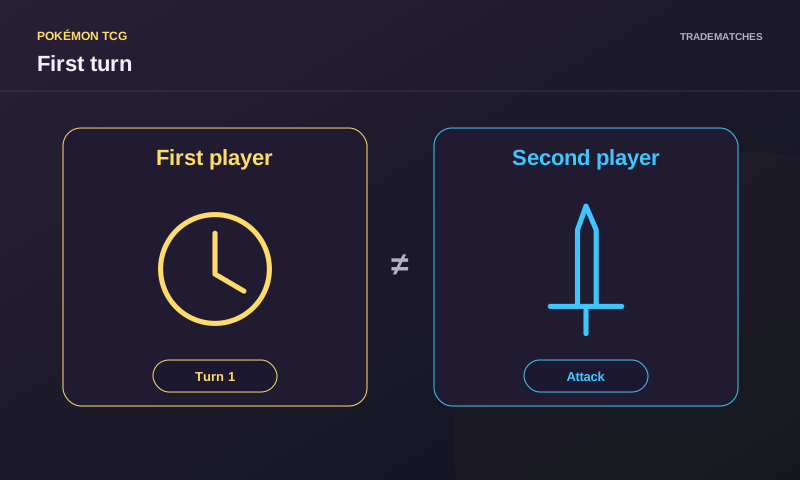
In the Physical Pokémon TCG, the player who starts cannot attack on their first turn. The player who goes second can attack on their first turn, provided their Active Pokémon meets the cost and any conditions specified by the attack. Starting also does not allow playing a Supporter during that first turn. These two restrictions do not make the initial turn an empty one: you can still prepare your Bench, attach Energy, use certain Trainer cards and Abilities, and play other allowed cards.
The answer depends on who has the first turn
"My first turn" can refer to two distinct moments. The player who wins the choice and begins the game takes the first turn of the entire match. Their attack step is skipped. The other player then takes their own first turn and, at that point, can attack. This difference explains why two players using the same Pokémon and the same Energy receive different answers to the question "Can I attack now?"
Imagine both players have an Active Pokémon with an attack that costs one Energy. If Player A starts, they can attach Energy during their first turn, but cannot declare that attack at the end of their other actions. Player B draws at the start of their turn, attaches Energy if they have it, and can then declare their attack. The cost does not nullify the restriction on Player A nor guarantees by itself that Player B can attack: you must also check the attack's text and any effects that might prevent its use.
Preparation occurs before the initial turn
The rules start with a 60-card deck per player. After determining who starts, each player shuffles, draws seven cards, and places a Basic Pokémon as Active, face down. They may place up to five additional Basic Pokémon on the Bench. Then, each player separates six cards from the top of their own deck, also face down, as Prize cards. Both players reveal their initial Pokémon and the game begins. If a hand does not contain a Basic Pokémon, the mulligan procedure applies before reaching this point.
These preparation actions are not part of the first turn. For example, placing a Basic Pokémon on the Active Spot during preparation does not count as an attack by that Pokémon nor consumes an Energy attachment. It also does not mean that the start-of-turn card has already been drawn. Separating preparation from turns avoids skipping the first draw or allowing an attack because "the Pokémon has been on the table for a while." The restriction refers to turn order, not the physical time the card is exposed.
What can the first player do?
Their turn begins with drawing a card. After that, they can develop their board within normal rules: move Basic Pokémon to free Bench spaces, normally attach Energy from their hand, play allowed Trainer cards, and use abilities when their text permits. They may also consider retreating their Active Pokémon if they can pay the cost and there is no restriction preventing it. All of this occurs before ending the turn without attacking.
The word "can" matters. The player is not required to place a Basic Pokémon on the Bench or attach Energy simply because they drew cards. A useful decision is to ask: what Pokémon needs resources for the next turn and what options do I want to keep in my hand? If there are multiple Basic Pokémon, filling the entire Bench automatically may leave less space for another Pokémon to be drawn later. If the card needed has a specific condition, read that condition first: a general description of the first turn does not replace the card's actual text.
Supporters and other Trainers do not share the same restriction
The player who starts cannot play a Supporter during their first turn. The rule names that type of card; it does not say all Trainers are forbidden. An Item, a Stadium, or a Pokémon Tool is governed by the rules of its type and by its text. That's why, when reviewing your initial hand, it's wise to categorize the cards before deciding what is available. The blog post on Trainer types explains the differences in usage among these categories.
The player who goes second can play a Supporter on their first turn, as long as the normal rules of the type and any applicable conditions are met. This gives rise to a real strategic decision: going second may facilitate a plan that requires searching for cards or drawing before the first attack. Going first allows earlier preparation of the board and Energy. Neither position guarantees an advantage if the hand doesn't support it. The rule offers different options; the deck and the situation decide which is appropriate.
When can the second player attack?
On the first turn of Player B, after drawing a card and completing any actions they wish, the possibility arises to attack with their Active Pokémon. To declare an attack, the player must meet the Energy cost indicated and any conditions written on the card or created by effects in play. If the required Energy symbol is missing, simply being the second player is not enough. If the attack has a cost that is covered, Player B may choose to use it; attacking ends their turn after resolving the corresponding effect.
Suppose the Active Pokémon of Player B has two attacks: one requires one Energy and the other requires two. If Player B attaches only one Energy during their turn and there are no other effects, they can choose the first attack but not the second. If the first attack's text includes an additional requirement, that requirement must also be satisfied. This example shows why "the second player can attack" describes a turn-authorization, not permission to ignore costs. The check always proceeds from general to specific: turn, Active Pokémon, cost, and text.
An attack with zero cost remains an attack
Some attacks carry a zero-cost symbol and do not require Energy to be used. This does not allow the starting player to attack on their first turn. The restriction applies to the action of attacking, regardless of the printed cost. The second player could use a zero-cost attack on their first turn if no other condition prevents it. Do not confuse "I can pay the cost" with "the game sequence allows this action."
This distinction is useful when testing a deck list. If a Basic Pokémon offers a zero-cost attack, it can be a viable option for the second player without depending on immediately drawing Energy. If the plan relies on using it when the first player starts, the plan fails under the general rule. A specific card might create an exception, but it's not advisable to invent one from memory: read the current text and verify exactly what it modifies. An effect that helps pay a cost does not necessarily eliminate the prohibition against the first attack.
Abilities are not attacks
The rules distinguish Abilities from attacks and allow using Abilities from both Active and Bench Pokémon, subject to their text and any in-play effects. Therefore, the player who starts can take advantage of a legal Ability even if they cannot attack afterward. Likewise, using an Ability during a later turn does not consume the attack of that turn. The key is to check when it is used, what it requires, and whether any card prevents its use.
As an example without relying on a specific card, imagine an Ability whose text allows performing an action during your turn. If the Pokémon is on the Bench and the Ability does not require being Active, the Bench position alone does not block it. Declare the Ability, pay any indicated cost, and resolve its instructions. Then continue the turn. If you are the starting player on your first turn, you still cannot attack; if you go second and your Active Pokémon meets the requirements, you might still be able to attack. These two facts do not contradict each other.
Evolution has another limitation in early turns
No player can evolve a Pokémon on their own first turn under the general rule, except when a card provides an exception. A player also cannot evolve a Pokémon normally in the same turn it enters play. These are separate limits from the prohibition against the starting player attacking. The player who goes second can attack on their first turn, but that does not grant permission to evolve during that turn. If Player B just placed a Basic Pokémon on their Bench, they still cannot evolve it immediately under normal procedures.
This detail changes exit plans. If you build a deck with an evolution as a central piece, do not assume that choosing to go second will allow you to evolve before the first attack. You can use that turn to place the Basic Pokémon and gather resources, while applying evolution rules in the appropriate subsequent turn. The existing guide on when a Pokémon can evolve develops these conditions in more detail; here it is sufficient to not mix "I can attack" with "I can evolve" into a single decision.
Example sequence with two players
Player A wins the choice and decides to start. During preparation, both players place their Active Pokémon, possible Pokémon on the Bench, and six Prize cards. Player A begins their first turn by drawing a card. They place an additional Basic Pokémon on the Bench, attach Energy to their Active Pokémon, use a legal Ability whose text allows using it at that moment, and play a legal Item. They have an attack whose cost could be covered, but do not declare it—starting players cannot attack on their first turn. They also do not play their Supporter from hand. Player A ends their turn.
Player B begins their first turn by drawing a card. They can place Basic Pokémon on the Bench, attach Energy, and play a Supporter if they wish and it is legal. They check the cost of their attack and any possible effect that might restrict it. If everything fits, they declare the attack with their Active Pokémon and resolve it; then they end their turn. If they do not have sufficient Energy, they may end their turn without attacking. The sequence does not guarantee that every first turn of the second player results in damage—it only shows why the possibility of attacking exists. An attack that does not deal damage is still an attack and must follow its instructions.
Choosing to start or go second with purpose
Before deciding, look at what your deck requires in the first sequence. If you need a Supporter to find a piece and want an early attack to benefit from that search, going second may provide both opportunities in your first turn. If you value placing resources before receiving the first attack and your plan does not depend on immediate attacks, starting may be reasonable. There are games where your opponent, your deck, or your starting hand change the evaluation; avoid turning a preference into a universal rule.
Practice with simulated hands. Place seven cards, an Active Pokémon, and the Prize cards; first imagine you start, then imagine you go second. Note what actions are available in each case without adding hypothetical cards to your hand. This simple test shows whether your deck needs more Basic Pokémon, accessible-cost attacks, or cards that help prepare the board. It also avoids justifying a choice based on an attack that the starting player cannot use. The goal is not to predict the entire game, but to understand what truly changes during the initial turn.
Common mistakes and on-table verification
The most common error is thinking that attaching Energy alone authorizes the starting player to attack. Another is believing all Trainers are forbidden, when the first-turn rule specifically mentions Supporters. People also confuse an Ability with an attack, allow evolution on the second player's first turn, or forget to draw the initial card. Each mistake arises from mixing rules from different moments. It is corrected by following a fixed sequence rather than relying on intuition.
Before declaring an attack on a first turn, check four things: who started the game; whether the Pokémon attacking is in the Active Spot; whether the Energy cost is covered; and whether the attack's text and in-play effects allow using it. If the player who started is still on their first turn, the first question already resolves the issue. If it's the second player, proceed to the others. In an organized game, when interaction depends on a poorly clear printed exception, show the card and consult the rules or the judge rather than resolving it from memory.
Frequently Asked Questions
Can the player who starts use a zero-cost attack?
No during their first turn. A zero-cost attack eliminates the Energy requirement for that attack, but it does not modify the prohibition against the starting player attacking.
Can the player who goes second play a Supporter and attack?
Yes, if the Supporter is legal and the Active Pokémon meets the attack's requirements. Playing a Supporter is not the same as attacking.
Can I use an Ability and then attack?
Normally yes, on a turn when attacking is permitted: an Ability is not an attack. Always check the text of that Ability and any effect that limits its use.