PSA signed cards: authentication or Dual Grading?
On this page
For a signed card, PSA can assess different questions: whether the autograph is genuine, the quality of the signature, and the condition of the card. Dual Grading combines card and autograph evaluation with separate grading options. Decide what you want documented and check that the signer and item are eligible before submitting. An “Auto 10” does not mean the card itself received a ten.
The card and signature are separate assessments
A card can have worn corners and a sharp signature. It can also be in excellent condition with an autograph that has faded or is difficult to see against the artwork. Those situations explain why reading only the highest number on a label is insufficient. Establish which element each result describes and which service was used to obtain it.
Authentication addresses genuineness; grading adds an assessment of quality or condition under the applicable scale. PSA offers autograph authentication through its own examination process. Do not turn a signature certification into a numerical condition grade for the card carrying it. The autograph and its support occupy the same physical object, but their results are not interchangeable.
For a TCG collection, first distinguish a handwritten addition from a printed reproduction. An artist’s name in a card’s illustration credit is not an autograph. A signature reproduced within an edition’s original design is not automatically one either. Identifying what you have prevents you from requesting handwritten-ink authentication for something that belongs to the original printed card.
What Dual Grading adds
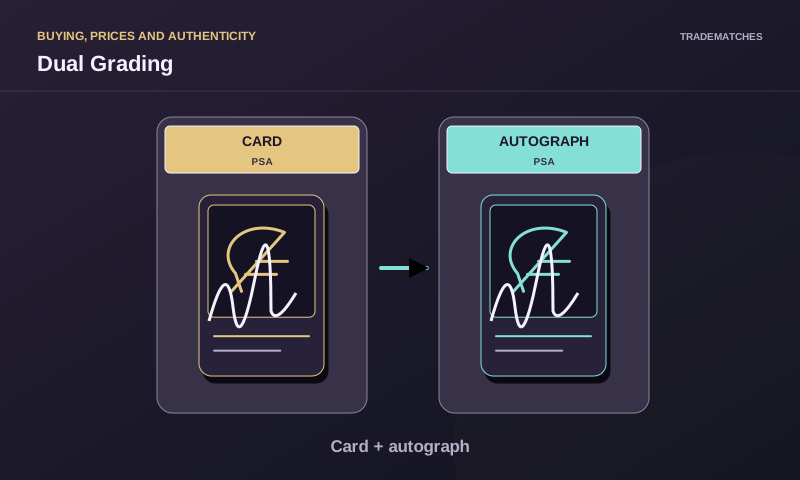
The PSA Dual Grading description combines autograph authentication with card assessment. The signature is examined first, followed by the item, and the service offers options for displaying the relevant grades on the label. Check the choices in the current submission process: specify the scope you want rather than merely writing “signed card” on a generic request.
| Result or label wording | What it establishes | What it does not establish |
|---|---|---|
| Authenticated autograph | Assessment of signature authenticity | A card condition grade |
| Auto 10 | The autograph’s grade | A PSA 10 card |
| Card 8 and Auto 10 | Two separate results | An averaged grade of nine |
| Authentic without a number for an element | Authentication under the selected service | A hidden numerical grade |
“Card 8 and Auto 10” is an illustrative example. It does not identify an actual collectible or predict the combination your submission will receive. It helps you read a label and write an accurate listing. Do not average the card and autograph grades or use only the higher number to describe the condition of the whole item.
If your main interest is establishing who signed a worn card, you may not need a numerical card grade. If you want to compare both card and autograph condition with other items, dual assessment may offer useful information. Your choice depends on the objective, eligibility and current options, rather than an assumption that additional numbers always increase market value.
Check the signer before preparing a submission
Do not assume every signature by an illustrator, player or creator will be accepted. Identify the full name, item and inscription type. Check PSA’s current eligibility and autograph information; if you cannot locate the signer, enquire before buying the service. The PSA terms contain admission limits for certain autographs and conditions of preservation.
An initial, nickname or abbreviated flourish may make the identification you supply more difficult. Do not fill gaps by inventing an attribution. If you attended a signing, retain the advertised signer’s name and event information. If you bought the card already signed, distinguish your observations from the seller’s account and retain that documentation as background.
Eligibility is not a positive authentication result. PSA examining signatures by a particular person does not establish that your example is theirs. Similarly, a photograph of a signing table may supply context without uniquely identifying your card. Describe your evidence accurately and avoid presenting a personal memory as if a professional certificate had already been issued.
Read the complete label and certification record
Read the card name, set, variant, signer and result fields separately. Then check the certification number with PSA and compare its record with the item shown. A cropped photograph displaying only “10” cannot tell you what was graded. Request the full label and both sides when assessing a signed card offered remotely.
If you see “Authentic”, determine which element it refers to. Do not infer a card condition grade or the highest autograph grade. The scope depends on the service and specific label. If the record leaves that unclear, obtain further documentation before describing the item as having two numerical grades.
Use separate inventory fields for card result, autograph result and certification number. Add the signer’s identity and any visible personal inscription. A dedication is part of your particular example’s description, even when other collectors own the same card name and number. These details distinguish items without turning personal preferences into unsupported price claims.
When comparing two listings, ensure their labels cover the same things. A card with an authenticated autograph but no numerical card grade is not directly equivalent to an example graded for both. You can prefer either one, but the preference should follow what you actually collect. A single prominent number is an inadequate shortcut for that decision.
What can affect the autograph’s appearance
PSA’s autograph grading guide considers presentation and the characteristics of the support. A dark signature against dark artwork may be less visible, and modern card surfaces can matter to the assessment. This does not let you predict a grade from a photograph or treat every foil and textured surface as equivalent.
Before a signing, decide whether you want a personal inscription and where you would prefer it placed. Communicate clearly and respect the event’s arrangements. Choose the card for the result you want to keep, rather than a promised future grade. A dedication may be your favourite feature even if another collector prefers unpersonalised examples.
After signing, avoid rubbing the area and follow applicable instructions for the material before storing it. There is no universal drying time for all markers and card surfaces that this guide can assign. When protecting the item, check that the sleeve and insertion method will not drag across the ink or require you to touch the autograph.
Do not retrace a signature to make it stronger or erase a dedication before submission. Authentication and condition are different questions, and intervention can affect the autograph’s evaluation. Document a subtle or personalised signature as it exists. An attempt to improve its appearance may remove the very information you intended to preserve and authenticate.
Prepare a submission that describes the item properly
Photograph the front, back, signature and additional writing in light that makes them readable. Record the exact card identification and attributed signer. Keep event photographs, receipts and purchase information separately. They help describe the object and check it on return; they do not replace authentication or guarantee that PSA will reach your conclusion.
Choose explicitly what you want authenticated and what you want graded. With an intermediary, ask them to confirm the submission options, who submits the order and which documentation you will receive. Avoid an ambiguous order advertising “signature grading” when you also expect a card grade. The quotation should identify the actual service and the item you hand over.
Calculate the complete journey, including transport, protection in transit and applicable costs. Consult current fees and estimates rather than recycling old figures. Personal usefulness does not require a profit forecast: a signed card can have sentimental value even when assessment does not improve its commercial appeal. Decide what information the service supplies and what you are willing to pay for it.
Before dispatch, confirm how the chosen service wants the item packaged. Protecting a signed card involves the inscription as well as the corners and edges. Do not improvise a display frame or add material that must be removed in contact with the signature. Keep your pre-submission photographs and order details available for comparison when the item returns.
Collecting signatures and playing the card
An authenticated autograph does not automatically make a card permitted in a tournament. Readability, condition and game or event policy are separate from PSA’s examination. If you intend to continue playing the item, consult the applicable rules and organiser before bringing it to competition. Encapsulation also changes how the object can be handled as a game card.
For sale or trade, describe the actual results: card, its grade if any, autograph, its grade if any, and certification. Identify visible dedications and provide enough photographs to recognise the example. Do not simply advertise “PSA 10” when the ten belongs only to the autograph. Precision prevents another collector from attributing an assessment to the card that it never received.
Keep a distinction between the signing story and the certified information. You can explain that you obtained a card at a particular event while stating separately what PSA’s record confirms. That lets the next collector appreciate the personal history without confusing an event memory with the technical scope of authentication. It also preserves context if you later reorganise your collection.
Frequently asked questions
Does Auto 10 mean the card is perfect?
No. Auto identifies the autograph grade. The card may have another grade or no numerical condition grade, depending on the service. Read the full label and certification record before interpreting a ten as an assessment of the entire item.
Is a card signed by its illustrator always eligible?
Do not assume so. Check the signer, eligibility and available service before submitting. Admission for examination does not guarantee positive authentication. If the name is absent from the relevant information or the inscription is unclear, contact PSA with an accurate identification of the object.
Do I need both grades to collect autographs?
That depends on the information you want. Establishing signature authenticity and comparing numerical card and autograph condition are different objectives. Choose the options that cover them and verify their scope in the current submission process, without assuming broader assessment guarantees a higher resale value.