Riftbound Equip: attaching and keeping Equipment
On this page
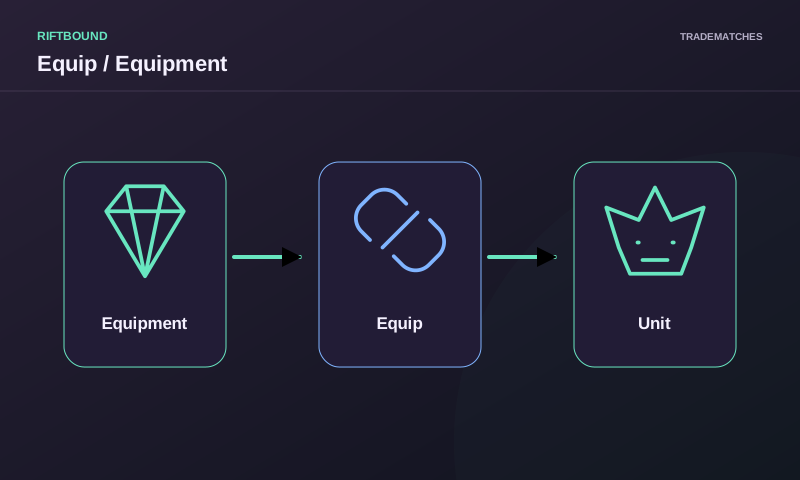
In Riftbound, playing Equipment and equipping it are different actions. You usually play Gear to your Base and then activate Equip by paying its cost to attach to a unit you control. If the equipped unit leaves the board, you retain the equipment according to the rules for detachment and location. It does not automatically go to the Trash alongside the unit.
Gear and Equipment are not identical words
Gear is a type of card; Equipment is a tag a Gear card can have. A Gear card without that tag doesn't get Equip just because its illustration looks like a weapon. Cards with Equipment can display rules text and bonuses that become relevant when attached. Check its type and abilities before looking for a combination.
To prepare a deck, distinguish the effects that check for Gear from those that require Equipment or an equipped unit. One card can meet one of those criteria and not another. Nor does a strong unit count as equipped because it receives a bonus from another source. The label and the state of attachment must really exist.
First you pay to play the card
The normal play procedure takes the Gear to the Base and applies its cost and timing. Entering as Gear does not mean it is already attached to a unit. If its effect needs to be equipped, you must then complete an action or effect that produces that attachment. Don't add its bonus to a unit just by placing it close to it.
Keep unattached Gear clearly separate from units. This allows you to know which text is working and what actions are available. A layout suggesting a non-existent attachment can influence the opponent's decisions. When equipped, announce the unit and place the cards so that the relationship becomes visible.
Equip has its own cost
The ability appears as Equip followed by its cost. To activate it, you pay whatever it says and choose a unit that you control that can be a valid target. That cost may include resources and other requirements. Paying the cost to play the card does not also pay its Equip cost.
Imagine a Gear with play cost and a different Equip cost. In a turn with limited resources you may be able to play it and not equip it yet. If your strategy requires the bonus immediately, count both payments before starting. Do not assume that the second is always smaller or that it uses the same symbols as the first.
Opponents can respond to Equip
Equip is an activated ability and the chosen unit is a target according to the rules. The activation and resolution should follow the chain procedure. If the situation changes between the two moments, the legality of what it tries to resolve must be checked. Physically joining the cards before giving the response opportunities can confuse that sequence.
Suppose you choose a unit and the opponent responds with an effect that removes it from the board. The ability cannot treat it as if it were still there. For the exact result, apply the target rules and Equip instructions. Do not automatically refund costs or choose another unit outside the procedure without a rule or effect.
Which text becomes active when attached
Riftbound distinguishes active and inactive text in these cards. The Might bonus and the effect text of the attachment frame are not applied the same before and after equipping. Rules text that becomes inactive cannot be used as if the Equipment remained unattached. See how the text of the specific card is distributed.
Inactive text can still be information another effect checks. Some effects may relate to characteristics or costs that remain information on the card. The difference is between using an inactive ability and allowing another effect to check a piece of information. Do not simplify both cases as "that half disappears".
You cannot re-equip freely from another unit
In ordinary operation, the Equip text remains inactive while the card is attached, so you cannot activate it again to move the Equipment to another unit. You need to detach it or use a specific effect that authorizes the new attachment. This avoids interpreting Equip as a permanent transfer ability available at any time.
Effects such as Weaponmaster can provide a specific procedure and check the cost even if the equipment is already attached. That permission comes from the effect that grants it. Do not extend that exception to all Equipment or any movement between battlefields. Read which Equipment you can choose, which unit you attach to, and what cost you should pay.
Quick-Draw changes playing from the hand
Quick-Draw allows you to play the Equipment with Reaction timing and attach it through its play effect, without making the ordinary payment of Equip for that attachment. It does not automatically convert the subsequent activation of Equip into a Reaction. The keyword modifies the permission to play from the hand and the effect that accompanies that entry.
If you want to surprise the opponent during combat, identify what cost you pay to play the card and how its attachment is resolved. The bonus should only apply when the equipment is legally linked. If it later becomes unattached and you want to equip it again, check its Equip ability and timing restrictions again; do not indefinitely retain Quick-Draw's initial permission for another action.
When the unit dies or leaves the board
The equipment does not automatically follow its equipped unit to the Trash. The rules provide for you to keep the Gear and detach it. Then it matters where it is left: unattached non-Unit Gear that is in a battlefield can be returned to the Base through the relevant Cleanup correction. Don't leave Gear in a location it cannot remain just because its carrier had just been there.
To play with it again, check that its text is active and that you can pay for another legal activation of Equip. Having used it before does not permanently consume the card, but also does not grant a free attachment to the next unit. This continuity can make equipment valuable in long games, as long as you count its cost and the necessary windows.
Movement with an equipped unit
When rules and effects move an equipped unit, the attachment relationship and location of the Gear must follow the corresponding procedure. Do not treat the equipment as an independent Gear that stays at the Base while its bonus magically accompanies the unit. The physical layout must reflect where it is and to what it is attached.
You should also check for any effect that only acts on a battlefield or requires a unit to be equipped. If the equipment is separated before resolving, a condition may cease to be met. Maintain the visible state of attachment; it is not enough to remember that "I equipped it two turns ago".
Evaluate Equipment before looking for it
Add play costs and possible activations needed during your plan. Compare what it contributes while attached and how many units can benefit from it. A powerful card that you cannot equip in time can stay inactive while you need to develop the battlefield. A premium version does not improve that sequence: the game text and collection preference should be valued separately.
Calculate the benefit of an equipped unit
Before counting a combat bonus, identify the text made active by attachment and confirm that the same unit is still receiving it. Unattached Equipment on the board does not automatically give any unit the benefit described for its wearer. Nor does an attachment-dependent bonus remain on a unit after that unit leaves.
To evaluate a purchase, compare two sequences: playing the Gear and equipping it normally, or using Quick-Draw when the card has it and its trigger applies. Count the resources and windows required for each. If you can only afford to play the Gear, note which turn the benefit will actually become available. This lets you compare an immediate improvement with a future setup, rather than valuing the strongest text as though it were always active. Repeat the test assuming the chosen unit disappears. The cost and vulnerability of that investment also matter when deciding whether it suits your deck.
Frequently asked questions
Does paying to play Gear also pay for Equip?
Not in the ordinary procedure. Playing Gear and activating Equip require separate payments unless a rule or effect provides another attachment procedure.
Is Equipment trashed when its unit dies?
Not automatically. Follow the separation and location rules; normally you retain Gear and you can use it again by legal permission.
Does Quick-Draw always allow you to equip with Reaction timing?
No. It changes the permission to play that card and attach it as it enters. It does not itself modify the timing of future Equip activations.