Riftbound Rune Deck: prepare 12 separate cards
On this page
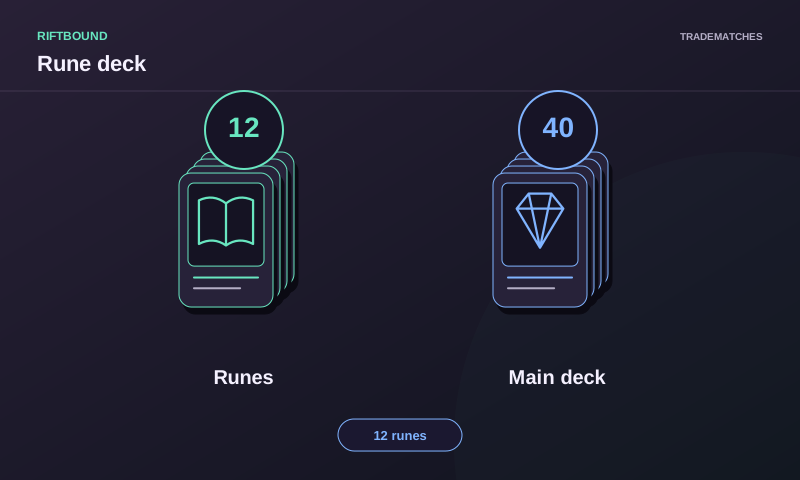
The Rune Deck is a separate pile from the Main Deck. In official constructed play, 12 runes are registered; their mixing should help pay for the domains of your Legend.
Count and separate the piles
Do not place the runes among the 40 cards of the Main Deck in constructed play. Tournament rules require registering 12 runes, as well as the battlefields and the Legend. Before playing, check that your runes belong to the allowed domains and are in their own Rune Deck, identifiable with appropriate sleeves.
Exhausting does not equate to recycling
Runes produce resources in two distinct ways. Exhausting them temporarily uses them for normal costs; recycling them returns them to the Rune Deck to pay for specific power costs. If an effect asks to recycle, it is not enough to turn the card over. This difference explains why a seemingly cheap card may require the appropriate domain.
Adjust the proportion according to your costs
The official guide suggests 6-6 as a starting point for a two-domain Legend and shows that an 8-4 may make sense if a domain demands more power. It is not a mandatory proportion. Review the cards you actually plan to play, try games, and change the runes that go unused.
Two decks that never should be mixed
The first check for playing Riftbound constructed is to separate the Main Deck from the Rune Deck. The Main Deck contains the game cards you draw to develop your plan; the runes form a separate resource pile. In the tournament setup indicated by the official rules, 40 main cards and 12 runes are registered. Counting 52 cards together and shuffling them as if they were a single deck alters the functioning of the game. The Legend, the chosen Champion, and the battlefields are prepared according to their own zones and requirements, not to compensate for the lack of runes.
Physically place each pile in an identifiable area before starting. If both decks use similar sleeves, a clear separation avoids picking the wrong pile when the turn is fast. When reviewing a digital list, look for the Rune Deck section and check that you are not interpreting cards from the Main Deck as runes when they mention resources in their text. The category and zone matter more than the word "rune" you remember from a description.
Why exactly the 12 runes matter
The number defines the size of the resource deck in the constructed format this guide refers to. If you register 11, one is missing; if you register 13, one is extra. Do not solve the problem by taking a card from the Main Deck: it would change two controls at once, and the card moved may not be a rune. Review the event list before leaving home and count the physical cards separately. A correctly annotated list does not save you if you left a rune in another box or next to exchange cards.
The total number does not alone decide a good distribution. The runes you choose must support the domains and the costs of the cards you are playing. If your strategy frequently needs a certain type of resource, an arbitrary mix may delay those plays even with the 12 cards present. Before buying a special version of a rune, test the distribution with a functional deck. The aesthetics of a resource card and its utility for paying are different questions; neither changes the size requirement.
How they relate to the Legend
Your Legend defines the domains of the deck. The composition of runes must be reviewed alongside the rest of the list, not at the end as an accessory. If you copy the main cards from a recipe and choose runes at random, you may not be able to reliably pay costs. Note the symbols or requirements of the cards you most want to play and check that the Rune Deck supports them. It is not enough for the card to be legal on the list: you need a reasonable plan to use it during the game.
Imagine a deck that focuses its first plays on one domain and reserves another for closing cards. Distributing the runes equally may be legal, but not necessarily convenient. If you frequently need the first type in the early rounds, try more runes of that domain and observe the hands. If you then lack resources for the closing, adjust. This test is strategic; the event rules still decide which combinations are allowed. Distinguishing the regulatory requirement from the recommended proportion helps adapt the list without turning a preference into a rule.
Exhausting and recycling are distinct actions
Runes are used to pay costs in different ways. When exhausting them, they are temporarily used; when a cost requires recycling runes, they return to the Rune Deck. Do not replace "recycling" with "exhausting" to keep resources on the table, or return a rune to the pile that only needed to be exhausted. The difference affects future turn options. The cost text indicates which operation you need; if a card uses symbols or words you don't know, consult the official guide before announcing the payment.
A simple example helps. You have several runes available and want to play a card that is paid by exhausting some of them. Mark which ones you use and place them in the correct state; they will remain in the appropriate area. For a card that requires recycling, identify the required runes and return them to the Rune Deck according to the rule. The consequence is not just visual: it changes the resources you will keep prepared for the next action. Do not mix both payments in a vague phrase like "I spent two" if the text distinguishes the mechanism.
A preparation sequence before playing
First, choose the Legend and confirm which domains it allows. Then build the Main Deck according to the format. Separate the 12 runes and note their composition. Place the Champion and battlefields where the rules indicate. Finally, verify that the list you wrote matches the cards you have in the sleeves. This sequence avoids a common error: deciding on resources after closing the deck, discovering they don't fit, and starting to change cards on the table just before the first game.
If you carry multiple decks in the same bag, store their Rune Decks separately so they don't mix. A rune from the correct domain for one list may be incorrect for another, and a casual exchange between boxes may leave both with 11 or 13. After finishing a game, count the piles again if you plan to switch decks. It is a brief and specific check, especially valuable in events where rounds start shortly after the previous one.
How to evaluate a list you see online
A published recipe may show only the Main Deck and omit the resources. Do not assume that "12 are missing" in the article or buy runes without seeing their domain plan. Look for the specific Rune Deck section and check the date and format of the list. If it does not appear, ask the author or build a provisional proposal and test it. A video may show impressive plays without detailing how they were paid; the rune tracking allows replaying them. The complete list is the one you can verify, not a partial capture.
It also distinguishes quantity from performance. Two lists with 12 runes can behave very differently if the proportions change. Try several hands or games and note when you lacked a domain for a specific card. Change one or two runes at a time and observe if the problem improves. Do not change the Main Deck and all resources at once: it will be difficult to know which adjustment caused the difference. The test is simple, but turns a regulatory number into an informed decision.
Errors to be aware of
The first is putting the runes inside the 40 main cards. The second is believing that any pile of 12 cards meets the requirement. The third is copying domains from a different deck. The fourth is treating exhausting and recycling as synonyms. The fifth is having a noted list of 12 but only 11 physical cards. Each problem has a direct check: separate, count, verify types and domains, read the cost, and compare the inventory with the registration. No sophisticated application is needed for these five checks.
If there is a doubt with a special interaction, consult the official Rules Hub for Riftbound, which is updated with the game. Some old introductory guides explicitly warn that they may not reflect all current rules. That is why this article focuses on preparing and using the standard Rune Deck; the current text of a card and the event document dictate the specific situation. Having both links saved helps resolve doubts without stopping the game too much.
The final table check
Before drawing, look at four things: the Main Deck separated, the Rune Deck with 12 runes, the Legend and battlefields prepared, and a coherent domain composition with the list. During the game, ask "Did I exhaust or recycle?" every time you pay a cost you don't usually play. After the game, return the runes to the correct pile before picking up. These habits avoid errors of organization seeming like complex rule errors. A well-ordered deck also leaves more attention for deciding which field to fight and when to commit your resources.
FAQ
Do runes count among the 40 main cards?
No. In constructed play, they are in a separate pile of 12 cards.
Do you always have to carry six of each domain?
No. The 6-6 division is an initial suggestion, not a rule.