Signature cards in Riftbound deckbuilding
On this page
In Riftbound, a Signature card is tied to a specific Champion Legend. To build a deck, first choose the Legend and your Chosen Champion; then verify which Signature cards have that Legend's Champion tag and whether the format allows playing them. In standard Constructed, sharing a domain is not enough: the Signature rule adds a separate condition. This prevents including a powerful spell from another Champion simply because it shares a color. The official deck-building guide presents Signature cards as part of the deck's identity, alongside the Legend's ability and the Chosen Champion available from the start.
The three pieces that should be separated
The Legend defines the domain and overall strategy. The Chosen Champion is a specific unit associated with that Legend and one copy forms part of the main deck. The Signature is another card, typically a spell in Origins, designed for that Legend. Do not confuse the illustration or the character's name with the card type: a Champion unit does not become a Signature simply because it's important in the story or shares a protagonist. Consult the card's text and official identification to classify it correctly.
This separation helps both playing and purchasing cards. If you're building a deck around Viktor, for example, the Riot guide identifies Siphon Power as his Signature Spell. That doesn't mean all spells that benefit Recruits are Signature cards, nor does it allow introducing Siphon Power into any deck that uses small units. Strategic synergy explains why you want a card; the deck-building rule determines whether you can include it. It's useful to check both separately before purchasing a third copy.
How to check if a Signature fits in your deck
The practical order is: identify the Legend you're playing, check its domains, locate the associated Signature, verify the number of copies, and finally confirm format legality and the current list. If any of these conditions fail, apparent synergy does not make the card legal. A card can perfectly fit your tactical plan and still be illegal in a tournament due to construction rules, prohibitions, or format restrictions. Conversely, being legal does not mean it's the best choice for your specific strategy.
Start with the Legend's identity because it controls the rest of the process. In Origins, the official guide describes Legends with two domains and explains how those domains limit the cards you can include. For example, a Fury–Chaos Legend opens those two domains; it does not add Calm by using an alternate Champion with a strong defensive ability. The Signature is then evaluated within that framework. Avoid the reverse approach of selecting a visually appealing spell first and assuming that some Legend of the same color authorizes it.
Next, distinguish the associated card from cards that merely share a Champion or theme. Databases and deck lists may abbreviate a character's name, so a text search for the Champion's name might return units, art versions, and different spells. Verify the full name and the function as stated by the official source. If an alternate print has the same card name and applicable game text, consider it alongside the others when counting the limit—the finish does not create a new playable card.
How many copies can you play?
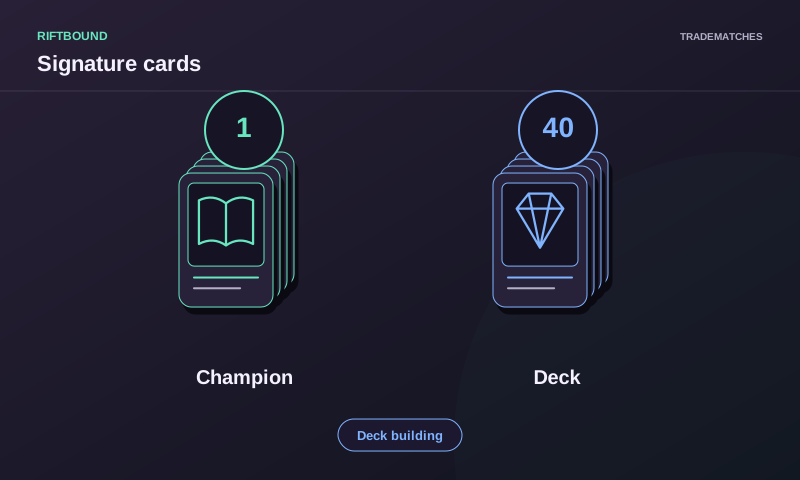
The official deck-building guide explains that the Main Deck has a minimum of 40 cards and allows up to three copies of one named card. The current Core Rules add a specific limit: the deck may contain only three Signature cards in total, all with the same Champion tag as your Champion Legend. If multiple eligible Signature cards share that tag, they share this three-card allowance; it is not three of each name. The guide suggests reserving space for up to three copies of a useful Signature, but does not require using the maximum. One, two, or three Signature cards can reflect different strategic decisions.
The Chosen Champion deserves an additional copy count check: the copy prepared for access to the Champion counts toward the three-copy limit for that unit, according to the same guide. It's a limit on that unit, distinct from the count of your Signature Spell. If you have one chosen copy of the Champion and two additional copies of the same card, you've already reached the three-copy limit. You can separately include up to the maximum allowed for its Signature spell, provided the list and format allow it. Do not indiscriminately add "three Champions plus three Signatures" as if they were six copies of a single card. Also, do not ignore the chosen copy when reviewing the unit.
Allowing the deck to exceed 40 cards does not increase the per-name copy limit. The guide recommends staying close to the minimum because adding cards reduces the likelihood of finding your key pieces. If you include 48 cards to make room for every attractive spell, the Signature will remain legal, but you'll see it less often. First consider what kind of game you want to win and what function each copy serves: finding it early, repeating an effect, or having a second one after your opponent responds to the first.
Why a Signature is not simply "the best card"
The function of a Signature is usually designed to support the Champion's strategy. The official example of Siphon Power explains that it can shift a battle in favor of a small-unit army. That strategic description should not become a universal promise: in an empty board, with insufficient resources, or facing a strong counter-response, the same spell may perform poorly. To evaluate its copies, identify in what game state it improves a battle, what resources it consumes, and whether you need to deploy units first. The card's strength depends on your ability to execute its plan.
Compare the Signature with other cards that fulfill a similar role in your list. If it's a situational response, three copies increase the probability of seeing it, but also the chance of drawing multiple spells when you lack units. If it's the core driver of your strategy, reducing it to one copy may make the deck behave inconsistently. The Riot guide recommends sufficient small units and interaction to contest fields; these are construction guidelines, not legal rules. A powerful Signature does not replace the number of units needed to capture or maintain a field.
A simple test involves playing several initial hands and noting when the Signature was playable and when a unit or rune would have been preferable. Don't draw a conclusion from a particularly good game. Also ask whether the card requires a specific board position that your deck consistently achieves. If the answer is no, the issue may be the deck's composition, not the Signature's power. This analysis is more useful than automatically copying a deck list from a different game environment.
Signature, domains, and special formats
Format matters. A built deck construction rule should not be transferred without checking it against a draft or another format with its own rules. In Limited, card availability, Legend selection, and construction exceptions may differ. Read the event instructions and current rules before assuming that a Signature listed in a sealed pack is legal in your deck. If you're preparing for a tournament, also use the official list of banned cards and tournament rules: mere presence in a valid collection does not guarantee competitive legality.
The official Riftbound rules page indicates which Core Rules document is currently in effect and includes a separate section on legality for Built decks. That section changes with balance updates; as of September 29, 2026, it shows bans and review dates. Therefore, keep the rules page URL as a reference rather than relying on an outdated list capture. In a store or trade, verify legality before paying a premium for a card intended solely for competitive play.
There is also a difference between owning a collectible variant and being able to play it in an event. Art, language, or finish variants may have aesthetic appeal, but they do not inherently alter the domain identity or the Signature association. When registering a deck, use the name required by the organizer and check any language or case restrictions in applicable rules. The three-copy rule refers to the game card, not to three arbitrary physical prints chosen for aesthetics.
Example of a deck list review
Imagine you've chosen a Legend that favors capturing Battlefields with multiple units. You prepare 40 cards, include one copy of the Chosen Champion, and find a Signature spell with that Legend's Champion tag. First, confirm the tag and make sure you did not pick a spell from another Champion with the same domain. Second, count every Signature card in the Main Deck. If there are three, you have reached the shared Signature allowance; if there are two, you can still consider a third eligible one. Third, count the chosen Champion unit plus any additional copies of that same unit.
Now imagine that during testing, you rarely have enough units when you draw the Signature. Adding a fourth copy would be illegal and wouldn't solve the underlying problem. Replacing a less useful card with a cheap unit or adjusting interaction card balance could make your existing Signature find better targets. Finally, review the official ban list before submitting your deck: a later update to the list may change the legality of another card, even if the Signature remains valid.
Common mistakes when buying or trading
An ad that says "Champion card" could refer to a Legend, a Champion unit, a chosen version, or a Signature. When looking to complete a list, request the exact name, readable image, and collection number. If you need three playable copies, verify that all three match the name in your deck, but don't pay three times for a more expensive variant if you only need functionality. In a trade, identify which piece you're missing; "my Champion's card" is too broad a description.
Another mistake is buying before reviewing rule changes. Riftbound continues to publish Core Rules updates, errata, and legality lists. An Origins deck-building guide helps understand deck structure, but an outdated phrase does not replace the current tournament document. Keep three checks separate: card identity, deck construction, and competitive legality as of the event date. Doing them in this order saves time and avoids disputes at the table.
Frequently Asked Questions
Do I have to play three copies of my Signature?
No. The official guide recommends considering the maximum for synergy, but allows fewer copies if there's a strategic reason. The general three-copy limit per card in the main deck is not a requirement to fill every slot. Test how the deck functions with two or three copies before deciding.
Does the Chosen Champion copy consume a Signature copy?
No. They are different cards. The chosen copy counts toward the maximum for that Champion unit. Signature cards share a separate three-card allowance, while each name also obeys the general copy limit. Review both counts in your deck list.
Can I play a Signature from another Champion if it shares a domain?
Not in ordinary Constructed deckbuilding. A Signature needs the same Champion tag as your Champion Legend, in addition to meeting the other deckbuilding rules. Consult the current Core Rules and the specific format's rules, especially in draft or other formats with exceptions.