TCG insurance inventory: evidence and declared value
On this page
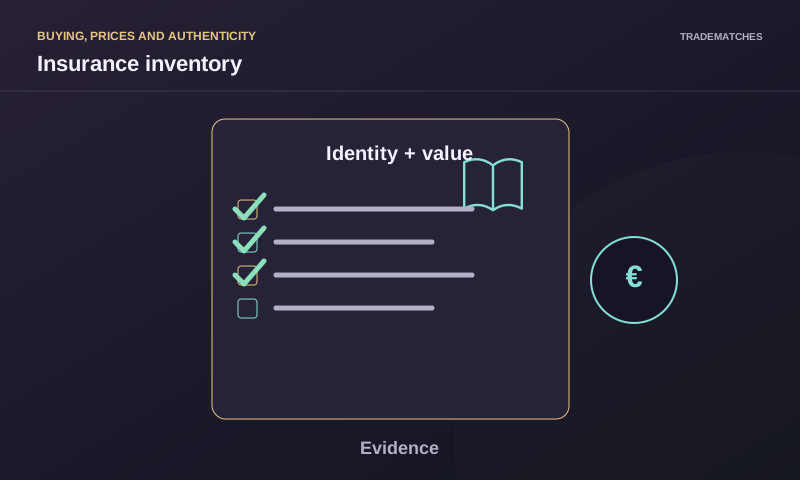
A TCG insurance inventory should identify what you own, document each important version and condition, link supporting evidence and record a dated valuation basis. It helps an insurer assess a proposed collection and can support a later loss report. It does not itself create insurance coverage or guarantee that the declared amount will be paid.
For a collection in Spain, ask the insurer to confirm in writing whether the exact cards, locations and activities are accepted under the proposed policy. General home or art-collection marketing is not that confirmation.
Start with a defined collection scope
State whether the inventory covers personal cards, sealed products, graded copies or another group. Identify the owner and relevant storage locations in the private record. Do not mix shop stock and a personal collection without explaining the distinction to the insurer.
Also record cards temporarily elsewhere, such as items submitted for grading or held by a service provider. Their location and responsibility can affect the coverage question. Do not assume that every item you own is automatically insured wherever it happens to be.
The inventory's purpose is evidence, rather than a public list of desirable cards. It can overlap with an ordinary collection catalogue, but it needs a clearer history of ownership, identity, value and location than a simple wanted-and-available checklist.
Identify the exact version of important cards
Record game, card name, set, collector number, language and finish. Add edition distinctions or other identifiers where they change what the object is. A name alone can describe many printings with very different values.
For a graded card, record the grading company, grade and certificate identifier. Photograph the holder and relevant identifying details. The certificate can help identify the object, but it should not be treated as complete proof of current ownership by itself.
For a serialized collectible, include the serial marking. For several identical ungraded copies, state the quantity and document the group. Give particularly valuable individual copies their own inventory identifiers so evidence does not accidentally refer to a different example.
Keep condition evidence separate from identity
Take clear front and back photographs under suitable light, along with views of relevant defects. Describe observable condition rather than promising a professional grade you have not obtained. A card's version and its physical state are different facts.
Record when the photographs were taken. An old picture can identify an object while failing to show its condition after later handling. Update the relevant evidence when a significant change occurs.
Do not remove a card from a sealed grading holder just to create a photograph for the inventory. Use the visible identifiers and appropriate holder images. Evidence gathering should preserve the object rather than introduce unnecessary handling risk.
Link receipts and acquisition records
Keep invoices, order confirmations or other genuine purchase evidence with the relevant inventory entry. Record the acquisition date and amount paid where known. For a trade or gift, describe the available record instead of inventing a cash receipt.
Purchase price can support the history of an item, but it is not automatically its present insured value. Likewise, a marketplace account screenshot can be useful while still requiring context about which copy was delivered and remains in your possession.
The Spanish insurer sources cited here discuss inventories, photographs and purchase identification for valuable collections. Applying that documentation approach to TCG cards is a practical adaptation. Whether a particular policy accepts those cards and evidence must be confirmed with the insurer.
| Inventory field | What to record | Supporting evidence |
|---|---|---|
| Identity | Game, set, number, language, finish | Front and back photographs |
| Individual copy | Grade, certificate or serial if present | Holder or serial photograph |
| Ownership history | Acquisition date and method | Receipt, order or genuine trade record |
| Valuation | Amount, date and stated basis | Comparable evidence or accepted appraisal |
| Location | Current private storage record | Relevant policy declaration |
Use a dated valuation method
Record the date, currency and basis for each significant valuation. Distinguish an asking price from evidence of completed comparable transactions, and match version, language and condition. A spectacular listing for a different printing is not a reliable substitute.
Ask the insurer what basis it requires, such as an agreed valuation, replacement assessment or an accepted appraisal. The policy's method governs the coverage discussion; your spreadsheet should not silently substitute another definition.
For groups of lower-value cards, discuss whether a grouped schedule is acceptable. If so, record the group's actual scope and method rather than multiplying every card by the highest-priced example in the box. Individual high-value pieces can require separate documentation.
Declared value is not a coverage promise
Entering a figure in an inventory does not make it an agreed insured amount. A home policy may have limits, sublimits, exclusions or declaration requirements. An insurer's general article about collections does not establish the wording of your contract.
Ask whether trading cards are included as the relevant category and whether important individual cards need specific listing. Obtain the actual policy and any endorsements that describe the accepted collection.
Do not transfer a monetary threshold from one insurer's example to every company in Spain. Product terms differ and can change. This guide deliberately provides a documentation process rather than a universal euro limit or a promise of cover.
Ask about the events and places that matter
Describe how the collection is used: stored at home, taken to tournaments, sent for grading or transported to another location. Ask which of those situations the proposed contract covers and what exclusions or conditions apply.
Separate theft, accidental damage, water incidents, loss in transit and gradual deterioration when asking. They are different events and may be treated differently. A broad phrase such as “all my cards protected” is too vague to verify the actual scope.
Also ask about required security, storage or packing measures. Keep the answer with the policy rather than relying only on a verbal conversation. The inventory documents the objects; the contract determines the accepted risks and obligations.
Keep private location details out of public catalogues
The insurance record can contain sensitive information about valuable items and where they are kept. Store it with suitable access controls and share the necessary version through the insurer's appropriate channel.
A public collection profile does not need your home address, exact storage arrangement or full private evidence archive. Keep the shareable catalogue and the private insurance schedule distinct when their information needs differ.
For routine exchanges or sales, provide only the evidence relevant to that transaction. An insurance inventory is not a reason to send every buyer a complete map of the rest of your collection.
Maintain a backup outside the same physical risk
Keep a digital copy of the inventory and linked evidence in a suitable backup location. A paper list inside the same box as the cards may be lost in the same incident. Test that files open and that the links still point to the intended evidence.
Use stable inventory identifiers rather than naming every photograph simply “card.” Include a version date so you can distinguish the current schedule from an earlier one. Keep prior versions when they help explain changes in ownership or value.
The backup should preserve the actual files, not only a spreadsheet full of broken local links. Periodically review a few entries end to end: identifier, description, images, acquisition record and valuation support.
Update purchases, sales and movements
Add newly acquired important items and mark sold or traded items as no longer owned. Record the date of the change. Otherwise the inventory can overstate the collection while omitting the very card you recently added.
Discuss material changes with the insurer under the policy's notification requirements. Updating your private spreadsheet is not necessarily the same as updating the declared schedule accepted by the company.
Likewise, review valuations at an appropriate interval using the accepted method. The aim is a current, defensible record rather than a constant speculative forecast. Keep the date and evidence visible so changes can be understood later.
Prepare a factual record after a loss
If an incident occurs, follow the policy's notification and evidence instructions. Use the inventory to identify affected items and their last documented location and condition. Preserve relevant records and avoid inventing details that were not known.
An inventory can help explain the claim, but the insurer still assesses coverage and the event under the contract. It does not replace a required report, proof of the incident or any other specified documentation.
Keep a copy of what you submit and any follow-up requests. A consistent record is easier to assess than changing descriptions of the same item. If valuation or coverage is disputed, use the insurer's appropriate review process and professional advice where needed.
Frequently asked questions
Does my household insurance automatically cover every TCG card?
Do not assume that. Ask for confirmation of the exact collection, locations, limits and relevant contract terms.
Is the amount I paid always the insured value?
Not necessarily. Purchase evidence documents acquisition; the policy's accepted valuation basis can be different.
Does a grading certificate prove everything needed for a claim?
No. It helps identify a copy, but ownership, condition, location, valuation and the incident can require additional evidence.