Digimon Decoy: sacrificing an ally to protect another
On this page
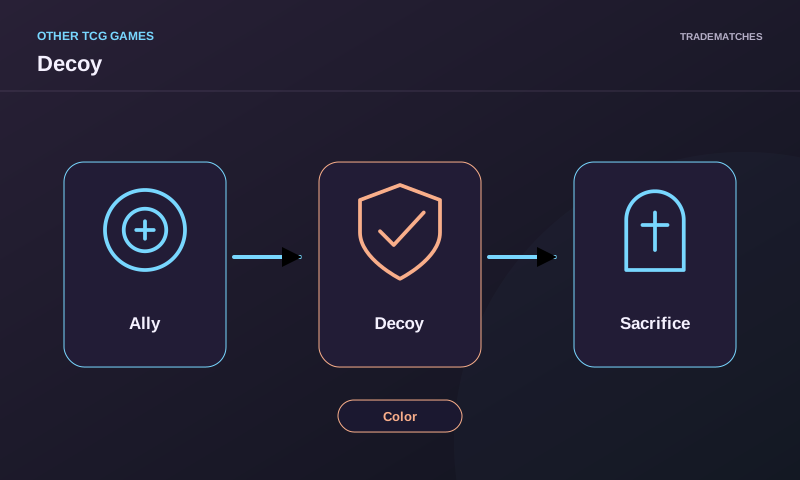
Decoy in Digimon lets you delete the Digimon carrying the keyword to prevent another specified Digimon of yours from being deleted by an opponent's effect. The protected Digimon must match the designation, such as Black. Decoy does not generally protect against losing a battle, returning to hand or deletion by the rules for having 0 DP.
Read three things before choosing: the threatened Digimon, the reason for deletion and the Digimon you would sacrifice. The keyword is a specific prevention procedure, not permission to redirect every kind of removal.
Another Digimon must face the qualifying deletion
The current definition in rule 16-18 concerns another specified Digimon of yours. A Digimon does not use its own Decoy to save itself by deleting itself. The keyword offers the carrying Digimon as the sacrifice for a different qualifying ally.
The designation matters as well. Decoy (Black) concerns an appropriate Black Digimon, rather than any Digimon you control. Check the current characteristics of the threatened Digimon and the exact keyword text. A remembered archetype or the colour of a sleeve is not a rules characteristic.
For an ordinary example, you control one Black Digimon and a second Digimon with Decoy (Black). An opposing effect would delete the first. If the other requirements are satisfied, you can choose to delete the Decoy Digimon to prevent that qualifying deletion.
The opponent's effect must be the cause
Decoy specifies deletion by an opponent's effect. It does not replace every deletion on the board. If your own effect is deleting one of your Digimon, the fact that sacrificing another would be tactically convenient does not supply the missing condition.
Likewise, a Digimon deleted after losing a battle is not being deleted by an opponent's effect simply because an opposing Digimon participated. Battle processing and effect processing are distinct causes. The keyword's defensive scope depends on that distinction.
When an effect grants another effect or creates a complicated sequence, identify who controls the actual deletion effect. Do not decide solely from who owns the card or whose turn it is. Use the current rules and the specific card's Q&A where the controller is unclear.
DP reduction is not the same as direct deletion
An opposing effect can reduce a Digimon's DP to 0, after which a rule check deletes it. That deletion is a consequence of the game's rules, rather than the opponent's effect directly instructing deletion. Decoy's qualifying cause is therefore absent in that ordinary situation.
Compare “delete a Digimon” with “give a Digimon minus DP.” The final physical destination may be the same, but the procedure differs. A protection keyword that responds to one cause does not automatically cover the other merely because both send cards away.
Do not delay a required rule check in order to create an opportunity for Decoy. Apply the proper timing and any genuinely relevant immediate effects. If a complicated interaction changes DP or protection during processing, consult the current rules instead of using the simplified example as a complete ruling.
Returning or placing cards elsewhere is another removal type
An effect that returns a Digimon to its owner's hand is not deleting it. Neither is an instruction to place it at the bottom of a deck. Decoy does not convert those movements into deletion just so its prevention can apply.
The same caution applies to effects that remove digivolution cards without deleting the whole Digimon. Identify the object being moved and the actual instruction. “Removal” is a useful strategic label, but it is too broad to determine whether a keyword condition is satisfied.
This is important when evaluating a defensive board. A Decoy can discourage qualifying deletion while leaving other ways to interact available. Describe that specific coverage accurately instead of treating the protected ally as immune to the opponent's entire deck.
| Threat to the ally | Does ordinary Decoy cover that cause? |
|---|---|
| Opponent's effect directly deletes a specified ally | Can qualify if the other conditions are met |
| Ally loses a battle | No: battle deletion is different |
| Rule check deletes an ally with 0 DP | No: this is rules processing |
| Effect returns the ally to hand | No: the instruction is not deletion |
| Your own effect deletes the ally | Not under the opponent-effect condition |
The sacrifice is an optional processing condition
The current rules classify Decoy as an immediate-type effect. Its “by deleting” instruction is an optional processing condition. You can decline to pay that condition rather than being forced to sacrifice a useful Digimon whenever an eligible ally is threatened.
If you execute the condition, the prevention described by Decoy becomes mandatory. Do not delete the Decoy Digimon and then voluntarily decide that the ally should still be deleted by the same prevented event. The cost and resulting prevention form the procedure described in the rule.
The carrying Digimon must actually be deleted to execute the condition. Do not assume a proposed sacrifice has been paid if another applicable rule or protection prevents that deletion. Complex combinations need their own ruling; the word “by” is not a licence to pretend an impossible action occurred.
Decide before applying the threatened deletion
Because Decoy addresses a Digimon that would be deleted, do not first complete that deletion and then move the ally back from the trash. The prevention has a relevant timing before the qualifying event takes place.
Announce which Decoy you are using and which ally it protects. Move the sacrificed Digimon under the normal deletion procedure and keep the protected Digimon in its proper state. A clear announcement prevents confusion between an ally that survived and one that was deleted and later returned.
If the table has already applied a disputed sequence, pause and call a judge at an event. Quietly restoring cards can hide information and change other pending effects. The appropriate correction depends on the actual sequence and applicable tournament policy.
Deletion of the Decoy can create other effects
The sacrificed Digimon has been deleted. Relevant effects that respond to its deletion can therefore matter under their own conditions and timing. The protected ally, by contrast, was not deleted by the prevented event, so do not automatically trigger its On Deletion effects.
Separate prevention from later triggered processing. An On Deletion effect belonging to the sacrificed Digimon does not necessarily resolve before the original opponent effect finishes its other instructions. Use the game's pending-effect procedure rather than choosing a convenient order without checking.
For a practice example, give the Decoy Digimon a hypothetical legal deletion trigger and the ally none. Record the prevention first, then the pending trigger. This makes the two events visible without inventing a particular published card or overlooking the rest of the resolving effect.
Broad deletion effects require the full card interaction
An effect can threaten several Digimon rather than selecting only one. Decoy's basic definition remains useful, but the interaction may involve multiple threatened objects, several prevention effects or a Decoy that is itself in the deletion group.
Do not assume that one sacrifice protects every matching Digimon from a board-wide effect. The keyword specifies prevention for the relevant other Digimon, and the actual card sequence must determine which event is being replaced or prevented.
Bandai publishes Q&A for individual sets and cards, including interactions involving broad deletion. Use the exact entry for the cards involved. An older simplified keyword summary should not replace the current comprehensive rules or the specific official clarification.
Compare the ally's value with the sacrifice
The optional choice gives you a tactical decision. Preserving an important evolved stack can be worth losing a smaller support Digimon, while another situation may favour keeping the Decoy available for a later threat. These are evaluations of the current board, not automatic rules outcomes.
Include inherited effects, pending triggers and the opponent's remaining options in that evaluation. Do not focus solely on printed level or play cost. A small Digimon may supply a relevant effect that you lose when it is sacrificed.
Also consider whether the opponent can follow up with a removal type Decoy does not cover. Saving an ally from one deletion does not grant continuing immunity. The protected Digimon remains subject to later legal interactions after the prevented event.
Verify with a short table procedure
Name the threatened Digimon and read the exact removal instruction. Confirm that an opponent's effect would delete it, that it matches the Decoy designation and that a different eligible Digimon carries the keyword. Then decide whether to execute the optional sacrifice.
After prevention, finish the resolving effect and handle any newly pending effects in the correct order. Keeping these stages separate makes the result easier to explain and helps prevent accidental deletion triggers on the ally that actually survived.
For disputes, retain the exact card identifiers and current rule version. A question about “Decoy against removal” is too broad; a question identifying direct deletion, DP reduction or returning to hand can be assessed against the appropriate official text.
Frequently asked questions
Can Decoy save the same Digimon carrying it?
Its definition concerns another specified Digimon of yours. It does not save itself by using its own sacrifice.
Does Decoy prevent deletion after DP is reduced to 0?
Not in the ordinary case described here. That deletion is performed by a rule check rather than directly by the opponent's deletion effect.
Must I sacrifice the Decoy whenever it can apply?
No. The deletion of the Decoy is an optional processing condition. If you execute it, the associated prevention is mandatory.