Digimon Jamming and Piercing: what each ability does
On this page
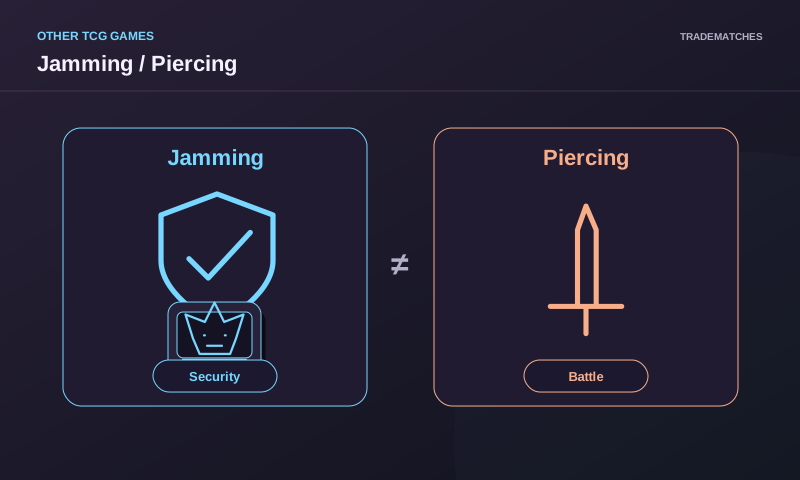
Jamming and Piercing solve different problems in the Digimon Card Game. Jamming protects a Digimon from deletion in battle against a Security Digimon. Piercing can produce security checks after an attacking Digimon deletes an opposing Digimon in battle. One concerns surviving a particular battle; the other concerns what an attack can do after a qualifying battle result.
Combining them can be useful, but neither keyword creates general immunity. An Option revealed from security, an effect reducing DP or an ordinary battle against a Digimon in the battle area can still require separate analysis. This guide follows the attack sequence rather than treating both keywords as a generic promise of safe damage.
Jamming only addresses Security Digimon battle
The current comprehensive rules define Jamming in section 16-9. Its protection concerns deletion resulting from battle with an opponent's Security Digimon. It does not stop every event that occurs during a security check.
Suppose an illustrative 5,000 DP attacker with Jamming checks a 10,000 DP Security Digimon. Jamming prevents the battle comparison from deleting that attacker. The protection is relevant because the opponent's card is being battled as a Security Digimon.
Now move the same 10,000 DP opposing Digimon into the battle area and have the 5,000 DP attacker battle it normally. Jamming does not supply that same protection. The word “security” in the keyword definition is a real limitation, not decorative reminder text.
The official rules page provides the current rule documents and Q&A. Check those resources and the individual card when a security effect changes the otherwise simple DP comparison.
A security effect is not the security battle
A revealed security card may have an effect that resolves according to its text. Jamming does not independently negate that effect. Surviving a battle with a high-DP Security Digimon therefore does not establish that the attacker will survive the complete security-check sequence.
For example, imagine a security effect that legally removes the attacking Digimon through an effect rather than a battle result. Jamming's battle protection does not cancel that operation. Identify whether the deletion or removal is happening because of battle or because of an effect.
Similarly, reducing an attacker's DP to zero is not converted into a harmless Security Digimon battle merely because it happens while security is being checked. Follow the rules for the actual event. A reliable explanation names the operation instead of saying the attacker “has protection.”
What Piercing needs before it can matter
Piercing concerns a Digimon that deletes an opposing Digimon in battle while attacking. Winning a battle is not enough if the necessary deletion did not occur. Deleting a Digimon with an unrelated effect is also not automatically the required battle deletion.
Imagine a 9,000 DP attacker with Piercing battling a 6,000 DP opposing Digimon. If the opponent's Digimon is deleted in that battle and the attacker remains available through the relevant processing, Piercing can lead to security checks before the attack ends.
Change the situation so that the opposing Digimon is removed by an earlier card effect. That removal should not be described as the attacker deleting it in battle. Change it again so that a protection effect prevents the battle deletion. The qualifying result may now be absent, even though the attacking Digimon had the larger DP.
| Event | Keyword question |
|---|---|
| Battle against a Security Digimon | Does Jamming prevent the attacker's battle deletion? |
| Attacker deletes an opposing battle-area Digimon in battle | Is Piercing pending for this attack? |
| Security effect removes the attacker | Does another effect protect it? Jamming alone does not answer |
| Opposing Digimon survives through a replacement | Did the required battle deletion actually happen? |
| Attacker leaves before Piercing processing | Is a Digimon still available to perform the check? |
Pending battle effects come before the check
Piercing is not an excuse to reveal security immediately after removing the defeated Digimon. The rules describe its security-check processing before the attack ends, after relevant pending effects have been handled.
An opposing Digimon's On Deletion effect can therefore matter before the Piercing check. If that effect removes the attacker, there may be no attacking Digimon left to perform the check when Piercing is processed. Announcing “Piercing” does not freeze the attacker in place through the intervening effects.
At the table, complete the battle result, identify triggered effects and resolve them according to the proper rules. Then handle the pending security check. Keeping those stages distinct prevents both players from revealing information prematurely.
Does Piercing mean one extra card?
Do not reduce Piercing to an automatic additional security card on top of an ordinary direct attack. It enables the relevant security checking after a qualifying battle against an opposing Digimon. The attacking Digimon's applicable Security Attack modifications determine how many cards are checked.
For a simple example, an attacker that would check one security card does not gain a second card merely because Piercing is present. If another applicable effect increases its Security Attack, use the resulting check count under the rules.
Likewise, multiple instances of Piercing do not create multiple independent security-check sequences during the same attack. The current rule explicitly addresses this. Count the applicable checks, not the number of times the keyword appears across the evolution stack.
How the two keywords can work together
Imagine an attacker with both Piercing and Jamming. It attacks an opposing Digimon, deletes it in battle and remains available after pending effects. Piercing can then lead to security checks. If a checked card produces a Security Digimon battle, Jamming can protect the attacker from deletion in that battle.
The protection applies at the later security battle, not retroactively to the original battle-area confrontation. If the attacker loses the original battle, Jamming does not save it just because Piercing was also printed somewhere in the stack.
This sequence explains the combination more accurately than “Piercing plus Jamming always gets through.” The opponent can still have battle protection, relevant triggered effects, security effects and other interactions. The keywords provide specific functions at specific moments.
Piercing and an empty security stack
Piercing performs security checks; it does not turn an attack against a Digimon into a direct game-winning attack against the player. If the opponent's security is empty, deleting their Digimon with Piercing is not itself the required direct attack to win.
The current comprehensive rules, section 11.5, distinguish an attack on the player from an attack on their Digimon. Removing a defending Digimon can improve your board position, but the resulting security checks do not satisfy the separate victory condition.
Also distinguish checking the opponent's last security card from making a later successful attack against a player with no security. Remaining checks in one attack should not be casually reinterpreted as a new direct attack after the stack becomes empty.
Choosing an attack target in practice
Before attacking, identify whether you are attacking the player or a legal opposing Digimon. For Piercing, assess whether the intended battle can actually delete that Digimon and whether relevant pending effects could remove your attacker afterward.
For Jamming, assess the risks that remain outside Security Digimon battle. Do not claim certainty about hidden security cards. The sensible plan recognises what the keyword covers while leaving room for effects it does not address.
If the sequence becomes disputed in organised play, describe the attack target, battle result, pending effects and current attacker status to a judge. Those concrete facts are more useful than arguing over whether the combination is “supposed to be safe.”
Mark the source of each deletion
In a practice game, describe a deletion with a short sentence naming its cause: battle against a battle-area Digimon, battle against a Security Digimon, or a resolving effect. Then identify which keyword, if any, addresses that cause.
Repeat the same attack with the attacker removed by an On Deletion effect before Piercing processing. The early battle result may be unchanged, but the later security outcome differs because the attacking Digimon is absent. This exercise explains why recording only the DP comparison is insufficient. The cause of deletion, the timing of pending effects and the existence of the attacker all contribute to the correct final result.
Frequently asked questions
Does Jamming protect against an Option in security?
It does not generally negate security effects. Its defined protection concerns deletion in battle against a Security Digimon. Resolve the Option's effect according to its text and any other applicable protection.
Can Piercing work after the attacker is removed?
If no attacking Digimon is available when its security-check processing occurs, the check cannot be performed by that absent Digimon. Resolve the relevant pending effects before assuming the attacker reaches security.
Does Piercing win against a player with no security?
Not merely by deleting an opposing Digimon in battle. Piercing provides security checks, not a conversion into a direct winning attack. Follow the game's actual victory condition and the target of the attack.