Security checks in Digimon: step by step
On this page
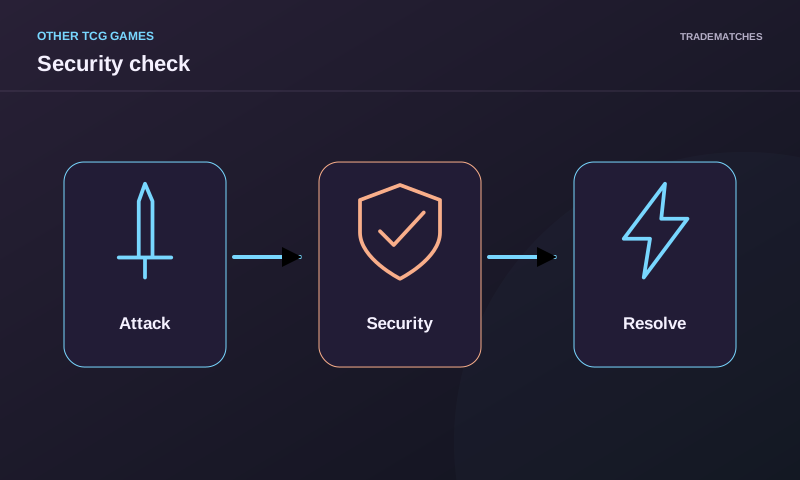
A security check in Digimon Card Game occurs when an attack on the opponent's player reaches their security pile and there are still cards remaining in it. The top card is revealed, relevant effects are resolved in order, and if the revealed card is a Security Digimon, a battle takes place between that Security Digimon and the attacker. Unless an effect changes its destination, the checked card goes to the trash. If the attacker can perform additional security checks, they are resolved one at a time. This explanation does not turn every attack into an immediate victory: if the security pile reaches zero, a successful attack by the opponent is typically still required to win. The full current rules detail exceptions and the exact order of events.
When does a security check occur?
The active player declares an attack using a Digimon capable of attacking, suspends the attack, and selects a legal target. Before performing a security check, there may be attack effects, a Counter moment, and a chance for a Blocker, according to the current procedure. A Blocker changes the target to a defender and may result in a Digimon battle on the field instead of a security check. If the attack on the player is successful and that player still has at least one card in security, the attacker performs the corresponding security check. Therefore, do not reveal the top security card at the moment of declaring the attack—let prior effects resolve first.
If the attacker leaves the battlefield or the attack fails to succeed, the sequence may end without a security check. This matters when an effect during the attack eliminates the attacker, changes targets, or prevents the attack from succeeding. To review a play, first ask whether the final target remained the player and whether there was a non-empty security pile upon confirming success. The security check is a specific consequence of that state, not a cost paid when declaring the attack.
The order of a security card
The full Digimon rules state that security checks are performed one card at a time. The top card of the pile is revealed. If there is a [Security] effect or any other effect triggered by the check, it is resolved according to priority and effect rules. Then, if the revealed card is a Security Digimon, a battle occurs between that Security Digimon and the attacker. Finally, the revealed card is placed in the trash unless the card itself or an effect specifies a different destination. Only then does the process move to the next check, if applicable.
This sequence allows a [Security] effect to modify the battlefield before comparing DP. A Security Option may execute its special text; a Digimon with [Security] may also activate that text before the security battle. Do not skip directly to comparing printed numbers if the card has a relevant ability. The official Bandai FAQ clarifies that [Security] effects have priority over other effects triggered simultaneously during the check; afterward, the rest are processed according to applicable order. If a new card creates uncertainty, consult its specific FAQ.
What happens if a Digimon appears?
A Digimon revealed during a security check is treated as a Security Digimon for the battle. The DP of the attacker and the Security Digimon are compared. The one with lower DP loses; if both have equal DP, both lose the battle in terms of comparison. The attacker may be eliminated if they lose. The Security Digimon, according to current rules, is not eliminated as a normal Digimon even if it loses that battle: it then follows the destination of the checked card, typically to the trash, unless an effect places it elsewhere. Do not automatically place the Security Digimon into the battlefield.
Imagine an attacker with 6000 DP facing a Security Digimon with 5000 DP. Without effects, the attacker wins the battle and survives; the security card ends up in the trash. If the security card shows 7000 DP, the attacker loses and is eliminated; any additional checks planned for that attacker cannot proceed if the attacker is no longer on the battlefield. If both have 6000 DP, the attacker also loses due to a tie. These examples change if an effect alters DP, prevents elimination, or modifies the battle—thus, always read all text before discarding cards.
What happens with an Option or a Tamer?
A security card that is not a Security Digimon does not automatically trigger a DP battle. If it has a [Security] effect, that effect applies; otherwise, it follows the normal destination of the checked card. Some effects may play the card, add it to hand, place it in the battlefield, or leave it in another zone. The general rule of placing it in the trash is overridden by any text specifying a different destination. That is why it is unwise to simply state "every security card is discarded"—it serves as a starting point, but hides one of the main sources of game interaction.
The owner of the pile must keep track of the remaining security count, even though the contents are normally hidden. When a card is revealed, both players must be able to identify whether it is a Digimon, Option, or Tamer and read any [Security] effects. If an effect places the card in another zone, do not send it to the trash first by habit if that contradicts its resolution. Follow the card's procedure and the rules; effects such as "when a security card is discarded" may activate during a specific window.
Multiple checks in a single attack
A skill like Security Attack +1 can increase the number of cards an attacker checks. The cards are not revealed simultaneously to sum their DP. Each card is fully resolved—including effects and battle—before moving to the next. If the attacker is eliminated during the first battle, no further checks can occur. If an effect modifies the number of checks while resolving the attack, current rules explain how to apply that change. For casual play, it's important not to assume future checks are guaranteed.
Suppose a unit can check two cards and the opponent has two security cards. The first reveals an Option with a [Security] effect that eliminates the attacker. The second check does not occur with that Digimon because the attacker is no longer present. If the first Option does not eliminate the attacker, the second check proceeds; if it reveals a Security Digimon with higher DP, the attacker may lose in that second step. Neither example grants an automatic victory simply by emptying the pile: the victory condition for attacking the player with no security is verified only upon a successful attack according to the rules.
Empty security and final attack
When the attacked player has zero security cards, a successful attack directed at the player can result in victory for the attacker. The current rules add that victory is not granted if the attacking Digimon cannot perform security checks. This nuance avoids the simplified rule "any touch with zero security wins" in all conceivable cases. Additionally, an attack may be blocked or fail before reaching that check. If the last security card is removed during a multi-check attack, review the applicable sequence; do not invent a check for a card that no longer exists or declare extra damage by analogy with other TCGs.
The practical distinction is clear: removing the last security card and achieving the winning attack are separate milestones. This distinction influences whether to spend resources to keep the attacker alive as they empty the security pile or to save another Digimon ready to attack later. An opponent with a Blocker or Counter may still defend the final attack. Cards that change targets or manipulate security create additional exceptions, but the principle of checking the state at the correct moment remains valid.
Common mistakes and a table method
The first mistake is revealing security before attack effects, Counter, and Blocker windows. The second is comparing DP before resolving a relevant [Security] effect. The third is revealing two cards at once due to Security Attack +1. The fourth is eliminating the Security Digimon as if it were a normal unit in the field, when the checked card follows its security destination. The fifth is continuing checks after the attacker has been eliminated. All of these are prevented by announcing a short sequence: legal attack, windows, check one, effect, battle, destination, next check if applicable.
If a play gets stuck, revert to the last undisputed state. Count remaining security and pending checks; identify where the attacker is and their current DP; read the revealed [Security] text; fully resolve that card. Then decide whether the attack can continue. You don't need to memorize all cards in the game, but you must respect the minimal unit of procedure: one card at a time. For new or simultaneous effects, the official Bandai rules and FAQ page provides the current text.
Frequently Asked Questions
Does a Security Digimon enter the battlefield when revealed?
No, by general check rules. It is used only for the security battle, and after that, the card follows its security destination, typically to the trash. Only a text that orders playing it or placing it elsewhere changes that result.
Are all Security Attack +1 cards checked simultaneously?
No. Checks are resolved one card at a time. Effects and the battle of the first card may prevent the attacker from reaching the next one.
Does emptying security immediately win?
Normally not. Victory requires a successful attack on the player when they have no security, subject to the rules' conditions. Removing the last card and achieving the decisive attack are separate steps.
Checked sources
For defense, check when Blocker can block and the difference between breeding and battle areas.