Red, yellow and blue pitch in Flesh and Blood
On this page
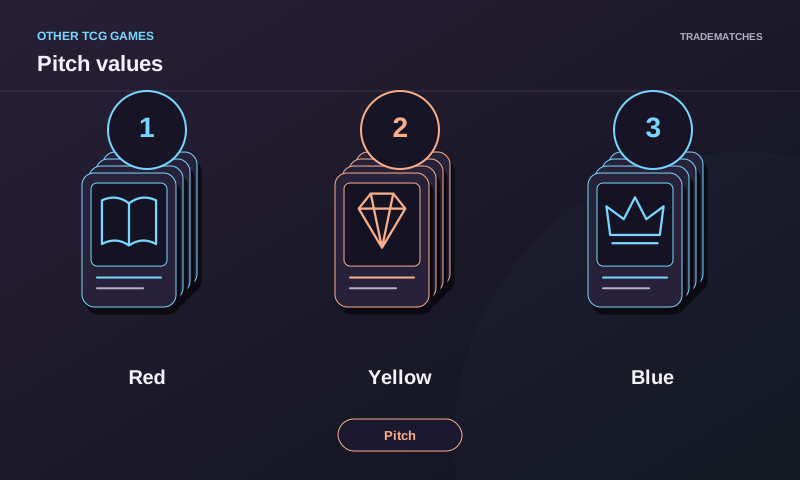
In Flesh and Blood, the red, yellow or blue strip usually corresponds to a pitch value of 1, 2 or 3 resource points. It is a difference in gameplay and identification of the copy, not a rarity or a foil finish.
Pitch produces resources
When you need to pay an Action, you usually place a card from your hand in the Pitch Zone. Its value adds resource points that are used during that turn. A red strip usually adds one, a yellow strip two, and a blue strip three. Any excess resources are lost at the end of the turn; do not save them for a future purchase.
Same name, three playable versions
A card can exist in red, yellow and blue with differences in power, defense or text. Simply searching for the name in an announcement is not enough: you also need to indicate the color and the collection number if you want an exact copy for a deck. A foil variant of red remains red, not blue.
Example of payment
If an Action costs two resources, a yellow card with pitch 2 usually pays it exactly; a blue card with pitch 3 leaves one resource available during that turn. A red card with pitch 1 does not cover the cost by itself. Consult the printed value: the official rules warn that color and pitch are usually related, but are distinct properties.
Color, pitch value and cost are separate data
In Flesh and Blood, the red, yellow or blue strip of a card usually identifies its pitch value: one, two or three resource points respectively. This value indicates how much it produces if you place it in the Pitch Zone to pay for something. It does not indicate by itself how much it costs to play that card from your hand. A red Action can have a printed cost, and a blue card with the same name can show other attack numbers or text. To make a decision, look at both the strip and the cost of the Action. Calling a "blue card" as a "three" without specifying whether you are talking about resources or cost causes many confusions.
Resource points are generated when you pitch a card when you have something to pay. If you need two and use a blue card that produces three, you may have one point available during that turn for another cost. What you do not spend is lost at the end of the turn; it is not saved for the next as a permanent coin. You also do not pitch without a reason just to empty your hand or prepare for a future turn: the official guide requires having a payment to make. The specific Action and its cost determine when you can place the card in that zone.
Red: one resource and a possible strong play
A red strip usually corresponds to pitch 1. Often you want to keep red cards to play them for their effects, but that is a strategic preference, not a universal rule. If you are short by exactly one resource for a decisive Action, a red card can be the appropriate card to pay. It is important not to assume that a full hand of red cards always can support high costs. Two Actions with a cost of two require an economy that perhaps you may not achieve if you spend your pitch cards without planning.
Example: you want to pay an Action with a cost of one and have a red card in your hand. You pitch the red card, get one point, and pay the cost. If later there is another opportunity to pay one in that turn, you cannot reuse that point already spent. You need another source. If the red card was also your best attack, perhaps it would be better to pitch a yellow card and keep it. The value of the color depends on what other cards you have in your hand and the order in which you play the Actions.
Yellow: two resources and flexibility
A yellow strip usually indicates pitch 2. It can pay exactly for an Action with a cost of two or leave one point for something else in the turn. That flexibility does not make every yellow card a filler. Some have effects that you need to play, defend, or keep. When building a list, think about the role of each print: a yellow card with the same name as a red card may sacrifice power to provide resources, but the specific comparison depends on the numbers and text of those cards.
Suppose your turn needs a cost of one for a weapon and another cost of one for an Action. Pitching a yellow card can cover both payments if the windows and conditions are appropriate. Pitching two red cards also provides two points, but it spends an additional card from your hand. In another hand, you might prefer to keep the yellow card to defend and use two red cards that you won't play. The resource calculation is simple; the decision of which card to deliver is what changes from one situation to another.
Blue: three resources for expensive turns
A blue strip usually provides pitch 3. It is an important source when you need to pay high costs or multiple payments during the same turn. If an Action costs three, a blue card can cover it by itself. If it costs two, it leaves a potential usable point before the end of the turn. Do not carry that surplus into the next round. Also avoid pitching a blue card when one resource was enough and you don't have a real use for the other two: it might be better to keep it for later, if the rest of your hand allows the play.
The blue does not mean "the same card red, but better." The different versions by color can change statistics or effects, and the pitch value is part of that exchange. A list that uses many blues can pay easily and, at the same time, lose pressure if its actions are less efficient for attacking. The balance must be tested with real hands. When copying a tournament recipe, do not substitute a red with a blue of the same name without reviewing what function that copy served.
Pitch is not discard or permanent use
The card used to produce resources goes to the Pitch Zone. At the end of the turn, the cards in that zone are placed at the bottom of the deck in the order you choose, according to the rules. Do not confuse them with cards discarded to the graveyard of other games or with a permanent source that stays on the table. This movement creates decisions for future turns, especially in long games. While you are learning, physically separate the Pitch Zone from the discard pile to avoid losing cards.
If you pitch two cards, note which one produced how many points and how much you spent on each payment. At the end of the turn, you do not keep surplus points, even though the cards return to the deck. The physical card and the points generated follow different paths: the first is repositioned; the second expire. This separation clarifies why you can see again a card you used as a resource, but you cannot "save" the three points of a blue for within two turns.
How to read a list with the same name three times
In Flesh and Blood, there can be red, yellow, and blue versions of a card name. Do not assume they are three interchangeable copies in a purchase list. Check the strip color, the collection number, the language, and the statistics. If a decklist says "3 blue" and you buy three red ones because they are cheaper, the deck might stop producing the necessary resources. If you were looking for a card to play as an attack, the blue version might not have the numbers you expected. A small visual detail changes the function of the copy.
When trading, always describe the name and pitch. "I have the card X" is insufficient if the other person is looking for the yellow version. The foil finish or rarity are additional attributes and do not substitute the pitch color. A blue foil card remains blue; a red card does not become blue just because it has a similar shine. Photographing the top strip and the collection number helps close a deal without confusing impressions.
An example of a turn with multiple payments
You have an Action with a cost of two and plan to use a weapon with a cost of one. With a blue card with pitch 3, you can generate three points and assign two to the first payment and one to the second, as long as you can perform both actions according to the game state. If you spend the point for the weapon first, there are still two left for the Action. If later you decide not to play it, the two points you don't use disappear at the end of the turn. The order of actions can change due to the opponent's response; therefore, it is advisable not to assume that all produced points will become value.
With a yellow card with pitch 2, the same plan needs an additional source for the third point. With a red card with pitch 1, there are two missing. This calculation of 3, 2, and 1 is the base, but the final choice considers defense, cards in arsenal, and what you want to keep for the opponent's turn. There is no fixed quota of each color that works for all heroes. Test hands and observe if you can pay the most important lines without sacrificing all the cards you wanted to play.
Common mistakes
One: believing that color is a rarity or a type of foil. Two: using the pitch value as if it were the cost of the card. Three: saving surplus points for another turn. Four: putting a card in pitch without a payment. Five: buying a version of another color because it shares a name. To avoid these, look at the resource symbols, the cost, and the strip separately. At the end of the turn, empty the Pitch Zone according to the rules. Before buying, compare the exact version of the list you want to build.
If a special card modifies how it generates or uses resources, apply its text and the complete current rules. The correspondence of red 1, yellow 2, and blue 3 explains most ordinary cards, but the game may include special effects. Do not convert a useful visual shortcut into a substitute for reading the text. Knowing how much each strip produces gives a solid starting point for playing and correctly identifying the copy you are trading.
Common questions
Does blue mean more rarity?
No. It usually indicates pitch 3; rarity appears by another symbol or data.
Can I pitch without anything to pay?
No as a free action. The quick guide requires a cost for which to provide resources.