Gundam Card Game Burst when a Shield is destroyed
On this page
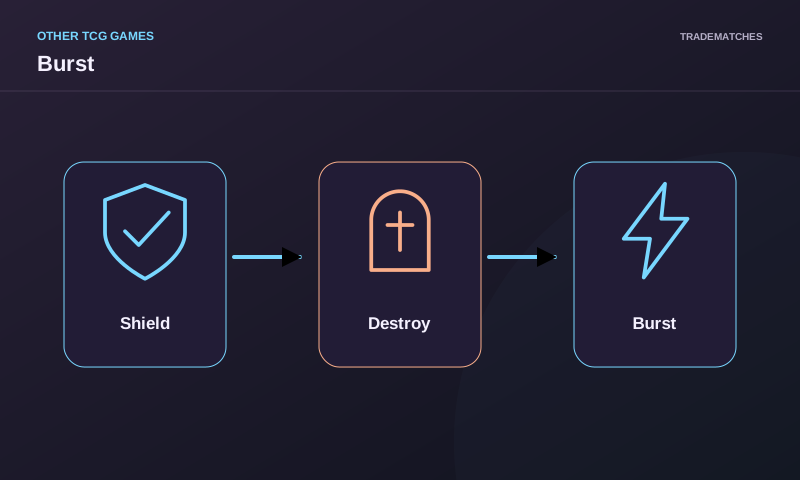
Burst is an optional effect you can activate when a Gundam Card Game Shield card is destroyed and revealed. Resolve the relevant Burst without paying its cost before sending that card to the trash, unless the effect moves it elsewhere. Declining the option normally sends the revealed card to the trash.
Burst does not automatically play the whole card or activate every ability printed on it. The Shield must have been destroyed through the relevant procedure. Drawing a card with Burst into your hand is a different event. These distinctions follow section 13-2-5 of the current comprehensive rules.
Follow the destroyed Shield's sequence
Start with the event destroying the Shield. The card is revealed through that procedure. Check whether it has an applicable Burst effect and whether you choose to activate it. If you do, resolve that Burst before handling the card's normal subsequent movement to the trash.
This order is easy to lose if you reflexively put every destroyed Shield straight into the trash. The optional effect belongs to the processing of the destroyed and revealed card, not to an unrelated opportunity you can claim several actions later.
If the Burst itself moves the card to another location, follow that actual instruction. Do not then retrieve it from the new location merely to force the normal trash movement as well. The rules account for a card no longer being in the expected place after its effect.
| Event | Does Burst follow from this event alone? |
|---|---|
| A Shield is destroyed by damage and revealed | Check the revealed card's Burst |
| An effect destroys a Shield and it is revealed | Check the applicable destruction procedure and Burst |
| You draw a card with Burst into your hand | No |
| A card reaches the trash without the relevant Shield destruction | No |
| You decline the revealed card's optional Burst | No Burst effect is resolved |
Read the instructions carefully when another effect moves a Shield card. Moving a card and destroying a Shield are not automatically interchangeable operations. The verb used by the effect decides whether the destroyed-Shield processing applies.
The option belongs to the Shield's controller
Burst is optional rather than mandatory merely because its name appears on the revealed card. The player with that applicable option can choose whether to use it. A visually dramatic reveal does not remove the choice or require the player to produce a result that is not legally available.
Before activating, read the complete Burst text. It may require a particular target, choice or condition. “Without paying its cost” does not mean ignoring every instruction in the effect. A free effect still resolves according to what it actually says.
For a teaching game, have the player read only the relevant Burst portion aloud and identify its legal choices. Then resolve those instructions. This prevents the common mistake of merging the card's normal use with the separate effect available from the Shield reveal.
Burst is not ordinary play from your hand
A card can have a normal role in the deck and a Burst effect that matters when it becomes a destroyed Shield. The Shield procedure does not automatically give you every result that playing that card normally would produce.
For a hypothetical card with a normal effect and a separate Burst instruction, resolve the Burst instruction when the Shield procedure permits it. Do not add the normal effect because both appear on the same physical card. Card layout does not combine separate permissions.
Conversely, finding a Burst card in your hand does not let you activate its Burst whenever you wish. You may have another legal way to use the card through its normal type and text. That is an ordinary card-use question, not the destroyed-Shield event described by the keyword.
No cost does not mean no conditions
The Burst processing provides the specified effect without paying its cost. That can create a useful response from a damaged Shield position, but it does not permit illegal targets, unavailable choices or impossible movements to be invented.
Imagine a hypothetical Burst effect that asks you to choose a qualifying Unit. Identify whether a qualifying Unit exists and apply the complete instruction. You cannot substitute a different object because the effect was free. Likewise, an effect with a numerical limit retains that limit.
If a separate effect restricts the relevant operation, include it in the analysis. The keyword's payment permission answers the cost question. Other text can still determine whether an instruction is applicable and what it achieves in the current board state.
Damage and effect destruction
The comprehensive rules cover Shield destruction through damage or an effect. Burst is therefore not limited to a Shield lost through an ordinary attack, but it still needs the applicable destruction and reveal sequence.
When reading a removal effect, retain the actual wording. An instruction to destroy a Shield and an instruction merely to move a card from one zone to another can produce different processing. Calling both “losing a Shield” is convenient conversation, but insufficient for deciding whether Burst is available.
If an effect is unfamiliar, consult its current official text and the rules and FAQ page. State which instruction destroyed the Shield, rather than asking only whether the card “came from security.” The game uses its own Shield terminology and sequence.
Several Shields require the actual procedure
An attack or effect involving several Shields should be resolved using its complete instructions and the current rules. Do not assume that every reveal can be pooled into one simultaneous menu simply because several cards eventually become visible.
For each relevant Burst, identify the destroyed card and the board state at its resolution. A previous effect may have changed which Units are present or which choices remain legal. A plan based on the board before the sequence began can become outdated.
At an event, pause and ask the judge if the destruction order or an individual card interaction is disputed. Moving all the cards to the trash and reconstructing the reveals afterwards is less reliable than clarifying the procedure at the point of uncertainty.
Consider the result before choosing
An available Burst is not necessarily useful in every position. Compare what its effect will actually do with the board and your remaining plan. An optional movement, selection or other result can be declined when the rules allow that choice.
Make the decision using visible facts. A legal target now may disappear through an earlier part of the sequence, and a desired target may not meet the effect's qualification. The printed effect, rather than the card's rarity or usual role in your deck, determines the benefit.
For deck preparation, distinguish a card's normal contribution from its potential Shield contribution. A card with an attractive Burst may still need to fit the deck's normal plan when drawn. Burst does not guarantee that the card will become a Shield or be revealed in a useful situation.
Keep physical processing clear
For a hypothetical Burst that moves the revealed card to your hand, place it in the hand only when that instruction resolves. For a Burst that changes another card but leaves the revealed card where it was, complete the normal subsequent trash movement. These different destinations arise from the actual effect, not from a general assumption that every successful Burst rewards you with the Shield card itself.
Reveal the destroyed Shield clearly so both players can read it. Announce whether you are using the applicable Burst before completing the normal trash movement. Once the effect has resolved, show the resulting card destination and board changes.
Do not shuffle the revealed card into an unrelated pile or place it among Units as if it had been played normally unless its actual effect instructs that movement. A clean layout helps identify what resolved and prevents a card from gaining an unsupported board role.
In a first game, demonstrate the sequence with one hypothetical Burst card and one card without Burst. Repeat it once while declining the optional effect. Those examples show the reveal, choice, resolution and destination more clearly than memorising the keyword's name alone.
Frequently asked questions
Does a destroyed Shield with Burst always activate?
No. Burst is optional. Read the effect and announce the choice during the relevant destroyed-Shield processing.
Can I activate Burst from a card in my hand?
Not from the keyword alone. Its described opportunity is the applicable destruction and reveal of a Shield. Normal use of the card follows its other text.
Does the card go to the trash before Burst resolves?
The relevant Burst resolves before the normal subsequent trash movement. If the effect moves the card elsewhere, follow that actual result rather than moving it a second time without an instruction.