Evasive in Lorcana: who can challenge?
On this page
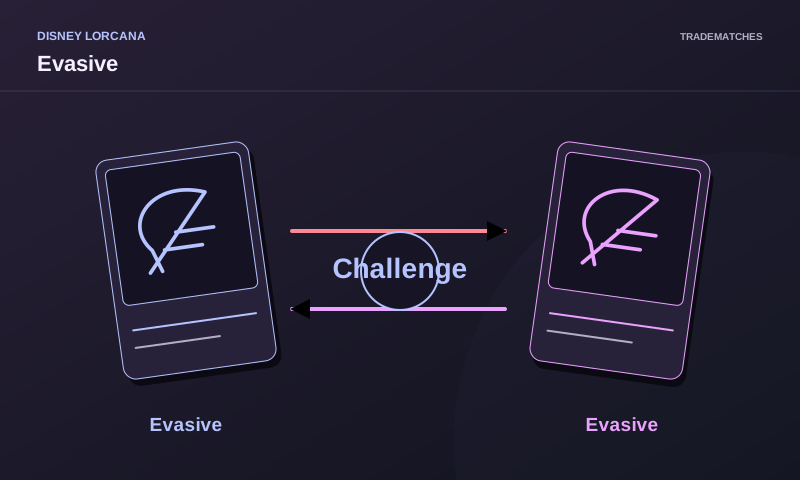
Evasive in Disney Lorcana limits who can challenge a character with that keyword: a character with Evasive can only be challenged normally by a character that also has Evasive. The current official rulebook adds a relevant exception: Alert allows a character to ignore that restriction when challenging, even though Alert does not grant Evasive. Evasive does not prevent questing, does not protect against any card effect, and does not allow challenging a character that remains in play. To determine if a challenge is legal, first check if the opposing character is exhausted, and then verify that your challenger either exceeds the Evasive limit or has a specific authorization.
The Normal Challenge Rule
During your main phase, you can challenge a character that is in play and has been in play since the start of your turn, unless a keyword or effect changes that requirement. The usual target is an exhausted opposing character; the rulebook also includes locations with their own rules. When declaring a challenge, you choose the target and check requirements and limitations—including Evasive—before exhausting your challenger. Then, the triggered abilities resolve and damage is applied. The Evasive restriction is evaluated during the legality of the challenge, not after both cards have already taken damage.
If the opposing character with Evasive is in play, it is not a normal challenge target for a prior reason: normally, you can only select exhausted characters. If it becomes exhausted, the second question arises: does your character have Evasive, Alert, or another permission that overrides the limit? Having sufficient strength to exile it does not make the attack legal if that check fails. Separating "exhausted" from "challengeable by this card" prevents the misconception that Evasive is the only protection a target can have.
What Evasive Actually Does
The official definition states that a character with Evasive cannot be challenged except by a character with Evasive, with exceptions introduced by other abilities such as Alert. This is a limitation on the selection of the challenge target. It does not reduce damage, does not increase resistance, does not change the amount of lore gained from questing, and does not make the character invisible to all actions. If an effect does not use the challenge procedure and can legally select that card, Evasive alone does not block it. For such other protections, there are texts like Ward, which serve a different function.
Example: the opponent exhausts a character with Evasive while making a quest. You control a character in play with Evasive and another in play without Evasive or Alert. The first can challenge if it meets all other requirements; the second cannot. Both could have high or low strength, but the number does not alter the limit. If your character without Evasive has an effect that grants Evasive until the end of the turn and that effect is already active, then it could pass the check. Verify the duration of the permission and the status of the target at the exact moment you declare the challenge.
Alert: The Important Exception in Current Rules
Version 2.2.0 of the complete rules, effective since July 2026, includes Alert. Its definition is clear: a character with Alert ignores the Evasive challenge limitations. It also explicitly states that Alert does not grant Evasive. Therefore, a character with Alert can challenge an exhausted target with Evasive even if it does not have Evasive, but it remains unprotected from normal challenges by characters without Alert. If you see an outdated summary that only mentions "Evasive vs. Evasive," update it with this exception.
The difference affects effects that specifically ask whether a character "has Evasive." Alert alone does not satisfy that condition. If a card requires a character with Evasive, do not substitute the word with Alert, because both could challenge the same target. In deck construction, Alert can serve as a response to Evasive threats, while Evasive can also help protect your own character when making quests. These are overlapping functions in attacking an evasive target, but not identical in defense or keyword synergies.
Evasive Does Not Allow Challenging in-Play Characters
It is common to read "only Evasive can challenge Evasive" and infer that a challenger with Evasive can choose any Evasive character in play. The prerequisite condition—that the usual target must be exhausted—is missing. If the opposing character with Evasive remains in play, you normally cannot challenge them, even with your own Evasive. An effect that specifically allows challenging in-play characters could change that legality; in that case, you would still need to check the Evasive rule. Each permission and each limitation answers a different question.
Example: your character with Evasive is in play; the opposing character with Evasive is also in play. The keyword match is not sufficient, and you cannot declare a normal challenge against them. On the next turn, the opponent exhausts it to make a quest. Now it can be a legal target for your Evasive, as long as your character is in play and has met its time requirement. This tactical shift explains why an Evasive character can safely generate lore when the opponent lacks an evasive response—but it does not mean it is impossible to counter.
Evasive vs. Actions That Select a Card
A spell that says "choose a character" is not a challenge by that definition. Evasive limits who can challenge the card; it is not a general protection against all effects that select a card. If the action meets its own target requirements and no other protection exists, it can affect the Evasive character. Here, it is important to distinguish Ward: the Ward rule prevents opponents from selecting that card when resolving an effect, but even Ward has nuances regarding effects that do not select. Evasive and Ward respond to different procedures, so a character with only Evasive does not automatically gain Ward.
The same distinction applies when evaluating elimination effects in a deck without Evasive characters. An action that exiles a selected character could respond to Evasive if it can legally select it; a character with Alert can challenge it; another effect could grant Evasive to one of your characters temporarily. Do not reduce all responses to "buy more Evasive." Compare cost, speed within your turn, available ink, and other text limitations. Some responses immediately remove the target, while challenging exposes your character to simultaneous damage.
What Happens When the Challenge Is Legal
Once the Evasive check is passed, a normal challenge proceeds. The challenger is exhausted, relevant challenge abilities are resolved, and both characters deal damage simultaneously based on strength and applicable modifications. Evasive does not reduce the damage the defender takes nor alter the damage the attacker inflicts. If damage counters reach the required threshold, the character may be exiled during the status check. Therefore, having Evasive does not guarantee victory over another Evasive—it only determines that the battle can be declared.
Suppose your Evasive challenger has strength two and the exhausted Evasive defender has strength four. The keyword allows the challenge, but the stats may make it disadvantageous for you. Perhaps a card that increases strength, heals damage, or removes the target is a better alternative. Calculate the full exchange before exhausting the card. The opponent does not need to "activate Evasive" when challenged—Evasive is a static ability that limits selection from the outset. If it is lost by an effect before declaring, the limit no longer applies; if it is gained before declaring, it re-activates.
Relationship with Quest and Lore Progression
A character with Evasive can make quests according to normal rules if it is in play and has not been "drying out." When it does, it becomes exhausted and enters a state where it normally could be challenged, but the Evasive restriction reduces the set of opposing characters that can select it. This is the source of its tactical value: it can generate lore while the opponent needs a proper response. It is not a guarantee of unlimited points—the opponent may have Evasive, Alert, legal actions, exhaustion effects, or tools to prevent questing.
If you use an Evasive character as a defense for your lore advantage, observe when it transitions from in-play to exhausted and what responses the opponent reveals. If you keep it in play, it may not be challengeable normally, but you will also not gain lore with it on that turn. If you exhaust it, you gain lore and accept the risks of available responses. In a race toward twenty lore points, calculating how many turns you would need with that character helps determine whether it's worth investing ink to protect it or whether expanding your lore sources is better.
Multiple Players or Multiple Evasive Characters
In multiplayer games, each opponent may have their own characters capable of responding. If one opponent lacks Evasive, it does not mean all are defenseless against your card—another might control an Evasive or a character with Alert. The text of an action may refer to "a character" or "a rival character" with different limits. Check who the target is and who the player generating the effect is. The Evasive keyword applies to any character attempting to challenge the bearer, but each player makes their own decisions during their turn according to the game structure.
If you control multiple Evasive characters, there is no rule requiring the opponent to challenge one before another. The opponent chooses among legal targets based on the situation, unless other restrictions like Bodyguard change the order. When Evasive and Bodyguard appear together on the board, apply all relevant challenge limits, not just the first one you remember. If a target becomes impossible to select due to a combination of requirements, consult the rulebook and exact card texts before dealing damage. A complete table read is safer than memorizing Evasive as "unchallengeable."
Common Mistakes When Using Evasive
The first is challenging an exhausted Evasive with a regular character without Evasive or Alert. The second is thinking that having Evasive allows challenging a character in play. The third is believing that an action selecting a character is blocked by Evasive without checking Ward or another protection. The fourth is treating Alert as if it grants Evasive for all effects. Before announcing a challenge, identify the challenger, the exhausted target, and the specific permission that overrides the limit. Then calculate strength and damage as in any other challenge.
If you purchase or trade a card for this mechanic, verify the current text and playable edition for your format. The keyword can be valuable, but cost, lore amount, and willpower determine whether it fits your plan. An Evasive card that gains lore each turn may serve a different role than one that removes opposing Evasive characters; they are not automatic replacements. The complete rules are updated, and the presence of Alert in the current version shows why an outdated guide may omit now-legal responses.
Frequently Asked Questions
Can a character without Evasive challenge an Evasive character?
Normally not, but Alert allows it to ignore that limit, and specific effects may change it. The target must also meet all other challenge requirements.
Does Evasive protect against actions that select a character?
No on its own. Evasive limits challenges; for an action, read its requirements and other protections on the card, such as Ward if it has one.
Can my Evasive challenge a rival Evasive character in play?
No through a normal challenge. The target character must be exhausted, unless an additional authorization modifies that rule.