Quest vs challenge in Lorcana: which action?
On this page
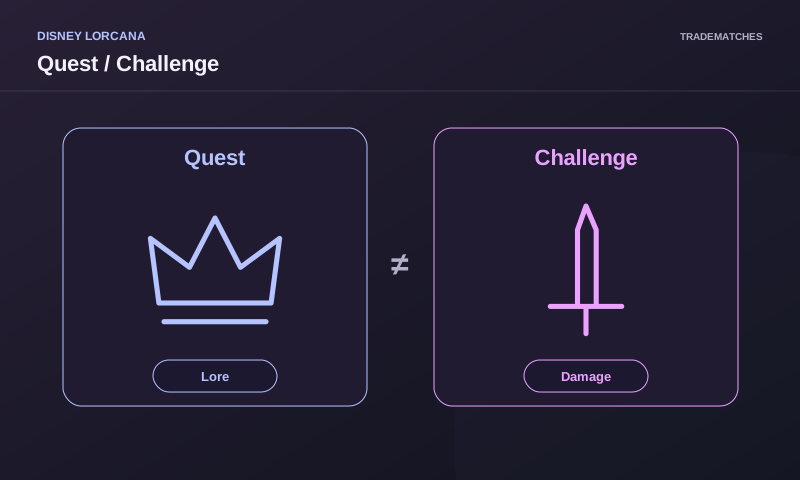
In Lorcana, making a quest and challenging are two distinct actions of a character. Quest increases your lore according to the value of the card; a challenge seeks to fight a rival character that is exhausted.
Quest: lore without combat
During your turn, you can exhaust a character that is suitable for making a quest and add the lore that shows on its card. This action does not itself inflict damage. The character becomes exhausted and, therefore, is usually available to be challenged by the rival in their next turn if it is still in play.
Challenge: objective and damage
To challenge, exhaust a character of yours that can do so and choose a exhausted rival character that is a legal target. Both characters deal damage according to their strength values; place the counters and check if either should be banished. You cannot challenge the rival player directly to remove their lore.
Decision on a real table
If you are two points away from winning and your character contributes two to lore, making a quest may end the game before fighting. If a rival has an exhausted character that threatens to win on the next turn, challenging may be better. Check abilities like Evasive or Bodyguard before choosing the target.
The common choice: exhausting a ready character
Quest and challenge begin similarly: during your turn you use a character of yours that can act and exhaust it. From there, the paths diverge. Quest adds to your counter the lore that corresponds to that character; it does not choose a rival character or deal damage itself. The challenge chooses a legal target from the rival and produces a confrontation in which both characters can receive damage. You do not gain lore by challenging just because your character has printed lore value: that number is used when making a quest, except if a ability indicates otherwise.
As both actions exhaust the character, you will usually have to choose one for that turn. If you make a quest first, it will not be ready to start a regular challenge afterward. If you challenge first, you also will not be able to use it for a quest without another effect preparing it and fulfilling the other rules. The order can matter when a ability is triggered by making a quest or by challenging. Read that ability before moving counters, but keep the main question separate: «Do I want to advance toward 20 lore or interact with a specific threat from the rival table?».
Quest: how to calculate lore and risk
Look at the lore value of the character, identified by the corresponding symbol on the card. When making a quest with it, increase your total lore by that amount, applying any relevant modifier. Do not compare its strength with the will of another character: there is no regular combat in a quest. If your character contributes two to lore and you were at eighteen, that action may reach the goal of twenty and end the game when appropriate according to the rules. Calculate the total before deciding if you want a longer play.
The character that makes a quest becomes exhausted. In the next turn of the rival, an exhausted character can be a challenge target if there is no specific protection or restriction. Therefore, a quest has an immediate benefit and a future exposure. Do not interpret this as a prohibition of making a quest with a valuable card: sometimes the lore gained clearly compensates for the risk. The important thing is to review the rival field, possible defense abilities, and how many turns are left to close the game.
Challenge: legal target and reciprocal damage
To a regular challenge, you choose a exhausted rival character that can be challenged. A prepared rival character is usually not a legal target just because its ability bothers you. After that, compare the strength of both characters with the will and the damage they already have marked. Both characters deal damage according to their strength values, except if an effect modifies the situation. The damage is marked and does not automatically disappear at the end of the challenge. If the damage of a character reaches or exceeds its will, that character is banished according to the rules.
This makes challenging not a «free attack». Your character can banish the target and take damage, or even be banished itself. Before announcing the challenge, ask how much damage each will receive and what would happen in the following turns if both survive. A high strength does not guarantee a good play if your own will is low or already has marked damage. Nor can you assume that the target exhausts again to defend: it was already exhausted; it participates in the fight and does damage even if it is not prepared.
The state of exhaustion and the exception of Rush
A character newly played is usually drying and cannot perform actions that require exhausting it during that turn. Therefore, you cannot lower a card and make a quest with it immediately in the regular case. The Rush ability creates a limited exception: it allows the character to challenge in the turn it is played, but it does not automatically grant permission to make a quest that turn. The official notes of Lorcana describe Rush precisely with that difference. If an additional effect changes the state or permissions of the card, read its full text.
The common mistake is concluding that «can act already» means «can do any action». A character with Rush can be an immediate response to a exhausted rival threat, while its lore contribution through a quest will have to wait. If the rival does not have exhausted characters you can challenge, Rush does not create its own target. The ability grants a temporary permission for a specific action; it does not modify the target requirements or grant lore automatically.
Five decisions with numbers
1. Two points to win
You have eighteen lore and a ready character that gains two when making a quest. If there is no effect that prevents it, making a quest reaches twenty. Challenging a exhausted rival character could eliminate a threat, but maybe you are giving up an available victory now. Before fighting, count your lore exactly and confirm the current value of the character. A lore modifier can change the outcome; the idea is not to ignore a line of victory just because you focus on the fight.
2. A rival that will win on their next turn
You are far from twenty lore and the rival has a exhausted character that threatens to gain three on their next turn. Your ready character could gain one by making a quest or challenge that threat. If the challenge banishes the threat at an acceptable cost, delaying the rival may be more valuable than your immediate point. Check before the damage of both sides and if there is protection like Evasive or Bodyguard that modifies the legal target. Do not decide solely based on the lore number.
3. Challenge with accumulated damage
Your character with strength three and will four already has two points of damage. The rival character has strength two, will three, and no damage. In a regular challenge, your character can deal three damage and banish the rival; the other can deal two, carrying the accumulated damage of yours to four and banishing it as well. The exchange could be correct, but it is not a unilateral banishment. Counting the previous damage avoids being surprised when your attacker disappears.
4. Rival prepared without a target
The only rival character is prepared. Your character has enough strength to defeat it if there were a fight, but you cannot challenge it through the regular path while it is still prepared. You can make a quest, play another card, or use an effect that changes the situation if you have one. An imaginary attack against a prepared character does not become legal just because it is tactically useful. Always check the status of the target before comparing fight numbers.
5. Character with Rush newly played
You play a character with Rush and the rival has a exhausted character. Rush allows you to challenge it in that same turn, even though the newly played character is drying for other actions. If you manage to eliminate the threat, you have used the immediate effect of the card. Do not note lore as if it also made a quest and do not attempt to challenge a prepared character without another exception. The ability opens a specific combat option.
Evasive, Bodyguard and other texts that change the choice
The basic rules describe the target of a regular challenge, but some abilities affect who you can choose. Evasive may require the challenger to meet a specific condition to reach the target. Bodyguard may restrict the choice when there is a protected exhausted character. You do not need to memorize all combinations to decide between quest and challenge: identify the exhausted rival characters, read the abilities that alter the targets, and only then calculate the damage. If your preferred target is not legal, quest may be the best available action without making the rival invulnerable forever.
Locations have their own challenge rules and should not be mixed without more with the question of whether a prepared rival character can be attacked. If a card invites you to interact with a location, read its specific section in the complete rules. Here, the central comparison is between gaining lore with your character and using it to fight a rival character. Adding exceptions of other types of cards without reviewing their text can lead to an incorrect conclusion about the target or the damage.
Decision routine before exhausting the card
First, confirm that your character is ready and can act; check if it is drying and if it has an exception like Rush. Second, calculate how much lore you would gain by making a quest and whether it ends or brings the game close. Third, if you consider challenging, identify a legal target and calculate the damage in both directions including the previous damage. Fourth, evaluate which character will be exhausted and exposed to the rival's turn. Only then announce the action and exhaust your card. This sequence avoids starting an illegal challenge or losing a clear opportunity to gain lore.
In a learning game, physically indicate the lore symbol when you make a quest and the strength and will values when you challenge. This way, the numbers do not cross. If a special effect modifies the action, consult the card and current rules before making irreversible changes to the counter or damage markers. Two actions that start by exhausting a character can have very different results; choosing well requires reading the table, not just remembering a key word.
FAQ
Can a character make a quest and challenge the same turn?
Usually not: both actions exhaust the character, except if an effect prepares it again.
Can I challenge a prepared rival character?
Usually not. The target of the challenge must be exhausted, except for a card exception.
Checked sources
When choosing to quest or challenge, check Evasive, Bodyguard, Support and Reckless vs Challenger.
Before questing or challenging, check whether the character may act yet and how locations gain lore.