Magic Adventure cards and casting from exile
On this page
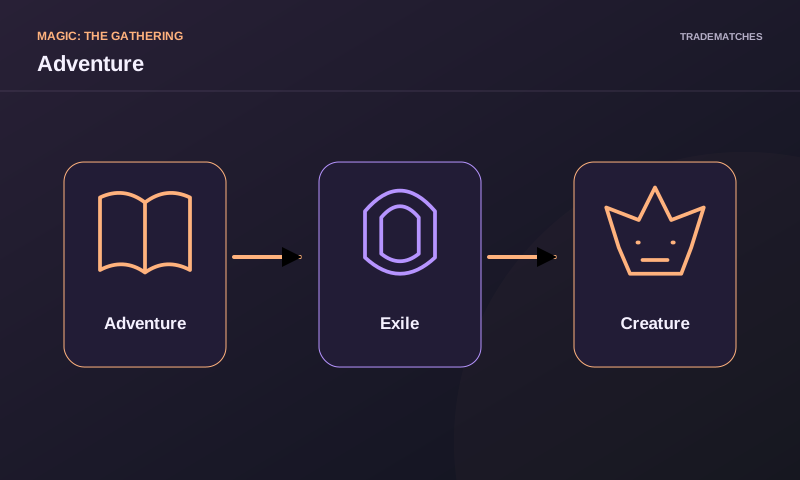
A Magic Adventure card is one card offering two ways to play it. You can cast its Adventure spell or use its normal characteristics. If the Adventure resolves, the card is exiled and you receive permission to play its normal part from there later. You still pay the applicable costs and follow the appropriate timing rules.
One card with two sets of characteristics
The Adventure appears in a smaller inset frame with its own name, cost and spell type. The normal part has another name, cost and text. The official Baldur's Gate mechanics article illustrates this layout and how resolving an Adventure can precede using the card normally.
Section 715 of the current comprehensive rules describes adventurer cards. Printing two information sets does not make the physical object two cards. Drawing one draws a single card, and discarding it discards one, even though a suitable permission may later let you choose between two ways of casting it.
You do not turn it over as you would a double-faced card. Adventure supplies alternative characteristics for the same object. The chosen spell matters particularly while it is on the stack. In other zones, the card normally has its ordinary characteristics, rather than combining both printed type lines into a single set of properties.
Playing the normal part directly
Casting the Adventure first is optional. If you may play the card from your hand and satisfy the normal part's requirements, you can do that immediately. The Adventure inset is an alternative use, not an additional payment you must make before accessing the rest of the card.
Once an Adventure creature is on the battlefield, the printed inset does not allow you to cast the Adventure from there. A separate permission would be needed to make such a play legal. The card's structure alone supplies no free second activation after you have deployed the permanent.
If the card later returns to your hand, assess its available uses from that zone again. This is not continuing the previous Adventure. Check current permissions and costs rather than treating one physical copy's history as authorisation to cast either part indefinitely from any zone it occupies.
Casting and resolving the Adventure
Announce the Adventure spell and use its alternative characteristics to check whether it can be cast. Pay its cost, choose its targets and satisfy its restrictions. On the stack as an Adventure, the spell has the Adventure's characteristics, not the creature type or other normal type printed elsewhere on the card.
Timing follows that spell and any applicable permissions. A sorcery Adventure does not acquire instant timing merely because the normal card has another ability. Conversely, an instant Adventure uses the appropriate instant permission without automatically inheriting the usual timing of a creature spell. Read the selected spell, not only the larger part of the frame.
When the Adventure resolves, its controller exiles the card instead of putting it into its owner's graveyard as a normally resolving spell. For as long as it remains exiled that way, that player may play it normally. This resolution creates the permission. Merely having an Adventure printed on a card exiled for some other reason is insufficient.
Permission from exile does not mean a free permanent
The normal part does not automatically enter the battlefield when the Adventure finishes. You must play it at a permitted time and pay the relevant costs. For an ordinary creature, that typically means your main phase, an empty stack and priority, unless an ability or effect supplies different timing.
The Adventure permission lasts while the card remains in that exile; it does not itself require playing it during the same turn. You may save it for later. However, additional restrictions still apply. Permission to use a zone does not defeat a casting prohibition or remove requirements associated with the normal card type.
The current rule uses permission to play the card. Examine its normal characteristics rather than assuming every Adventure card in every product must be a creature matching older examples. The relevant costs and rules depend on the actual card and action you are attempting. Where a special permission changes one requirement, identify precisely which requirement it changes.
| Situation | Result for Adventure permission |
|---|---|
| The Adventure resolves | The card is exiled and may later be played normally from there |
| The Adventure is countered | Its resolution does not grant that permission |
| Another effect exiles the card from hand | The printed Adventure alone grants no such permission |
| You play the normal part from that exile | The card leaves exile as the permitted play is processed |
| The card changes zones before being played | The old permission does not follow the new object |
Countered spells and illegal targets
If an opponent counters the Adventure spell, it has not resolved. You therefore do not apply the usual resolving-Adventure process that exiles it with permission to play the normal part. Follow the countering effect and applicable destination rules. Do not put the card with your available Adventures simply because that is where successful ones go.
If every target is illegal when the spell would resolve, it also does not resolve. This differs from a spell that resolves but fails to accomplish some instruction. A missing target can change the outcome, but check whether another legal target remains and how the instructions are written before deciding that the entire spell fails.
For example, an Adventure with one target does not resolve if that target is no longer legal. An Adventure with several targets can still resolve where at least one remains legal, following the general rules. Do not conclude that an unhelpful result prevents Adventure exile without first establishing whether the spell actually resolved.
Its own permission cannot recast the Adventure
The permission created by resolving the Adventure lets you play the card using its normal characteristics. It does not let you choose the Adventure again from that exile. If the normal part is a creature, you cannot use that permission to repeat the inset instant or sorcery indefinitely.
Another independent effect might allow a different way of casting the card from exile. Identify that permission and check its exact scope. Do not credit the Adventure rule for an option supplied by another card. Keeping the permissions separate avoids mistakes with effects that let you play exiled cards under additional conditions or time limits.
Organise exiled cards so both players can distinguish those with Adventure permission from cards exiled by other effects. Visible groups and clear explanations of their origins help track the game. This physical organisation does not create a new game zone or change the text authorising use of each card.
Characteristics in the hand and graveyard
Outside the stack as an Adventure, the card has its normal characteristics. If its normal part is a creature, a creature search can find it when the remaining criteria fit. An instruction searching for an instant does not make it an instant just because the Adventure inset has that type.
Similarly, mana value in the hand or graveyard uses the normal characteristics. On the stack as an Adventure, the spell's alternative characteristics apply. Do not add both mana costs together or select whichever cost is cheaper whenever another effect asks for a mana value. The object's current characteristics determine the answer.
Casting permissions from special zones require an additional check. When deciding whether an Adventure can be cast, the rules evaluate its alternative characteristics. That does not retroactively change how an earlier effect selected a card or target before casting was attempted. Choosing a card and checking a proposed spell are related steps, but they are not the same operation.
This distinction is especially useful when reading a permission that mentions a card type. First establish whether the effect can find or select the card in its present zone. Then establish whether the proposed spell satisfies the casting permission. Skipping either stage can turn a valid general rule into an incorrect answer for a particular card interaction.
Copying an Adventure spell
A copy of an Adventure spell on the stack also uses that spell's alternative characteristics. It does not become a copy of the normal creature simply because the original physical card has a creature part. Apply the copied spell's rules and any target choices the copying effect permits.
Copying a spell also does not create another physical card you can retain in exile and later play as a creature. Distinguish the spell-copy object from the actual card representing the original spell. An effect doing something more specific, such as copying a card and allowing the copy to be cast, must be read and resolved using its full instructions.
Frequently asked questions
Must I play the creature during the Adventure's turn?
The ordinary permission lasts while the card remains exiled that way. You can wait, while respecting the normal part's timing, costs and any additional restrictions.
Does a countered Adventure leave the creature available?
Not through the Adventure resolution rule. A countered spell does not resolve and therefore does not generate that permission to play the card from exile.
Can I cast the Adventure from the battlefield?
The printed inset does not grant that option. You would need an independent permission making the cast legal from that zone.