Commander damage in Magic: tracking 21
On this page
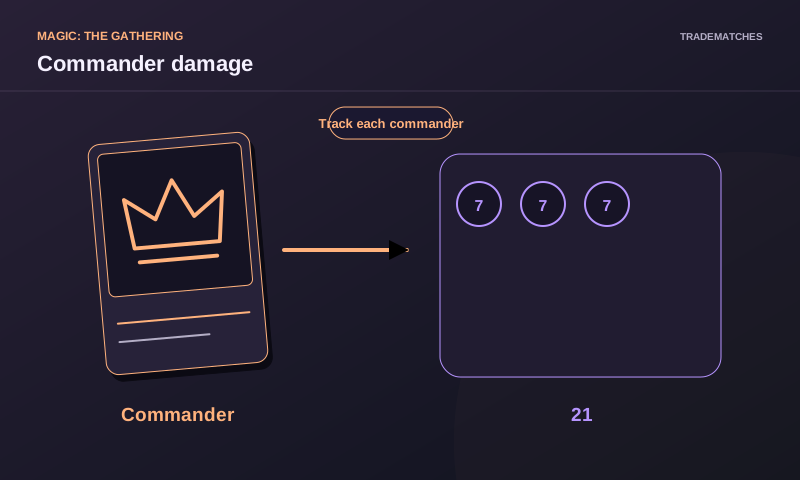
In Commander, a player loses if the same commander has dealt 21 or more combat damage to them during the game. The total is tracked per pair "specific commander → player who received damage." Damage from two different commanders is not summed to reach 21, even if they share the same owner or are in the same deck with a Partner. Damage from abilities, spells, or creatures that are not commanders is also not included. The damage counter follows the commander across zones and does not reset if another player takes control of it. Keeping a visible table prevents losing track of a loss condition that is independent of the initial 40 life points.
The Number 21 and What Damage Counts
The official Commander format page describes the condition as: 21 or more combat damage dealt in combat to a player by the same commander throughout the game. "In combat" means the damage that the creature deals as part of the combat phase when attacking and that reaches the player. A damage-causing ability triggered by an attack that deals damage separately is not automatically added to the commander damage counter, even if the ability originates from the commander itself. First identify the damage event; then determine its source. Occurring during a turn with combat does not automatically convert any damage into combat damage.
Example: Your 5/5 commander attacks a player and is not blocked. If it deals five combat damage, you record five for that pair. If, in addition, a non-combat damage ability from that commander deals two points of non-combat damage, the player's life total may drop by seven in total, but the commander damage counter only increases by five. If in a later turn the commander deals four combat damage to the same player, the counter reaches nine. It is not necessary for the damage to occur in consecutive turns or for the commander to remain in play continuously.
One Counter Per Player Who Receives Damage
In a multiplayer game, the same commander can attack different players in different turns. Damage to each player is tracked separately. If your commander deals ten combat damage to Ana and eleven to Bruno, neither player has received 21 damage from the same commander when adding both totals. Ana has ten in her record; Bruno has eleven. If later the commander deals eleven more damage to Ana, she reaches 21 and loses, even though Bruno remains at eleven. This separation allows for accurate threat assessment and defensive negotiation: "my commander has dealt twenty to Ana" is very different information from "it has dealt twenty in total across the table."
It is also possible for multiple commanders to attack the same player. In that case, the player needs a separate column for each commander. Receiving twelve damage from one and nine from another totals twenty-one damage, but does not meet the condition of 21 damage from the same commander. The player may lose due to life total reaching zero, of course; these are parallel loss conditions. When there is a Partner or another legal way to have two commanders, Wizards clarifies that each commander is tracked individually. The relationship is not "deck owner → player," but rather "designated commander object → player."
No Reset When Changing Zones
A commander can die, be exiled, return to the command zone, and be reactivated. The combat damage it has already dealt continues to be tracked. The official page states that the commander is tracked across zone changes for this purpose. For example, it deals eight damage to Clara, leaves the battlefield, and returns several turns later. If it then deals six damage to Clara, the counter reaches fourteen, not six. The additional cost of reactivating from the command zone is a separate cost; it does not affect the combat damage history.
A common mistake is using a physical counter placed on the creature to represent accumulated damage. When the card leaves the battlefield or changes zones, that counter may be lost or confused with +1/+1 counters. Keep the commander damage in a separate sheet, life tracker, or external marker with the commander's name and the affected player. Record the total after each combat damage event, before proceeding with subsequent actions. This way, you don't rely on remembering an attack from half an hour ago when the commander returns to the battlefield.
Control of the Commander Can Change
If a player takes control of a commander that belongs to another player, the prior damage dealt by that commander does not disappear. The official notes explicitly state this example. What matters is the identity of the commander that dealt the damage and the player who received it, not who controlled it at each moment. If a commander had already dealt fourteen damage to a player and another player takes control to attack that player for seven more, the player reaches 21 damage from the same commander and loses. The new controller does not start a new counter from zero for that source.
Even the owner of a commander can receive combat damage from their own card if another player controls it and the attack conditions are met. Official Commander notes indicate that this possibility also counts. Do not exclude a player from the table simply because they own the commander. In political games, taking control of a large commander can shift who is at risk, but it does not rewrite the history. Before declaring attacks, ask whether there are existing counters for the relevant pair and verify the total publicly.
Damage to a Player Against Creatures or Planeswalkers
For this condition, the commander must deal combat damage to a player. If the attack is blocked and the damage is dealt to a blocking creature, that amount does not count in the player's damage counter. If a commander attacks a planeswalker or a battle, the damage dealt to that permanent is not counted as commander damage to the player simply because both are controlled or protected by the same player. Analyze the actual recipient of the damage. Only record the amount that the player actually received as combat damage from that commander.
There may be effects like "crushing" that allow assigning part of the combat damage to the defending player after assigning it to blockers. In that case, record only the portion that the player actually received, not the total power printed on the creature. If an effect prevents or redirects damage according to the rules, wait to know the actual damage dealt. Recording before resolving prevention or assignment may falsely advance a loss. In advanced situations with changing sources or targets, consult the exact text and complete rules; do not use the creature's power as an automatic substitute for the damage actually caused.
Total Life and Commander Damage Are Two Separate Counts
Commander typically starts with 40 life per player. Normal commander damage usually reduces life and also increases the commander damage counter. However, later life recovery does not reduce the historical damage counter. A player might have 60 life due to gain effects and still lose when receiving the 21st combat damage from a specific commander. Conversely, a player may lose due to life dropping to zero or below without any commander reaching 21. It is useful to show both values separately, as each can determine the outcome of the game.
Imagine Leo has received twenty combat damage from a commander and then gains ten life. He remains one point below the 21 threshold for that source. If the commander deals one more combat damage, he loses even though his total life remains high. If he receives ten combat damage from a regular creature, his life may drop significantly, but that damage does not increase the specific commander counter. This distinction prevents blocking decisions based solely on the life display. With a counter at twenty, a small attack from that commander may be more dangerous than a large hit from another creature.
Two Commanders in the Same Deck
Some abilities allow starting the game with two commanders. Each maintains its own damage identity. Wizards explained in Commander notes that each commander's damage is tracked individually: you need one commander to reach 21 damage against a single player. Do not add thirteen from one and eight from the other. If an effect increases the power of both, continue tracking the source of each hit. This separation applies even if both cards enter and leave the command zone multiple times.
This rule influences deck construction. A strategy aiming to eliminate players through commander damage may focus improvements and evasion on one commander or use both as independent threats. Distributing damage equally may reduce life, but it takes longer to reach 21 with one commander alone. It does not mean that distributing attacks is always bad: in multiplayer, you might need to pressure multiple players or maintain open options. The key is to calculate with the correct record before purchasing support cards for that strategy.
A Practical Table for the Game
Draw one row per commander and one column per player who can receive damage. Write the name or a clear abbreviation of the commander, especially if there are two versions with similar names at the table. After each combat damage event, add the total in the cell "source → recipient." If a copy or effect raises questions about which is the commander, consult the Commander rules and the specific card before adding. A shared list in the center of the table reduces disputes at the end, and an app should allow viewing the history by source, not just a total of "commander damage."
At the end of a turn with multiple combats, review the cells near 21. If a player receives more combat damage than needed to exceed the threshold, there's no need to round up to 21: record the actual amount if the game continues for other players or if there's any relevant interaction. In a multi-player game, the game may continue after one player loses and leaves. The damage a commander has dealt to the remaining players remains as recorded. Keeping the record up to date is a small task that prevents having to reconstruct an entire combat phase later.
Common Errors
Do not sum damage from different commanders; do not count ability damage as combat damage; do not reset the counter when the commander returns from the command zone; do not erase the history because the player gained life; and do not record damage to a blocking creature as if it had reached the player. Each error can potentially change the loss condition. When a dispute arises, identify four details for each attack: what object was the commander, who received the damage, whether it was combat damage, and how much damage was actually dealt after modifications. With these answers, the sum becomes mechanical.
Frequently Asked Questions
Do the damages from my two commanders add up to 21?
No. Each commander must have dealt 21 or more combat damage to the same player individually.
Does the counter reset if the commander dies or changes control?
No. The same designated commander is tracked throughout the game, across zones, and through changes in control.
Does healing reduce previously received commander damage?
No. Gaining life changes the total life, but does not erase the accumulated combat damage from that commander.