Commander tax in Magic: calculate every recast
On this page
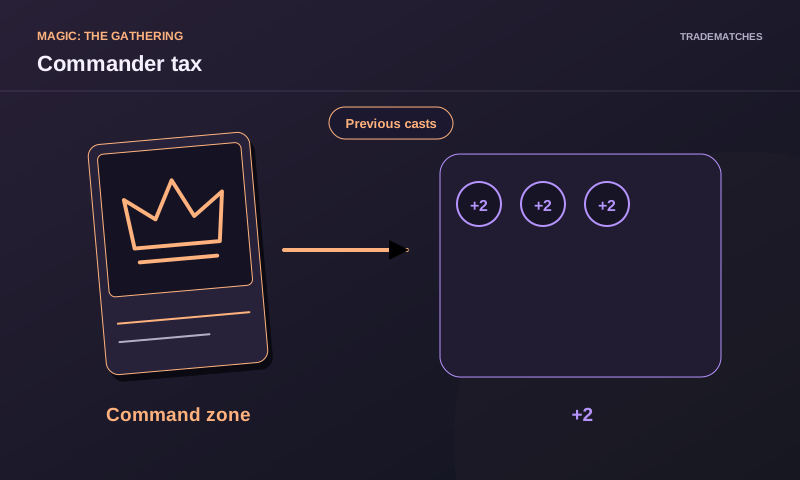
The commander tax adds two generic mana for each time you've cast that commander from the command zone in that game. Counts castings, not deaths or returns to the zone.
Keep a count per commander
The first time from the command zone, you pay its normal cost; the second adds two mana, and the third adds four. If the printed cost is three mana, the three game costs would be three, five, and seven before other increases or reductions. Note the count if the game extends.
Returning to the zone does not increase the count
That the commander dies and returns to the command zone does not count by itself. What increases the next cost is having cast it from that zone. If a card puts it in your hand and you cast it from there, that casting does not incur the tax nor increase the counter for the next casting from the zone.
Two commanders, two counters
If your deck uses two allowed commanders, each has its own count. Casting one twice does not increase the first time of the other. The tax is an additional cost, so it can still apply even when another effect lets you cast the spell for an alternative cost or without paying its mana cost.
The formula in one sentence
When casting a commander from the command zone, add {2} for each previous casting of that same commander from that zone during the game. The first time, the previous count is zero; the second, one; the third, two. The increase is generic mana, not additional color symbols. If its mana cost is {2}{R}, the three times from the command zone would cost {2}{R}, then {4}{R}, then {6}{R}, before applying other increases or reductions. The symbols {R} still require red mana.
This formula counts actions of casting, not appearances on the field. If the spell was counterspelled, you still cast it from the command zone and that casting counts for the tax. If an effect puts the commander directly on the field without casting it, that entry does not count as a casting. The distinction between "casting" and "putting on the field" avoids many erroneous calculations. When in doubt, reconstruct from which zone each casting began and note it, rather than counting how many times you've seen the commander on the table.
What the counter records and what it does not
The counter increases when you cast that commander from the command zone. It does not increase when it dies, is exiled, returns to the hand, is returned to the command zone, or changes controllers. These movements may make another casting from the zone possible, but they are not the event that increases the tax. A commander that returns to the command zone without having been cast from it during the game retains its previous count, even if that count is zero. The current zone of the card is not sufficient to determine the cost: you need its history of castings.
If you cast it from the hand, you do not pay the tax from the command zone for that casting nor do you increase the count you will use next from the zone. The same applies when another effect lets you cast it from a different location. Do not say "it's my commander, so it always costs two more": the rule has a condition of origin. This can influence the decision to put it in the hand or on the command zone when a card offers you a legal choice.
How to calculate the total cost with other effects
The tax is an additional cost. To determine the total cost of a casting, start with the mana cost or the alternative cost you are going to pay, add the applicable increases — including the tax if you cast from the command zone — and then apply the relevant cost reductions. Do not subtract a reduction before discovering how much tax there is nor assume the tax disappears because another effect says "without paying its mana cost." Official notes from Commander Masters explicitly state that a casting from the command zone for an alternative cost is still subject to the tax.
Imagine a commander with a cost of {3}{U} cast for the third time from the command zone. The base cost would be {3}{U} and the tax, {4}; before other effects, you would pay {7}{U}. If an applicable effect reduces the generic cost by {1}, the resulting total could drop to {6}{U}. The reduction does not convert the blue symbol into generic. If there is another increase or a card's additional cost, include it according to the cost procedure. The example teaches the operation, not that a specific reduction affects all components of all spells.
When casting "free" from the command zone
An instruction that allows casting a spell "without paying its mana cost" removes that mana cost from the count, but not necessarily the additional costs. If it is your commander cast from the command zone and you have already cast it twice from there, the associated tax would be {4}. You need a legal way to pay that amount unless another text explicitly modifies the situation. "Free" is a dangerous abbreviation in Commander: ask which part of the cost is exempt and which other costs remain in effect.
There may also be an alternative cost that replaces the printed mana cost. The question remains whether the spell is cast from the command zone. If the answer is yes, calculate the tax based on the number of previous castings from that zone and add it to the alternative cost, subject to other cost rules. If you cast it from the hand, that tax does not apply. Do not transfer an example of a specific card to all cards with similar wording; read the exact instruction that allows you to cast the commander.
Six cases that clear common doubts
1. The first casting is counterspelled
Your commander with a cost of {2}{G} leaves the command zone for the first time. The opponent counterspells the spell. Although it never reached the field, it was cast from the command zone once. If you cast it again from there later, the tax is already {2}: before other effects, you would pay {4}{G}. Do not reset the counter because the first attempt failed. The tax measures the casting, not the success of the resolution.
2. Returns to the zone without having been cast
An effect places your commander in another location and ends in the command zone, but there was no new casting from the zone during that sequence. That journey does not increase the count. If it had been cast once from the zone before, the next casting from there would add {2}, not {4}. Registering movements as castings is the cause of most disputes about how many times "it has returned."
3. You carry it to the hand and cast it from there
Your commander had been cast twice from the command zone, so the next casting from that zone would add {4}. A card puts it in your hand and you cast it from there paying the applicable cost, without the tax from the command zone. If it returns to that zone later, the next casting from there would still add {4}, not {6}: the casting from the hand did not increase the count. Wizards has explained this interaction in official card notes like Command Beacon.
4. Two commanders with Partner
Your deck has two allowed commanders. You cast the first twice from the command zone; you cast the second for the first time from that zone. The first would have a tax of {4} on its next casting, and the second started with zero. Do not add their castings to get a common count. Each commander has its own history. The same idea applies when a format or ability allows two commanders in another way, following the specific rules of that combination.
5. A reduction makes the casting cheaper
The commander was cast once from the command zone and now has a tax of {2}. A card reduces the cost of the next spell you cast. Calculate the base cost, add the {2}, and apply the reduction that actually corresponds. The counter continues to increase for the casting even though you paid less thanks to the reduction. Do not note the mana spent as if it were the number of taxes: they are different data.
6. It leaves the field multiple times
Your commander enters the field and returns to the command zone via an effect; it reenters without being cast and leaves again. It may have changed zones multiple times, but the tax only depends on the actual castings from the command zone. This scenario is useful to distinguish effects that "put" a card on the field from effects that allow "casting it." Look at the verbs of each card before updating your count.
A simple way to keep track in multiplayer
Place a die or a visible note next to each commander to indicate how many times it has been cast from the command zone. Increase the number at the moment of casting, not when it resolves or when it dies. If you have two commanders, use separate counters. When calculating the next cost, multiply the number by two and add that generic amount to the corresponding cost. This practice does not change the rules; it simply avoids long games depending on the memory of four players.
If someone disputes, reconstruct the sequence: From which zone was the card cast each time? Was there a direct placement on the field? Was there any casting that was counterspelled? The answer to these questions fixes the counter. Then calculate the total cost with the current reductions and increases. Keeping "history of castings" and "mana paid that time" separate avoids confusing a temporary discount with a reset of the tax. For a complex interaction in an event, consult the judge before paying and moving the card to the pile.
Frequently Asked Questions
Does the tax reset when returning to the command zone?
No. The count lasts throughout the game for that commander.
Is there a tax when casting it from the hand?
No. The rule applies to castings from the command zone.
Checked sources
Commander tax increases the cost of casting your commander; commander damage is a separate count that can cause a player to lose.
For more Commander rules, see when to move it to the command zone and how the stack and priority work.