Deathtouch vs indestructible in Magic
On this page
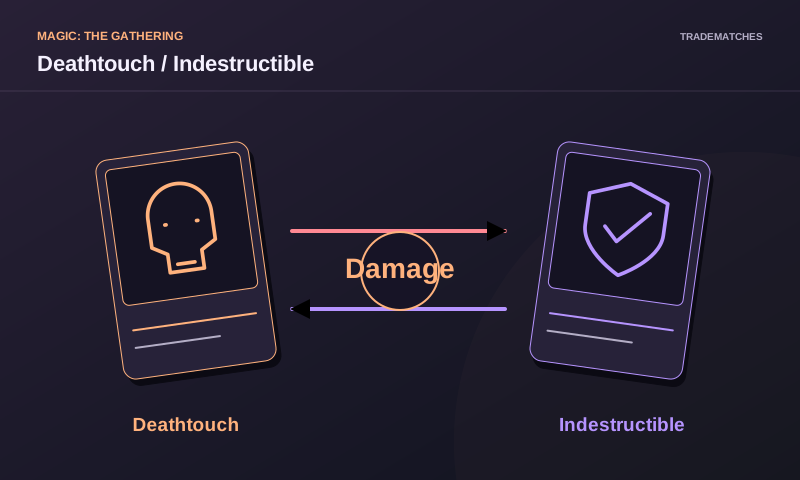
A creature with indestructible survives damage from a creature with deathtouch. Deathtouch makes a positive amount of damage lethal for the relevant checks, but indestructible prevents destruction. Removing the creature requires another legal mechanism, such as exile, sacrifice or reducing its toughness to zero. The exact cards and other restrictions still matter.
What deathtouch changes
Deathtouch changes how damage dealt by a source to a creature is treated. A positive amount can be lethal even when it is smaller than the creature's toughness. That makes a small creature dangerous to a large blocker. It does not turn every effect on the card into destruction, and zero damage is not enough to trigger the consequence.
Imagine a 1/1 with deathtouch dealing one damage to a 6/6 with no other abilities. The damage can cause the 6/6 to be destroyed when state-based actions are checked. Give that 6/6 indestructible instead: the damage is still dealt, but the destruction that would normally follow does not remove it. Deathtouch contains no exception that overrides indestructible.
What indestructible prevents
Indestructible prevents destruction from lethal damage and effects that say destroy. It does not mean the creature cannot take damage, lose abilities, change controllers or leave the battlefield. Nor does it automatically prevent a spell from targeting it. These distinctions keep indestructible separate from hexproof, ward and protection.
Damage dealt to an indestructible creature remains marked for the applicable period. If the creature later loses indestructible while it has lethal damage marked, state-based actions can destroy it. Do not remove damage markers just because the creature survived. The ability prevents a consequence of damage; it does not erase the record of damage already dealt.
Damage does not reduce toughness
Damage does not subtract from the toughness number. A 4/4 with three damage marked still has toughness 4 unless something changes that characteristic. An effect giving it -3/-3 does change its power and toughness for the stated duration. The two situations may look similar when represented by a die, but they interact differently with indestructible.
An indestructible creature with toughness zero or less is put into its owner's graveyard by a rule that does not destroy it. For example, giving an indestructible 4/4 -4/-4 can remove it. Dealing four damage produces a different result: lethal damage alone cannot destroy that creature while it remains indestructible. Check which operation the card actually performs.
Exile and sacrifice are different removal methods
An exile effect can remove an indestructible creature if it can legally affect it. A sacrifice instruction can also remove one when its controller must choose and sacrifice that creature. Indestructible does not stop either method. However, read who chooses and what qualifies. Making an opponent sacrifice a creature does not necessarily let you choose their indestructible creature.
If the opponent controls two creatures and chooses which to sacrifice, they may give up the less important one. Count their options before treating that card as a reliable answer. “This can remove an indestructible creature” describes a possible mechanism. It does not guarantee that the particular creature you wanted will leave in every position.
Hexproof and ward still need checking
A creature can have indestructible alongside other defensive abilities. A targeted exile spell must satisfy targeting requirements and any relevant costs or restrictions. Understanding that exile avoids destruction does not let you ignore hexproof or ward. The removal method and your permission to affect the permanent are separate questions.
Read an answer in two stages: can you legally cast or activate it with the intended target, and what will it do if it resolves? A spell that does not target may avoid a hexproof restriction, but if it only destroys creatures, indestructible still protects them. A useful answer must fit the whole situation rather than just one keyword.
Deathtouch together with trample
When an attacker has deathtouch and trample, a positive amount of damage can count as lethal when assigning damage to a blocker. That can leave the rest available for the defending player. An indestructible blocker can survive the damage afterward. Assigning a lethal amount and actually destroying the creature are different steps.
For example, in a simple case, a 5/5 with both abilities blocked by one indestructible creature can assign one damage to that blocker and four to the defending player. Include other effects and restrictions before applying the example to a real game. The blocker does not have to die for the permitted trample assignment to work.
Prevention and losing abilities
If all damage from the deathtouch source is prevented, it has not dealt a positive amount to the blocker. Do not apply the deathtouch consequence merely because the creatures participated in combat. Check the damage actually dealt and the source's relevant abilities. Assignment, prevention and the resulting state-based actions each answer a different question.
An effect removing indestructible can also matter before damage or a later check. The result depends on its timing and wording. You cannot announce that you remove indestructible after the sequence is over and invent a response window that has passed. Use the stack and priority correctly, and consult current Oracle text for the exact interaction.
Choosing answers for a deck
You do not need a deck full of cards that answer only one indestructible threat. Start with the threats you actually encounter and identify legal answers that serve other roles too. Exile, toughness reduction and sacrifice have different strengths and limitations. Check colours, costs and format legality before looking for copies.
In Commander, also consider whether an answer depends on a player controlling only one creature or gives that player other resources. In a tournament deck, assess its role and current legality. An inexpensive collectible is not automatically the best strategic answer, and a premium illustration does not change the rules interaction. Choose the card before choosing the cosmetic version.
Three practice cases
First, a 1/1 with deathtouch damages an indestructible 6/6: the 6/6 survives while it remains indestructible. Second, a spell gives that 6/6 -6/-6: zero toughness removes it without destruction. Third, a spell says destroy it: indestructible prevents that destruction, even if the spell legally targeted the creature.
These cases isolate mechanisms so you can read more complicated cards. A real game may add protection, replacement effects or changing characteristics. Apply all conditions that exist rather than treating the examples as permission to ignore them. If players disagree during an event, call the judge before moving cards or taking further actions that make the state harder to reconstruct.
Check both the effect and the target
Before choosing a removal card, write down the exact obstacle. An indestructible creature with hexproof needs a different answer from one that only has indestructible. If you choose a sacrifice effect, count the other creatures its controller could sacrifice. If you choose toughness reduction, calculate its current toughness after existing modifiers. This short review makes the proposed answer testable instead of relying on a keyword slogan.
Marked damage when an ability ends
An indestructible 5/5 can remain on the battlefield with five damage marked on it. That does not make it a 5/0. Its toughness is still five; indestructible prevents the destruction that lethal damage would otherwise cause. A marker used to track damage is not automatically a −1/−1 counter either. Establish what each marker represents before calculating the result.
If the creature loses indestructible while lethal damage remains marked, the next applicable state-based check can destroy it. When evaluating an effect that removes abilities, timing matters, as does whether the damage is still present. Once damage has been removed under the rules, you cannot continue counting it as though it remained marked.
In a different situation, an effect reduces that creature's toughness to zero while it still has indestructible. It goes to the graveyard because of its toughness, rather than damage or deathtouch somehow overcoming indestructible. Explaining the precise cause helps when later effects refer to dying, destruction or damage. Those words do not all describe the same event, even if a creature ends up in the same zone.
Frequently asked questions
Does deathtouch beat indestructible?
No. The damage can be lethal, but indestructible prevents the destruction that would otherwise result.
Does indestructible prevent damage?
No. Damage can remain marked. Losing indestructible while lethal damage is marked can allow destruction at a subsequent check.
Are exile and -X/-X interchangeable?
No. Both can avoid destruction, but they use different mechanisms. Toughness reduction must reach zero or less, while exile must legally affect the creature.