Magic first strike and double strike: combat steps
On this page
First strike deals combat damage in the first damage step; double strike can deal combat damage in both steps. Double strike does not mean doubling a single damage event. The creatures still have to be present and eligible in each step, and a blocked attacker does not become unblocked merely because its blocker died early.
Build a timeline with two damage steps
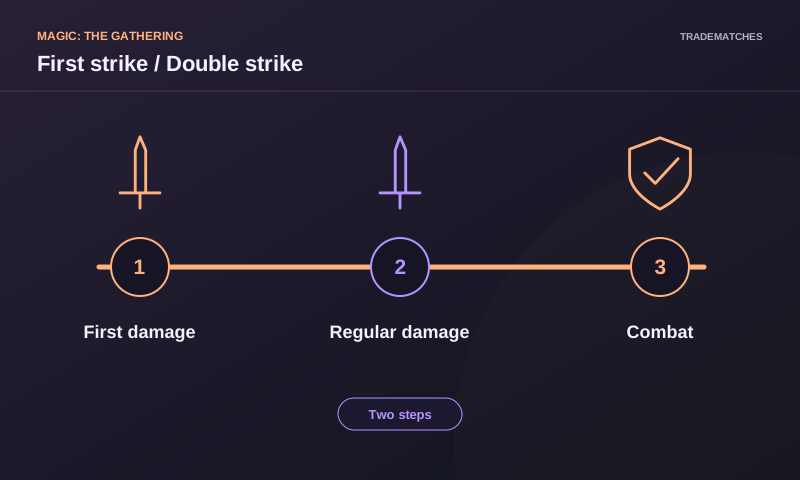
Under Magic's combat rules, first strike or double strike among the relevant creatures creates an additional combat-damage step. The first step handles the creatures eligible for early damage. The later step handles ordinary damage and qualifying double-strike creatures still present. If no creature needs the early step, ordinary combat uses one damage step.
Damage is followed by state-based actions and triggered abilities, and players can receive priority before the next damage step. That interval matters. It allows a legal spell or ability to change which creatures survive and what characteristics they have. It does not let you act between damage assignment and damage being dealt within one damage step.
Draw this on paper: first damage, consequences, priority, second damage. Write the power and remaining toughness of each creature under the correct step. You will find it easier to explain a combat than by saying “my creature hits twice” without identifying the separate events.
A small first-strike creature can survive a larger fight
Use hypothetical creatures with no other abilities. A 2/2 with first strike is blocked by a 3/2 without it. The 2/2 deals two in the early step. The blocker has lethal damage and is destroyed before ordinary combat damage. It therefore does not deal its three damage in the later step. The first-strike attacker survives this isolated combat.
Change the blocker to a 3/3. The early two damage is not lethal. The blocker survives to deal three in the ordinary step, destroying the 2/2. The attacker does not get a second damage event simply because it still has first strike. A one-point toughness change produces a different result without either creature having double strike.
These examples deliberately omit prevention, indestructible, deathtouch and other modifiers. When using a real board, add those features one at a time rather than importing the example's outcome blindly. First strike specifies timing; it does not promise that the first source wins every battle.
| Attacker | Blocker | Early damage | Later damage, absent other effects |
|---|---|---|---|
| 2/2 first strike | 3/2 ordinary | Blocker takes 2 and dies | No blocker remains to deal 3 |
| 2/2 first strike | 3/3 ordinary | Blocker takes 2 and survives | Blocker deals 3; attacker deals none |
| 2/2 double strike | 3/3 ordinary | Blocker takes 2 | Surviving creatures deal normal-step damage |
| 2/2 double strike, unblocked | No blocker | Player takes 2 | Player takes another 2 if attacker remains |
Killing a blocker does not remove blocked status
Consider a 3/3 double-strike attacker blocked by a 2/2. Its early damage destroys the blocker. Without trample or another permission, the attacker does not then deal three to the defending player in the later step. It remains a blocked creature, even though it no longer has a creature blocking it.
This is the most consequential difference between “two hits” and the rules procedure. The first event may eliminate every blocker while the second event has no legal recipient among those blockers. You cannot redirect that event to the player just because you would prefer another target.
If the attacker has trample, the assignment rules are different. Trample supplies the permission to assign damage beyond blockers; double strike supplies a second opportunity for damage. For an undamaged 2/2 blocker against a 3/3 double-strike trampler, a straightforward assignment can put two on the blocker and one on the player early. With that blocker gone, three can go to the player later, provided the attacker survives and remains eligible. Other abilities may alter this calculation.
A response between the steps can change the arithmetic
Suppose an unblocked hypothetical 2/2 double striker deals two in the first step. During the following priority window, a legal effect gives it +3/+0 until end of turn. Its power for the next event is five, so the later damage can be five. The earlier two is not retroactively changed to five. The total is seven, not ten.
Now suppose the attacker is removed during that window. It cannot deal the later damage from a battlefield it has left. Double strike is not a delayed promise of another hit from the graveyard. If an ability triggered from the first event, handle that ability according to its own rules; it is not the same as the creature dealing the next combat damage.
You may also gain or lose the relevant keyword between steps. The comprehensive rules determine participation by what qualified for the first step and the later eligibility conditions. In particular, adding first strike after the first damage step does not manufacture another early step. When an interaction changes keywords mid-combat, consult that eligibility rule rather than treating keyword labels as simple multipliers.
Damage triggers can happen more than once
An ability that triggers whenever a creature deals combat damage can potentially trigger from each qualifying damage event. An ability that requires combat damage to a player must actually see damage to a player in that event. Damage to a blocker in the first step does not satisfy a player-damage condition.
For a hypothetical unblocked double striker, both events might qualify. For a double striker stopped by a blocker without trample, neither may deal damage to the player. For a trampler, each depends on the assignment and result of that particular step. Count events from the resolved timeline, not from the printed keyword alone.
Lifelink similarly concerns damage actually dealt. Prevented damage does not generate the same result as successfully dealt damage. A prevention effect that applies to one event may leave another event unaffected, depending on its wording. These distinctions are especially useful when evaluating cards for a combat deck: adding double strike changes timing and event count, while adding power changes amounts.
Check an unfamiliar combat in order
Declare which creatures have first strike or double strike when reaching damage. Resolve the early event if required. Process its consequences before moving on. Then account for any legal actions during priority and identify the survivors eligible for ordinary-step damage. Finally, apply blocked status and trample where relevant.
This method keeps a difficult combat manageable without needing a giant damage shortcut. In a multiplayer game, track the defending player for each attacking creature as well; a dead blocker does not let you choose a different opponent. Ask for a judge before advancing past an unclear window in tournament play.
Frequently asked questions
Does double strike automatically double damage to a player?
No. It permits participation in both damage steps. Survival, blocked status, prevention and changes in power can produce totals other than twice the original power.
Can I cast a combat trick after first-strike damage?
There is a priority window between damage steps after state-based actions and relevant triggers are handled. You still need the spell or ability to be legal in that window.
Does first strike stop damage from an instant?
No. First strike changes combat-damage timing. It does not provide general damage prevention or protection from removal.