Magic trample: how much damage reaches the player?
On this page
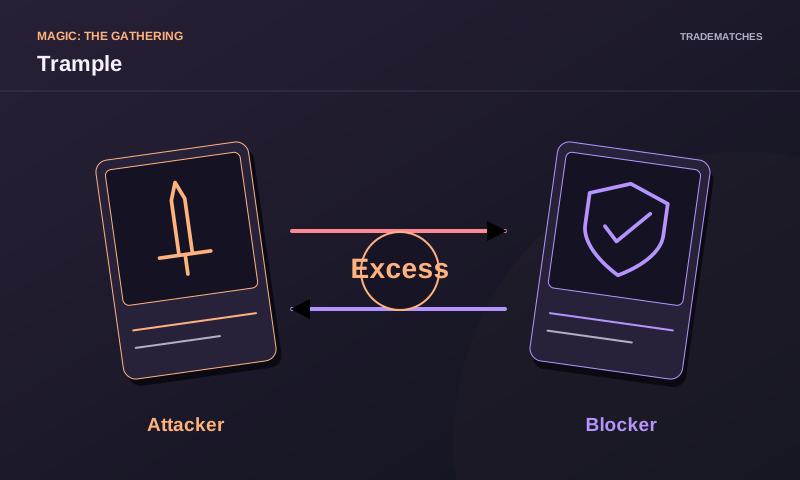
Trample allows a blocked attacker to assign some combat damage to what it is attacking after assigning lethal damage to its blockers. The calculation uses the current combat state, including toughness, damage already marked and deathtouch. Simply subtracting the blocker’s printed toughness works only in the simplest case.
A basic example
A 6/6 with trample is blocked by an undamaged 2/2 with no relevant abilities. You can assign two damage to the blocker and four to the defending player. You may also assign more to the blocker. Trample permits excess damage to reach the player; it does not require you to maximise that amount. Damage is then dealt and its consequences checked.
Without trample or another relevant permission, being blocked normally prevents the attacker from assigning damage to the player. Having much more power than the blocker does not transfer excess damage automatically. Power determines how much damage the creature can assign. Trample changes where it may assign part of that damage when the requirements are met.
What counts as lethal for assignment
For an ordinary blocker, consider its current toughness and damage already marked. A 4/4 that has taken three damage this turn may need only one more assigned for a lethal amount. Use its characteristics at assignment, rather than what they were when blocks were declared. A toughness-changing effect before damage can change the distribution.
Marked damage does not reduce toughness, even though it contributes to this calculation. The damaged creature has not become a 4/1. Make clear whether a die represents damage or a modifier to characteristics. Two markers showing the same number can represent different things and produce different results, especially if another effect later changes toughness or removes an ability.
Multiple blockers
Before assigning excess damage to the defender, the attacker must assign lethal damage to all relevant blockers. Current rules no longer require the old mandatory ordering of blockers for damage assignment. If you learned combat under an earlier rules version, use the current procedure rather than automatically carrying that old order into the calculation.
Imagine a 7/7 blocked by an undamaged 2/2 and 3/3. One straightforward assignment is two to the first, three to the second and two to the defending player. If a blocker gains toughness before damage, recalculate. When the attacker lacks enough power to assign lethal damage to both, you cannot reserve damage for the player while ignoring that requirement.
Deathtouch changes the lethal amount
A positive amount assigned from a deathtouch source can count as lethal for this purpose. Combining deathtouch and trample can therefore leave more damage available for the defender. A 5/5 with both abilities blocked by two creatures, with no other relevant effects, can assign one to each blocker and three to the defending player.
The blockers need not actually die afterward. An indestructible creature can survive the damage despite receiving a lethal assignment. Do not calculate “the amount that would really destroy it” and demand that amount before trample works. Indestructible prevents destruction without changing this assignment requirement. Other abilities and prevention still need separate checks when their effects apply.
Prevention does not erase a blocker
Do not ignore a blocker’s toughness when assigning damage because you expect protection or prevention to stop the damage. Assignment and prevention happen at different stages. An effect that changes assignment must be read as such; an effect that only prevents damage is applied when appropriate. Neither should be turned into an informal permission to bypass the blocker.
Suppose a 6/6 with trample is blocked by a 2/2 whose damage will be prevented. The ordinary assignment can still be two to the blocker and four to the player. The blocker may survive because its two damage is prevented. That does not retroactively undo the four assigned to the player, assuming no other effect modifies the result.
When the blocker leaves combat
An attacker that has become blocked remains blocked even if its blockers leave combat. Trample matters because it can allow assignment to the defender when no blockers remain. Without trample, the disappearance of the blocker does not by itself turn that blocked creature into an unblocked attacker. Check the current state and abilities at the damage step.
If the opponent sacrifices their only blocker before damage, an attacker that retains trample can generally assign its damage to what it is attacking, subject to other restrictions. Losing trample before assignment changes the analysis. Do not calculate from a snapshot taken when blocks were declared; creatures, characteristics and abilities may have changed since then.
First strike and double strike
First strike and double strike can create two combat damage steps. Evaluate the state separately in each. A blocker may take damage or leave in the first step, so the trampling attacker can face a different situation in the second. Doubling the initial distribution without reviewing the board can produce an incorrect result.
If an attacker with double strike and trample destroys its only blocker in the first step, it can potentially assign all its damage to the defender in the second. It must still be in combat and have the necessary abilities. If an effect removes it between steps, there is no second hit. Timing matters alongside the printed power.
Trample does not change what you attacked
Excess damage is assigned to the appropriate defender under the applicable rules. If the creature attacked a planeswalker or battle, do not redirect that excess to another player simply because you prefer it. A different distribution needs a rule or effect that permits it. Read the attack’s destination together with the damage-assignment ability.
In Commander, combat damage from your commander that reaches a player can count toward commander damage. Damage dealt to a blocker does not become commander damage to that player. Track the totals separately. Trample explains how damage can reach the player; the separate commander-damage rule determines the significance of that recorded total.
Calculate before moving markers
Announce current power, the blockers still present and the proposed assignment. Then deal damage and apply relevant prevention or replacement effects. This order makes errors easier to detect before someone removes a creature or changes a life total. “You take four” is easier to verify when both players understand why two was assigned to the blocker.
For practice, change one variable at a time: marked damage, toughness, deathtouch or the number of blockers. Compare the resulting assignment. If several effects interact and the answer is uncertain, consult the comprehensive rules or a judge. The aim is to recognise which information each step checks, rather than memorising one subtraction that works only with an undamaged ordinary blocker.
Recalculate after marked damage and toughness changes
An 8/8 attacker with trample is blocked by a 3/3 that already has one damage marked on it and an undamaged 4/4. With no other relevant effects, you can assign two damage to the first blocker, four to the second and two to the defender. The damage already marked on the 3/3 matters for this check. You do not need to assign three new damage simply because its toughness is three. Both blockers still require a lethal assignment before damage can go through to the defender.
Now suppose the first blocker gets +2/+2 before combat damage. It is a 5/5 with one damage marked, so four new damage is required for that assignment. The second blocker needs another four. All eight damage from the attacker is now accounted for, leaving none for the defender. The earlier calculation became invalid because the relevant state changed before assignment.
This is why it helps to confirm statistics and marked damage at the appropriate step. You can discuss an expected result during blocking, but it is not an immutable assignment if power, toughness or abilities subsequently change. You may also assign more than the minimum to a blocker. Trample lets you use the remainder; it does not require you to maximise damage to the player in every situation. Decide using the final values and applicable restrictions, and distinguish marked damage from counters that change a creature's statistics.
Frequently asked questions
Does a larger attacker always deal excess damage to the player?
No. It needs trample or another applicable permission. A large blocked creature does not automatically transfer its excess damage.
Can I assign all the damage to the blocker?
Normally, yes. Trample allows excess damage to pass; it does not require the maximum possible amount to pass.
Does an indestructible blocker stop trample?
Not by itself. Lethal assignment and actual destruction are separate checks. The blocker can survive while damage still reaches the defender.