Magic phasing versus blink: what actually changes?
On this page
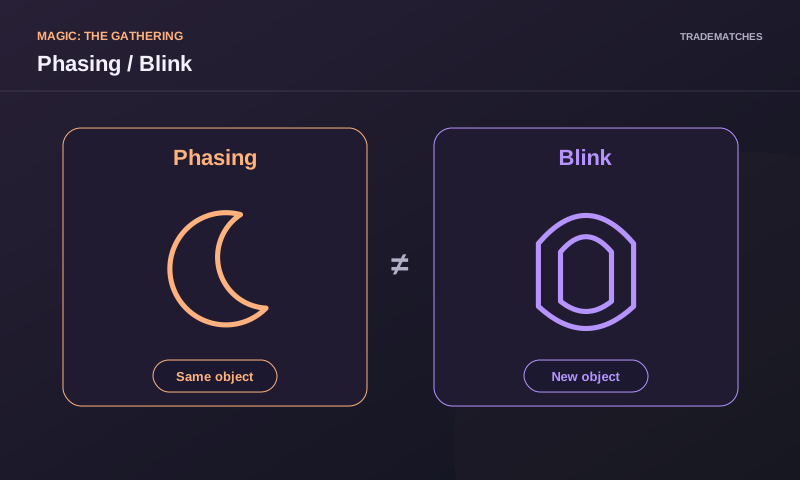
Phasing preserves the identity of a Magic permanent: a phased-out permanent is generally treated as though it does not exist, but it has not changed zones. Blink usually exiles a permanent and returns it, creating a new object. That difference controls counters, attachments, tokens and enter-the-battlefield triggers.
“It disappears and comes back” describes the physical impression of both procedures, but does not resolve the rules. Start by identifying whether the effect says phase out or actually instructs a move to exile and a return. Then track identity and timing separately.
Phasing does not move a permanent to exile
A phased-out permanent remains associated with the battlefield while most game rules and effects ignore it. Do not move it into the exile pile and use exile-recovery cards on it. Phased out is a status with its own rules, not a new public zone to search.
This is why phasing normally avoids leave-the-battlefield and enter-the-battlefield events. The permanent has not left and returned through those events. Its temporary absence can make it unavailable to an effect without creating a fresh copy when it becomes phased in again.
At a casual table, moving a card slightly aside and placing a clear reminder beside it can be easier than stacking it into exile. Keep its counters and attachments identified with the same object. Avoid an arrangement in which a later player cannot tell whether the card is phased out, exiled or merely tapped.
Blink normally creates a new object
A blink effect actually changes zones. The common pattern is exile followed by a return to the battlefield, either immediately or at a later specified time. The returned permanent is ordinarily a new object, even though you are holding the same piece of cardboard.
That new-object principle means many effects that referred to the former permanent no longer refer to its returned version. It also means an ordinary enter-the-battlefield ability can trigger on the return, provided the card returns in the required way and no relevant effect prevents the trigger.
Always read where it returns and under whose control. An effect returning under its owner's control can behave differently from one returning under the controller specified by the effect. A delayed return at an end step also leaves a period in which the card really is in exile, unlike phasing.
| Detail | Phase out and phase in | Ordinary exile-and-return blink |
|---|---|---|
| Zone change | No | Yes |
| Object identity | Preserved | Normally a new object |
| Counters | Remain associated with it | Old counters normally disappear |
| Enter-the-battlefield event | Not caused by phasing | Usually occurs on return |
| Auras and Equipment | Follow indirect-phasing rules when applicable | Old attachments do not simply follow |
| Token | Can phase out and later phase in | Cannot normally return after leaving the battlefield |
Counters and temporary effects
If a creature with two +1/+1 counters phases out, those counters do not fall off merely because it is being ignored. When it phases in, it remains the same permanent with the relevant state preserved. Blinking the same creature ordinarily returns a new object without its former counters.
Do not extend this to every temporary effect. An effect that lasts until end of turn can expire while the permanent is phased out. When it later phases in, the effect has not been paused in storage. Preserving object identity is different from freezing the game's clock or extending a duration.
Imagine a creature with a permanent counter and a spell giving it +3/+3 until end of turn. After phasing it out, let that turn finish. On a later phase-in, the counter still belongs to the creature, but the temporary spell's duration has ended. This is a useful practice case because the two modifications have different reasons to persist.
Auras and Equipment need separate treatment
When a permanent phases out, Auras, Equipment and Fortifications attached to it can phase out indirectly with it. Those attachments remain connected through the indirect-phasing rules and normally phase in with that permanent. This is one reason phasing can protect a developed creature without immediately dismantling its attachments.
Do not assume that every attachment independently follows the ordinary phase-in schedule. Indirect phasing follows the permanent it accompanied. An Aura phased out by a separate instruction can create a different situation, so establish exactly which objects the effect phased out and which followed indirectly.
Blink has a different consequence. Equipment generally remains on the battlefield but becomes unattached when its former creature leaves. An Aura left without a legal attached object is normally put into its owner's graveyard through state-based actions. A blink effect that explicitly moves additional objects or returns an Aura has to be evaluated from that extra wording.
Tokens expose the identity difference
A token can phase out and later phase in because phasing does not make it change zones. This differs from an older intuitive shortcut that treats any disappearance as permanent loss. Track the token's status using an identifiable marker instead of clearing it away with ordinary destroyed tokens.
With blink, a token leaves the battlefield and cannot normally return. The rules concerning tokens outside the battlefield prevent an exile-and-return trick from bringing it back as an ordinary permanent. Do not replace the exiled token with another token unless an effect actually creates that replacement.
For example, choose a token creature as the subject of a practice blink effect. Resolve the exile instruction and check whether the return can happen. Then repeat with a phase-out effect. The same physical counter may represent the creature in both exercises, but the different legal procedures lead to different results.
Protecting against a targeted effect
Suppose an opponent targets your creature with a spell, and you phase that creature out before the spell resolves. The spell cannot simply treat the phased-out creature as an ordinary available target. Evaluate target legality at resolution, including whether there are other targets and what the spell can still do.
Blink can also remove the original target, but the returned creature is a new object. The original targeted spell does not automatically follow the piece of cardboard to the new permanent. The useful outcome may resemble phasing protection while the consequences for counters and attachments remain different.
Avoid saying that either technique “counters the spell” without checking its complete resolution. A spell with other legal targets may still resolve for them. A spell with no targets at all may affect the returned creature if its timing and wording make that creature part of the relevant set.
Board wipes and delayed returns
Timing matters when protecting a creature from an untargeted sweeper. An immediate blink returns the creature before the next object on the stack resolves. If the sweeper then resolves and affects that new creature, the blink has not protected it merely by changing its identity.
A delayed blink can keep the card in exile until after the sweeper, provided its actual return instruction does so. Phasing can similarly make a permanent unavailable while the relevant effect resolves. Compare the effect's duration and return moment with the threatening event, not just the name of the technique.
For practice, write a three-line timeline: protective effect resolves, threatening effect resolves, permanent returns or phases in. If the return belongs on the first line rather than the third, an untargeted effect may still reach it. This timeline explains many apparent disagreements without needing a new exception for every sweeper.
Phasing in and remembering control
Ordinary phasing rules handle the phase-in procedure during the untap step, with effects able to create specific exceptions. Follow the actual instruction responsible for the phase-out rather than assuming every card returns at the beginning of the next turn of any player.
Because the permanent remains the same object, phasing does not restart its history of being under your control. It does not automatically create summoning sickness as an ordinary battlefield return would. Nevertheless, whether you may attack or activate an ability with the tap symbol still depends on the full control-history rule and other restrictions.
Frequently asked questions
Do I get an enter-the-battlefield trigger when a creature phases in?
Phasing in does not itself cause an entry event. A card that actually returns from exile normally has such an event; that is the key difference to check when planning a triggered-ability interaction.
Does blink remove damage and counters?
An ordinary blink returns a new object without the former permanent's damage or counters. Read the effect for any instruction placing new counters on the return, which is different from retaining the old ones.
Can I phase out a token to save it?
Yes, if the effect can legally apply to that token. Phasing does not make it leave the battlefield. Exiling the token instead normally prevents it from returning, even if a blink effect includes a return instruction.