Magic tokens and copies: what is the difference?
On this page
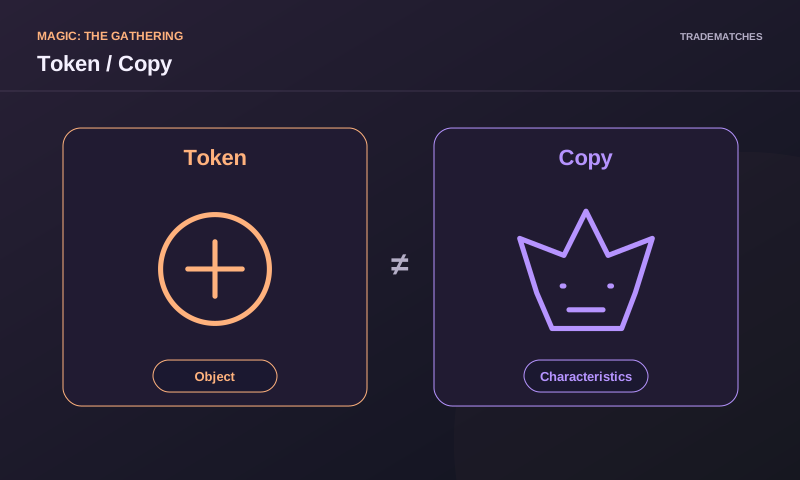
In Magic, a card is an object in the game that typically represents a permanent, while copying is an instruction that reproduces characteristics or a spell. They are not synonyms and do not create another physical card for your collection.
A card can create a card without copying anything
A card can create, for example, a creature card 1/1 defined by its own effect. That card does not copy an existing card. To play, you can represent it with an official card or another clearly distinguishable object, following the rules of the event. The card is not a card in your library.
A copy can exist without being a card
If a ability copies an instant or enchantment in the stack, the copy of the spell resolves normally, but it is not an additional card that you can keep or trade. Instead, an instruction that creates a card copies a creature and does produce a permanent card with the relevant copyable characteristics.
The exception of copying a permanent spell
When copying a permanent spell, the copy can become a card when it resolves. The official notes clarify a nuance: that card is not considered created by the effect, even though it entered as a card. If a card rewards creating cards, do not assume it interacts with this case without reading its text.
The initial question: What is the effect producing?
When you read "create a card," the effect generates an object that exists within the game, normally a permanent on the battlefield. When you read "copy," the effect reproduces certain characteristics of another object or a spell. A card can be the result of a copy, but it can also be defined without copying anything. And a copy can appear in the stack as a spell without being a permanent card on the battlefield. The word you should look for is not just "card" or "copy": identify the zone where the result appears and the specific instruction that created it.
This distinction avoids errors both playing and buying. A creature card you create during a game is not another physical copy of the card that produced it. If a store sells a printed card to represent that object, you are buying an collectible accessory, not adding a legal card to your main deck for that reason. Similarly, copying a spell can duplicate its effect within the game, but it does not duplicate the original card in your library. Game rules, physical components, and collection are three different planes.
A card created with its own characteristics
Imagine a card says "create a creature card 1/1." The effect defines the card: it is not copying an existing 1/1 creature on the battlefield. That card can attack, block, and take damage like any creature when the rules allow it. It can receive counters or be enchanted. Its representation on the table must clearly show what it is, if it is face up, what counters it has, and who controls it. An official card is convenient, but the function of the card does not depend on possessing a specific illustration of the product.
The card does not become a card in your library by using an official card with a Magic reverse. The rules distinguish cards from cards, although you can use a printed card to remember it. If an effect makes a card leave the battlefield, it will follow the movement that corresponds and will no longer exist as a permanent in your hand or graveyard as a normal card. That is why it is advisable not to shuffle cards with the deck or treat them as copies of the original card when inventorying the collection.
Copying a permanent: what data is usually copied
An instruction that creates a card that is a copy of a creature looks at the copyable characteristics of the indicated object. In ordinary cases, it resembles copying what is printed on the original card, but the result depends on the copy effects that already affect the original and the exceptions that the new effect establishes. Do not automatically copy everything you see on or around the permanent. Official notes of several cards clarify that the copy does not reproduce that the original is face up, its counters, the damage marked, the Auras or Equipment attached, or non-copyable modifications of power, toughness, types, or color.
Suppose a 2/2 creature has two +1/+1 counters and is therefore functioning as 4/4. If a card creates a card that copies that creature, do not assume that the card enters with the same two counters and as 4/4. In an ordinary case, it will copy the copyable characteristics, and the original counters will remain where they were. After that, if another effect says that the new card enters with a counter, apply that instruction to the card separately. The procedure is "determine what is copied" and then "apply what the effect says," not "photograph the entire table."
Copying a spell in the stack
An instant or enchantment can be copied while it is a spell in the stack. The copy is also a spell in the stack and usually resolves before the original if it was placed on top. In general, a card created directly in the stack is not considered cast; therefore, it does not automatically trigger abilities that say "when you cast" a spell. It remains a spell that can be responded to or countered if the rules and effects allow it. Do not confuse "was not cast" with "cannot affect the game."
For example, you cast an instant that steals cards and an ability copies it. There can be two separate resolutions of the effect of stealing, as long as both copies reach resolution according to the situation. You only paid the cost of the original instant, unless the copy effect indicates otherwise. Do not look for a second physical card in the library and do not add a paper copy to the hand. If the text of a card allows you to cast a copy, that special wording requires a different analysis of the copy that simply appears in the stack.
The particularity of a copied permanent spell
Copies of permanent spells are a less intuitive area. When a copy of a permanent spell resolves, it can become a permanent card on the battlefield. However, official notes explain that that card is not considered "created" by the effect in the usual way. This matters if another card triggers when a card is created: do not assume that seeing the entry of that copy is considered a creation. The card exists and can interact with cards that look at cards or entries to the battlefield, but the exact wording of the trigger matters.
The way to avoid a discussion is to separate three questions: Was a permanent spell copied in the stack? What happens when that copy resolves? Does the ability you want to apply ask "create a card," "a card enters," or something else? Do not substitute these phrases for each other. Wizards published this precision in the notes of several collections and incorporates it into the Comprehensive Rules. If you build a deck around a specific trigger, check that text and the official interaction before taking it for granted.
Five examples to identify the result
1. The card creates a 1/1 card
There is no existing object to copy. The card has the characteristics that the effect assigns to it, in addition to what the rules and other applicable effects indicate. It can be represented with a card or a clearly distinguishable object, separate from the library. If the effect creates two cards, there are two game objects even if you use identical representations. Keep visible which one is face up and which ones have counters, because each one may have a different state.
2. The card creates a card copy of a creature
There is an original creature that determines the copyable characteristics. If it was face up, damaged, and equipped, do not attach those conditions to the card by intuition. Review the effect that creates it and the copy rules. The new card is another permanent; its entry to the battlefield may matter for abilities that trigger on entries. The original creature retains its counters and its attached cards, so there is no transfer of resources from one to the other.
3. Copying an instant
The result is another instance of the spell in the stack, not a creature card or a physical card. It can resolve separately and can have its own targets if the copy effect allows choosing them. If an ability only triggers when a spell is cast, check if the copy was actually cast; a copy placed directly in the stack is usually not cast. The word "copy" by itself does not answer that last question.
4. Copying a creature spell
While it is in the stack, the copy is a spell. If it resolves as a permanent, the result is a card. The distinction "card that enters" versus "card created" can change triggers from other cards. Look for the exact wording of the effect that wants to benefit. Do not treat it as if you have robbed, cast, and put into play a second creature card: these are distinct events that did not happen automatically.
5. Copying an existing card
A card can also be the object that another effect copies. Look at the characteristics the original effect assigned to that card and any relevant copyable modification. Do not copy the counters it has received after, the damage it has marked, or if it is face up. The new card will be an independent object: it can end up in a zone or under a different controller depending on the effect, and its state must be represented separately on the table.
Additional questions that often appear
A card that copies a creature is not exempt from the ordinary rules of creatures because it resembles an existing card. Check when it entered under your control before attacking or activating a ability with the face-up symbol; a new card does not automatically avoid the known limitation called invocation shock. If the copied object is legendary and you end up controlling two legendary permanents with the same name, review the legend rule: being a card does not protect from it. These effects can change what card you keep, but they do not turn the card into a card in your library.
To resolve a rare case, read the verb of the card first: "create," "copy," "cast," or "enter." Then identify if the original object was a card, a card, a permanent, or a spell in the stack. Finally, ask what characteristics are copyable and what exceptions the specific effect brings. This sequence is more reliable than memorizing a single phrase like "copies are always cards" or "cards cannot be copied": both are false. The Comprehensive Rules of Magic and the specific card's official notes are the reference when the interaction goes beyond simple examples.
Common questions
Can I put a card in my library as a card?
No. A card represents an object generated during the game, not a card in the library.
Does copying an instant give me another physical card?
No. You get a copy of the spell, not a second collectible card.