Rested vs attached DON!! in One Piece
On this page
A DON!! in the cost area can be rested to pay cards and effects. If you link a DON!! to a Leader or Character during your main phase, it grants +1000 power to that Character during your turn.
To pay, rest active DON!!
The cost of playing a Character, a Scenario, or an Event is paid by resting the necessary active DON!! in your cost area. A DON!! that has already rested cannot be used again as if it were still active. Count your available resources before announcing a play with a cost.
To power up, link available DON!!
During your main phase, you can give DON!! from your cost area to your Leader or Characters. Each one grants +1000 power during your turn. The linked DON!! stops being available in the cost area to pay another card at that same moment. The manual makes the linked DON!! return to the cost area during the refresh phase.
Example for planning the turn
With four active DON!!, if you rest three to play a Character, you will have one active left in the cost area. You can use that last one to pay for something else or link it to an attacker, but not both. The power bonus of linked DON!! is limited to your turn; do not assume it protects the Leader in the opponent's turn.
Two distinct movements for the same resource
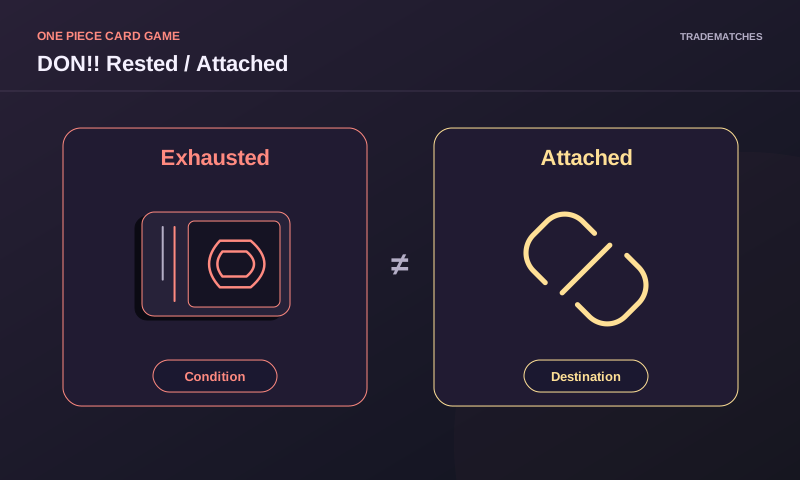
A active DON!! in the cost area is a resource with two main uses during your main phase. You can rest it there to pay the cost of playing a card or activating an effect that requires it. You can also give an active DON!! from that area to your Leader or a Character, placing it below the card so it remains visible. In the second case, it stops being in the cost area and grants the power bonus during your turn. Both movements spend immediate availability, but do not leave the DON!! in the same place.
The status and the area respond to different questions. "Rested" describes that a DON!! from the cost area has already been used to pay during this turn. "Linked" describes that a DON!! was given to a Leader or Character. A linked DON!! cannot be counted as an active DON!! from the cost area to pay another card. Looking only at the total number of DON!! you possess can be misleading: you need to count how many remain active in the correct area at the moment of announcing each action.
The order of plays changes what you can pay
Imagine five active DON!! in your cost area. You want to play a Character with a cost of three and give two DON!! to your Leader to attack with more power. You can rest three to play the Character and give the other two to the Leader: both actions are possible. If you give three to the Leader first, you will only have two active left to pay, and you will not be able to normally play the Character with a cost of three. The power bonus does not convert the linked DON!! into a loan you can withdraw without instructions. Plan your turn from the most restrictive cost to the more flexible uses.
It is not mandatory to give all the DON!! you haven't spent. An active DON!! that remains in the cost area can allow you to pay a Counter Event in the opponent's turn, if you have one in your hand with the correct window and cost. Giving it to an attacker can increase the power of your attack now, but reduce the defense threat later. The correct answer depends on your hand and the attacks you anticipate. The simple rule to remember is physical: each DON!! occupies one area and does not pay two actions simultaneously.
What does a linked DON!! contribute in a battle
For each DON!! given to a Leader or Character, that card gains +1000 power during your turn according to the rules. If a Character with 5000 receives two DON!!, its power will be 7000 during your turn while the applicable bonus continues. You can use that increase to surpass a target or make the opponent need more Counters. The linked DON!! does not change the printed cost of the Character nor automatically pay the cost of an Event. It also does not convert the sum into a permanent defensive bonus.
The phrase "during your turn" is fundamental. If you ended your turn with linked DON!!, you do not add their +1000 generally when the opponent attacks during their turn. The text of some cards can grant an additional effect by having DON!! given, and it has to be read separately; it does not alter the temporal scope of the general bonus by intuition. To compare power in defense, start with the power that corresponds at that moment and add only the active effects. A wrong calculation of +2000 can make you discard Counters that do not change the result or leave a Character exposed.
What happens in the refresh phase
The refresh phase of the turn returns the DON!! given to the Leader and Characters to the cost area, and activates the rested cards according to the official sequence. Therefore, a DON!! given to attack does not remain linked forever. At the beginning of your next turn, you will once again have access to those resources, always subject to changes caused by other effects. This recovery explains why you can use the same DON!! to power up an attack in one turn and pay a card in a subsequent turn, even though you cannot do both things at the same time in the same moment.
There is another situation: if a Character you gave DON!! leaves the field before that phase, the DON!! it carried return to the cost area rested according to the rules. Do not place them active for immediate payment just because they returned. The movement back does not equate to refreshing. Keep the DON!! visible during the zone change so both players can count how many return. The Leader remains in its ordinary zone, but Characters can leave the field by K.O. or effects, so this detail appears frequently.
Six specific situations on the table
1. You want to play a cost four and attack more strongly
You have six active DON!!. If the card you want to play has a cost of four, reserve four in the cost area first to rest them when paying. You will have two active left that you can give to your Leader or a valid Character. If you give three before paying, only three will remain and the cost four play will no longer be possible through the normal route. The order of actions is free during your main phase, but each choice limits the following ones.
2. A rested DON!! after a payment
You paid for an Event with a cost of one and left that DON!! aside in a rested state. Later you realize you are missing +1000 power to attack. That same DON!! is not active to be given by the ordinary action, even though it is physically in the cost area. Use another active DON!! if you have one or reconsider the attack. Do not turn it back without an effect that authorizes it. A rested DON!! remains yours, but its availability during that turn changed.
3. Attack with bonus and defense afterward
You give two DON!! to a Character with 5000 and attack with 7000 during your turn. The opponent can respond with their defensive tools according to the battle. When it comes to the opponent's turn, do not automatically attribute 7000 defensive power to that Character for the two linked DON!!: the general bonus is during your turn. If it is rested, it can also be a target for a normal attack. Spending resources to attack can open a window for response; evaluate that exposure before distributing all your DON!!.
4. Reserve a DON!! for Counter
You have a Counter Event in your hand with a cost of one. If you keep an active DON!! in the cost area at the end of your turn, you can pay for that cost during the correct window of the opponent's turn, as long as no other restriction intervenes. If you give it to an attacker only to gain +1000, it will no longer be there to pay. The decision is strategic, but the check is mechanical: locate an active DON!! in the cost area before making the Event available.
5. The Character with DON!! is K.O.
A Character carried three DON!! and was K.O. Do not send those three to the discard along with the Character or place them active for convenience. They return to the cost area rested according to the official rule. After that, continue resolving the effects of the battle. The example shows why distinguishing zone and orientation matters even outside your turn: a resource can return to your area without being immediately available to pay.
6. A card returns DON!! to the DON!! deck
Some texts ask to return DON!! from the field to the DON!! deck as a cost or effect. This is not the same as resting a DON!! to pay or giving it to a Character. Read how many to return and from which areas the card allows taking them. Then recalculate the resources that will remain available. Do not extrapolate the rule "linked DON!! return in the refresh phase" to a DON!! that an effect has explicitly returned to the DON!! deck.
A routine to not count the same DON!! twice
Before your main phase, count the active DON!! in the cost area and mentally note the cost of the play you don't want to lose. Pay first the cards or effects necessary for your plan, then distribute the remaining active DON!! among attackers and leave those you want to conserve for future Events. Check the power of each attacker only after placing the DON!! physically below them. At the end of the turn, count how many remain active for defense and how many are given; that state will be visible to the opponent.
In a learning game, announce aloud "rest three to play" or "I give one to my Leader" and move each card to the correct area. If there is a doubt, reconstruct the last move instead of discussing about an abstract total of resources. The official cost rule, the DON!! giving rule, and the refresh phase have distinct moments. Following them in order allows understanding why a DON!! can participate in several turns of the game, but never simultaneously rested to pay and given as a power bonus.
FAQ
Does a linked DON!! add power when defending?
The manual's bonus applies during your turn, not during the opponent's turn.
When do linked DON!! return?
The refresh phase returns them active to the cost area.