Stage cards in One Piece: playing and replacing
On this page
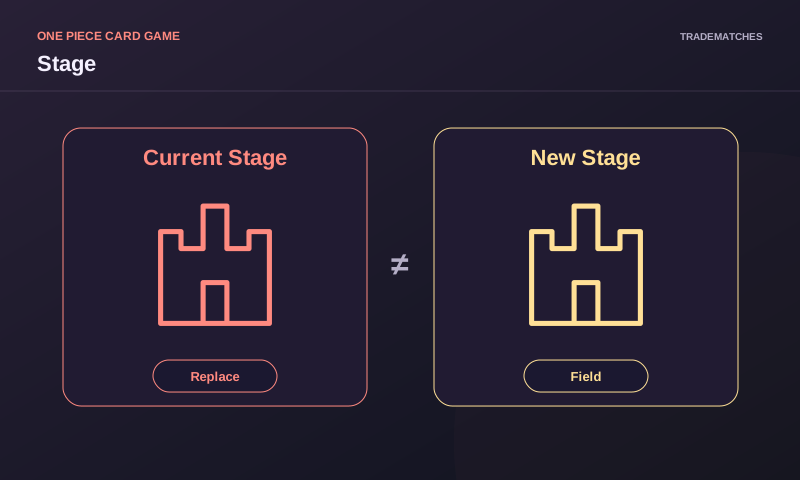
A Stage card in One Piece Card Game is played in the player's Stage zone. Each player can have at most one Stage in that zone. If you play another Stage when you already have one, you reveal the new card, send the previous one to trash, and then play the new one. The Stage does not occupy a Character space nor behaves like an Event. Its cost, timing of use, and effect depend on the specific text of the card.
What a Stage represents on the table
One Piece distinguishes several card categories: Leader, Character, Event, Stage, and DON!!. A Stage has its own zone, separate from the Leader zone, the Character zone, the Life zone, and the cost area where DON!! cards are placed. When played, it is placed face-up in the Stage zone. This organization is not merely aesthetic: rules and many card texts refer to a specific card type or a particular zone. If an instruction refers to "a Character," do not treat the Stage as if it were one.
The Stage zone is open, so both players can see what card occupies that space and read its text. The rules state that cards played there are active unless a rule or card specifies otherwise. This orientation matters if a later effect requires resting the Stage to gain something. Like other elements on the table, it's best to keep it in a fixed position so your opponent can see whether it is active or rested and avoid confusing it with cards in the trash.
How to play a Stage from your hand
When you decide to play a Stage from your hand, you reveal the card and follow the applicable procedures and costs. Stages, like Characters and Events, can have printed costs. During a normal turn, check when the action is allowed, how many active DON!! you have in your cost area, and any conditions stated in the card text. Paying the cost to play a card is not the same as activating an ability that may appear on it afterward.
Example without card names: you have four active DON!! and a Stage with a play cost of three. If the action is permitted, rest the required DON!! to pay the cost and place the Stage in its zone following the regulatory sequence. The DON!! being rested does not mean they are now attached to the Stage. The card also does not become a Character that can attack. If you later want to use an effect from that Stage, you must re-read its text: it may have its own cost, condition, or usage limit.
Only one Stage space per player
The Stage zone allows only one card. The limit is per player: your opponent can have their own Stage at the same time you have yours. They do not share a single global space. If you have a Stage, you cannot simply place another next to it as if both remained active. The rules provide a replacement procedure for the case where you want to play a second Stage. You must apply it even if the new Stage has an effect similar to the previous one.
This limit also affects deck-building decisions. Including many Stages can improve the probability of drawing one, but if you draw a second one while the first is still useful, you must evaluate whether replacing it is worthwhile. It is not a decision to "expand" the Stage zone. Before adding an extra copy, ask yourself whether you need to see the card frequently, whether its effect remains relevant in future turns, and whether there's a way to leverage a copy you won't play. It is a strategic question, not a rule that guarantees more copies are better.
What happens when playing a second Stage
The rules describe the order: you reveal the new Stage you want to play, send the existing Stage in your zone to trash, and then play the new card in that space. You do not choose to keep both or move the old one to your hand by default. The previous Stage leaves the Stage zone before the new one is placed. If an interaction depends on the removal of a card or the entry of another, this order must be respected and the specific text must be read carefully.
Imagine a Stage has served you for three turns and you draw a different one that better supports your current plan. You can choose to keep the first and hold the new one in your hand, or play the new one and replace the previous one. If you choose to replace it, do not continue applying any ongoing effect from the old Stage as if it were still on the table. Check what effect corresponds to the new card once it is played. The number of turns the previous Stage was on the table does not affect the rule limit.
Active Stage and Rested Stage
A Stage enters active unless a specific instruction states otherwise. Some cards may require resting a Stage or use the rest symbol as part of an ability's cost. In such cases, rotate the card according to the game convention and do not use an action that requires the Stage to be active while it is rested. The availability of that ability depends on the text: having a Stage active does not mean every Stage has an active ability.
The start of a turn includes a step where cards resting in specified zones are activated, including the Stage. This allows a Stage used in one turn to be available in another if it remains in play and no effect prevents it. Do not confuse this process with playing the card from your hand again or paying its play cost a second time. The card remains the same Stage; it simply changes its orientation according to the normal turn sequence.
When does a Stage's text apply?
Generally, a Stage's text is valid when the card is in the Stage zone, unless a specific text states otherwise. Therefore, you do not apply an effect from the card when playing it from your hand, nor do you maintain its continuous effect once the Stage has been sent to trash. Read the type of ability: it may be an effect that applies while a condition is met, an ability activated by paying a cost, or an instruction triggered by an event.
To resolve a specific Stage, ask four questions: where is it located? When does the text state it activates? What cost does it require? Which card or player receives the effect? This reading avoids attributing a unique behavior to all Stages. A Stage may help with attacks, your hand, or another part of your plan, but that result comes from its text, not from the Stage category itself. If there is an official errata, consult the current wording before basing a play on an outdated impression.
Stage, Event, and Character: useful differences
An Event is played according to its own rules and resolves an effect; it does not normally occupy the Stage zone. A Character is placed in the Character zone, subject to its limit, and can participate in attacks according to the rules. A Stage occupies the Stage zone and its effects are read from there, except in exceptions. Knowing the difference between these three categories avoids errors such as trying to attack with a Stage, counting it among your five Characters, or automatically sending it to trash as if it were an Event after playing it.
The difference also matters when selecting targets. If a card says "choose a Character," you cannot choose your Stage simply because it has strategic value. If another card explicitly mentions a Stage, do not apply it to all permanent cards on the table. The card's name, illustration, and historical representation do not replace the printed category. When building your deck, check the quantities by type and do not assume that a Stage can fulfill the role of a cheap Character.
An example of two turns with replacement
In the first turn of the example, Laura plays Stage A after paying its cost. She leaves it active in her Stage zone and applies only the effects allowed by its text at that time. In a later turn, Stage A remains there; if it had rested and the step that activates resting cards occurs, it is activated again according to the rules. Laura then draws Stage B, which has an effect she finds more useful for the current board. Before playing it, she compares the benefit of B with what she loses by giving up A.
Laura decides to play B. She reveals it, sends A to trash, and plays B in the Stage zone. A is no longer in play to provide its general text. B begins with the correct orientation and can only perform what its text allows. If B does not have an immediately usable ability, playing it does not create an additional action simply because it is new. This sequence is more reliable than placing B on top of A and mentally remembering which one "counts"; the zone must contain only one card.
Deciding whether it's worth replacing it
Before spending DON!! to play a new Stage, calculate what actions you will lose that turn by paying its cost. Perhaps those DON!! were reserved for playing a defensive Character or Event later. Then consider how long you expect to benefit from the new Stage. If the effect of the previous Stage still serves you, keeping the new card for another turn may be better. If the board has changed and the old Stage no longer influences your game, replacing it can turn a card from your hand into a useful advantage.
Do not confuse strategic value with legality. The rules allow replacing an existing Stage, but do not require you to do so when you draw another. They also do not force you to keep the first Stage simply because you paid its cost in a previous turn. A good decision is based on the current state of the game and the specific texts. When practicing, note how many times a second Stage is not played and why; this observation will help you adjust the number of copies without inventing a universal "optimal rule."
Common mistakes and quick checks
Common mistakes include leaving two of your own Stages face-up at the same time, sending the previous one to your hand instead of to trash when replacing it, treating the new one as a Character, or continuing to apply the text of a Stage that has already left the board. Another mistake is believing that the play cost covers all future costs of an activated ability. The solution is to keep zones separate and read each instruction at the right time. If the Stage changes orientation, physically indicate it so both players can see it.
Before playing a Stage, check: is the card actually a Stage? Can you pay its play cost now? Is there already a Stage in your zone? If there is, reveal the new one, send the previous one to trash, and place the new one according to the regulatory order. Then identify which text of the new card applies and whether additional activation is needed. This short sequence avoids turning a reasonable strategic decision into an illegal play due to forgetting a card's limit.
Frequently Asked Questions
Can both players have a Stage?
Yes. The Stage limit applies to each player's zone; there is no single shared space between rivals.
What happens to my previous Stage when I play another?
It is sent to trash following the replacement procedure, and the new Stage occupies the zone.
Can a Stage attack?
No, simply because it is a Stage. It is a distinct category and zone from a Character or Leader. It can only perform actions and effects allowed by its rules and text.