Rush in One Piece: attacking when played
On this page
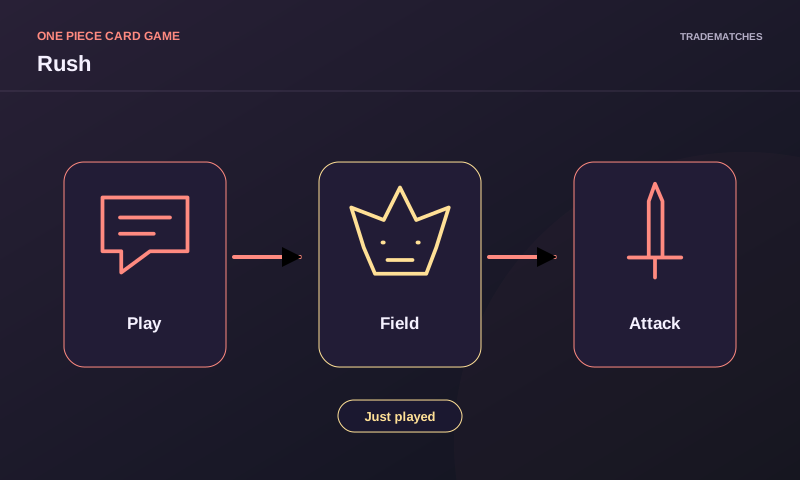
Rush allows a Character to attack during the turn it was played. This is a specific exception to the normal wait rule for Characters in One Piece Card Game, but it does not eliminate other attack conditions: the attack must occur during your main phase, the attacker must be active, you must choose a legal target, and the combat resolves through its standard steps. Neither player can battle on their first turn of the game, even after playing a card with Rush. Additionally, [Rush: Character] is not equivalent to [Rush] without a qualifier: the first ability allows a Character to attack opposing Characters during the turn it is played, but not the Leader. Reading the full keyword before resting the card avoids one of the most common corrections at beginner tables.
The normal rule that Rush modifies
A Character played during your turn normally cannot attack on that same turn due to the general rule. Typically, you'll have to wait until your next turn, provided the Character remains in the Characters zone and is active when it's time to attack. This waiting applies to Characters: the Leader has its own rules for attacking. You also cannot bypass this restriction by attaching DON!! to the newly played Character. A DON!! card can increase its power during the turn, but it does not grant permission to attack unless explicitly stated by an effect.
The exception is significant because playing a Character and attacking are separate actions during the main phase. You can play a card, pay its cost, and still perform other legal actions. If the Character does not have Rush or another specific permission, declaring it as an attacker immediately afterward remains illegal. If it does have Rush, you can now evaluate whether attacking now is beneficial. The ability opens a possibility; it does not force you to use it. You can keep it active to avoid exposing it as a resting Character during the opponent's turn.
What [Rush] actually allows
The general version, written [Rush], permits that Character to attack during the same turn it was played. Once attack permission is granted, target selection follows normal rules: the opponent's Leader or a resting opposing Character, subject to any applicable restrictions. Rush does not automatically make a card ignore Blocker, Counter, the target's effects, or power comparison. It also does not turn an opponent's active Character into a legal target on its own. The ability addresses when a newly played Character can attack, not to overhaul the entire combat system.
Imagine you play a Character with [Rush], pay its cost, and are still in your main phase. You can declare an attack against the opponent's Leader if no effect prohibits it, or against a resting opposing Character. Then, you rotate your attacker and continue with the combat window. The opponent can still use a legal Blocker or Counter at the appropriate times. Gaining the right to attack early does not guarantee damage to Life. Before committing additional DON!!, calculate whether the opponent can modify the defense's power.
[Rush: Character] does not authorize attacking the Leader
The version [Rush: Character] is more restrictive: it allows the newly played Character to attack opposing Characters during that turn. If there is no legal opposing Character you can attack, the keyword does not transform into the general [Rush]. An opponent's active Character remains an illegal target solely because your card states [Rush: Character]; look for a resting opposing Character or another explicit permission that modifies targets. If the opponent's board is empty, this version of Rush may not give you any immediately useful attack.
Example: the opponent has a Leader and a resting Character. You play a card with [Rush: Character]. You can attack the resting Character, provided there is no additional restriction, but you cannot declare the Leader as a target solely due to this keyword. If the card had simply said [Rush], the Leader would have been a valid target. The distinction matters both in building the deck and evaluating a purchase: a card designed to eliminate Characters does not automatically serve as an immediate threat to Life. Always check the full printed text of the card you are about to play.
Sequence for declaring the attack
First, complete playing the Character: pay the cost, place it in its zone, and resolve any [On Play] effects. Then, when you return to your main phase and the board state allows it, check what version of Rush the card has. Verify that the Character is active, that a legal target exists, and that no effect prohibits the attack. Only then declare attacker and target, and rest the attacker. This sequence prevents declaring an attack before finishing an entry effect that could change the board.
During combat, each player uses the windows prescribed by the rules. [When Attacking] effects are considered when the attack is declared; a Blocker can change the target if it meets its conditions; the defender can use a Character Counter from hand or Event [Counter] during its window. Power comparison determines the battle result. If the final target is the Leader, Life damage resolves according to the rules; if it's a Character, check whether it is knocked out. Rush does not skip any of these steps. Separating "can attack now" from "what happens when attacking" makes resolving interactions much easier.
DON!! and Rush: two different functions
Attaching DON!! to a Character with Rush increases its power during the turn according to DON!! rules and may help overcome the target. The permission to attack is granted by Rush, not by the attached DON!! card. If you play a Character without Rush and attach several DON!!, its power can grow, but the first-turn wait continues. Conversely, a Character with Rush can attack without additional DON!!; whether the attack has success options is another question. Do not confuse the cost to play, active DON!! cards remaining, and the power it will have once the attack is declared.
Before spending resources, count the available DON!! cards after playing the Character. A "play and attack" plan may be legal and still ineffective if you've spent all your resources and the printed power doesn't exceed a predictable defense. Sometimes it's better to play the Character, keep it active, and prepare a stronger attack on the next turn. Other times, an immediate attack forces the opponent to spend cards from hand or accept Life loss. Rush expands tactical options, but the decision still depends on the board state, the opponent's likely hand, and your remaining resources.
When a card effect changes the permission
Some cards may grant Rush to another Character, remove a skill, prevent attacking, or allow attacking different targets. In such cases, it matters exactly what the text says, when it applies, and how long it lasts. Do not assume that every effect mentioning "attack" equals [Rush]. An [Activate: Main] ability might do something useful with a newly played Character without authorizing it to attack; the official Page One question confirms precisely that activating its ability does not grant attack permission for that turn alone. Always look for a specific instruction that genuinely changes attack permission.
If a newly played Character receives Rush after entering, verify that it still has the ability when declaring the attack. If it loses Rush before attempting to attack, do not use a permission that no longer exists. If you have already declared a legal attack, resolve subsequent interactions according to the rules and the effect's text; do not automatically retract the declaration simply because the situation changed during combat. This difference between checking legality at declaration and resolving post-events also appears with Blocker and [When Attacking] effects. When specific cards create doubt, consult the official questions for their collection.
Common mistakes when playing or reading Rush
Mistaking Rush for being able to attack any card
Rush removes the temporary prohibition on attacking with a newly played Character; it does not allow attacking an active opponent Character without another authorization. It also does not force the opponent to use a Blocker. Choose a target that the rules allow at that moment and check if any effects protect it. If the board changes during the main phase, revisit the targets before declaring the attack, not after you've already rotated the card.
Reading [Rush: Character] as [Rush]
The word "Character" restricts the scope of the exception. It allows attacking opposing Characters during the turn of entry; it does not make the Leader a valid target for that early attack. In a deck list, the two variants can serve different functions. Always check the exact text when showing the card to your opponent so both of you know what kind of attack is being declared.
Forgetting the phase and windows
The permission does not create an attack phase outside your turn nor allows you to ignore pending effects. Play the card, complete its instructions, return to your main phase, and declare the attack if it remains legal. Then, give the opponent their opportunities for Blocker and Counter. A Character with Rush that attacks rests and can become a target on the opponent's next turn.
A quick check before rotating the Character
Ask yourself in this order: Was this played this turn? Does its text say [Rush] or [Rush: Character]? Is it still active? Am I in my main phase and not in another combat? Is the chosen target legal for that version of the ability? Are there any additional restrictions? If all answers fit, clearly declare attacker and target. This habit takes only seconds and avoids confusion with Characters played earlier, those that entered via an effect, or those that receive temporary abilities. In tournaments, when facing a doubtful interaction, preserve the board state and call a judge before proceeding.
When evaluating the card outside of play, apply the same list to real scenarios: opponent with no Characters, opponent with a resting Character, opponent with an active Blocker, and opponent with multiple cards in hand. The Rush text specifies what attacks are available, but its strategic impact depends on those scenarios. If you trade for a Rush card to a specific deck, verify edition, language accepted by the event, and current text, especially if the list you consulted shows an outdated print or unofficial translation. A rules check before purchasing multiple copies avoids confusing two similar-appearing abilities.
Frequently Asked Questions
Can a Character with Rush attack on the turn it is played?
Yes, as long as it has [Rush], you are in the correct moment, and a legal target exists. You must follow all normal combat steps and respect any additional restrictive effects.
Can [Rush: Character] attack the Leader?
No, due to this ability during the entry turn. [Rush: Character] authorizes attacking opposing Characters. If another card grants a different permission, resolve it according to its exact text.
Does attaching DON!! to a new Character give Rush?
No. DON!! can increase its power, but it does not eliminate the normal wait to attack on its own. You need [Rush] or another explicit permission.
Checked sources
For your next plays, distinguish Once Per Turn, DON!! −X and how a zero-Life loss works.