Do you lose at zero Life in One Piece?
On this page
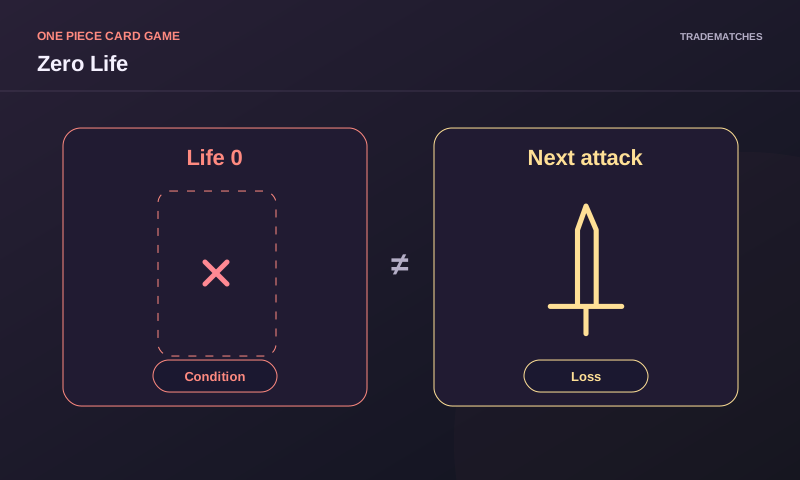
In One Piece Card Game you do not lose the moment you run out of Life cards. You lose only when, already having zero Life cards, your Leader takes damage. If an attack removes your last Life card, the match continues; your opponent must deal damage to your Leader afterward, unless another effect or condition ends the match first. The difference between "losing your last Life" and "taking damage with zero Life" is the key.
The exact condition of defeat
The full rules describe two general conditions for defeat: that your Leader takes damage when you have zero Life cards, and that your main deck reaches zero cards. The first condition does not state "having zero Life." Therefore, a Leader can remain in play with an empty Life zone. In that state, the Leader is highly vulnerable: a subsequent attack that successfully deals damage can end the match. However, as long as no such damage occurs, this condition is not met.
This precision changes how final attacks are counted. If your opponent has Life, a successful ordinary attack against their Leader removes the top Life card and places it in their hand, with the possible option of [Trigger] based on the card. That strike is not automatically the winning blow: after it, you have zero Life. If you then deal another attack that successfully damages the Leader with no Life, then defeat occurs via that condition. The sequence may vary due to specific effects, so each damage must be resolved in order.
What happens when dealing damage with Life remaining
When a Leader takes damage and has Life cards, the owner moves the top Life card to their hand. The Life zone has a specific order and does not allow arbitrary selection of a card. If the card moved from Life has [Trigger], the owner may choose to activate it according to the applicable procedure. This possibility is a reason not to treat Life cards as a mere abstract counter: they can become a defensive or strategic resource.
Example: Marta's Leader has two Life cards. A rival attack equalizes or exceeds its defense power and deals one point of damage. Marta takes the top Life card, leaving her with one. Later, she receives another attack that successfully deals damage and takes the final Life card, leaving her with zero. Marta has not yet lost by the Life condition. She now must survive an additional damage to her Leader or finish the match before such damage occurs.
The final blow with zero Life
If the Leader already has zero Life at the moment damage is determined, the attacking player wins by the corresponding condition. There is no Life card to take to "represent" that final blow. The power comparison remains important: declaring an attack against a Leader is not sufficient. After the defense window, the attack must win the battle and actually deal damage according to the rules.
Imagine the defending Leader has zero Life and 50,000 power, while the attacking Character has 6,000. If no defense or effect changes the outcome, the attack wins and damage to the Leader ends the match. If the defender increases their power so the attacker falls below, that attack loses the battle and no damage occurs; the match continues. Do not say "zero Life is defeat certain" before resolving the Counter and the final power comparison.
Attacking does not always mean dealing damage
When declaring an attack, you choose a legal target according to the rules. Defense may then intervene: cards with Counter from hand, Events with [Counter], and Blocker abilities when their conditions are met. The battle compares the attacker's power and the target's power at the appropriate step. If the attacker has equal or greater power, they win the battle; if the target is a Leader, damage is applied. If the attacker has less power, no damage occurs during that battle.
Therefore, a Leader with zero Life does not lose simply by being the target of an attack. The attack must go through the sequence. A legal Blocker can change the target; a Counter can raise the Leader's power; an effect might remove a card from the battle. To understand the final blow, separate three questions: Was the Leader a legal target? What changed during the defense? Did damage actually reach the Leader when Life was at zero? Only the third, combined with the zero Life condition, determines this defeat.
When a Life card is taken and when it isn't
With one or more Life cards, normal damage to the Leader typically moves the top Life card to the owner's hand. With zero Life, there is no card to move: damage triggers the defeat condition. A card with [Banish] changes the fate of Life cards that would otherwise be lost in an attack by sending those cards to trash instead of to hand and without activating their [Trigger]. But it does not change the central idea of this guide: damage to a Leader who already has zero Life is the final threat.
Some interactions add or restore Life. If an effect places a new Life card before the damage of a subsequent attack is determined, the Life zone is no longer at zero and the resolution becomes different. Do not assume that "zero Life at the time of declaring the attack" fixes the result forever; review the state when damage is actually applied and the specific effect text. This precision prevents declaring a victory when a legal card changes the Life count before the relevant check.
Double Attack with the last Life
[Double Attack] causes two points of damage to be dealt to the Leader when an attack with this keyword successfully deals damage. If more than one Life card remained at the start of the damage, two cards may be lost according to the procedure. If only one Life card remained, the second point of damage may occur when the Leader is already at zero Life and result in defeat. The interaction depends on the attack actually dealing damage; simply having the card with the keyword is not enough.
The safe way to resolve it is to process the damage in sequence, not to remove two Life cards at once and decide afterward. First, verify that the attacker won the battle. Then process the first Life card and any associated decisions, including a possible [Trigger] card. Then examine what happens with the second point of damage under the rules and any intervening effects. The specific TradeMatches guide on Double Attack and Banish develops this interaction; here it is sufficient to understand why a final Life card does not always require a second attacker when dealing with multiple damage.
The role of [Trigger] when losing Life
A card with [Trigger] that is moved from Life to hand due to damage offers an activation option. Not all Life cards have [Trigger], and not all moves from the Life zone allow its use. Read the card's text and the attack procedure. A [Trigger] can modify the board before a subsequent attack, but it does not mean the player with zero Life has already won or lost automatically. Its specific effect determines what changes.
If an attack with [Banish] causes a Life card to go to trash, the rule of that keyword indicates that [Trigger] does not activate during that move. Again, what matters is the actual destination of the card, not just that "it left Life." When explaining the situation to your opponent, indicate whether the card went to hand or to trash and why. This information is necessary to know which defensive options were available before the next attack on the Leader.
Other ways to lose the match
The full rules also establish defeat if the main deck reaches zero cards. This condition is distinct from having zero Life and can occur even when the Leader still has several Life cards. Do not confuse the main deck with the DON!! deck: they are separate zones. Additionally, a player may voluntarily concede the match, and some cards have effects that result in victory or defeat based on their text.
This matters when determining whether the opponent will have another opportunity to attack. Perhaps the player with zero Life can end the match on their own turn before taking damage, or perhaps one player's deck runs out first. The situation is resolved by the actual events that occur, not by an isolated Life counter. On a table with simultaneous effects, apply the official processing rules and consult a judge if the specific interaction is unclear.
How to defend a Leader with zero Life
With zero Life, every attack that could damage the Leader requires attention. Count the attacker's power, the current power of your Leader, available Counters, and options for Blocker or Events with [Counter] before deciding what to spend. Do not use all your resources on the first attack if a larger one follows; also, do not save a defensive card to "later" if the current attack already exceeds your Leader and would cause defeat. The sequence of attacks declared by your opponent and the DON!! cards you keep can guide your decision.
A successful defense does not require destroying the attacker; it only needs to prevent the Leader from taking damage in that battle. If you raise the Leader's power above the attacker, the attack does not win. If an ability legally changes the target, damage is not applied to the Leader in that battle. But never assume a Character with Blocker works in all circumstances: check its status, timing, and ability conditions. The blog post on Blocker explains these limitations.
Common mistakes and quick check
Common mistakes include declaring victory after taking the last Life card, declaring defeat at the start of a turn with zero Life, declaring a winner for an attack that could still be defended, or treating multiple damage as if it all happened without intermediate steps. It is also often forgotten that a card with [Trigger] was moved to hand, or attempting to use one that was sent to trash via [Banish]. These errors are corrected by reconstructing when damage occurred and how many Life cards were present just before.
A quick check on the table is useful: count Life before damage; end the Counter window and determine if the attack wins; apply damage one at a time as appropriate; move the top Life card or, if already zero, recognize the defeat condition. If a specific card changes any of these steps, read its full text before announcing the result. Knowing that zero Life does not equate to immediate defeat improves both defense and final attack calculation.
Frequently Asked Questions
Do I lose when I take my last Life card?
No, under the standard Life condition. You lose only if your Leader takes damage when you already have zero Life cards.
Does an attack declared against a Leader with zero Life automatically win?
No. It must overcome defense and actually deal damage to the Leader. Legal Counters, Blockers, and other effects can prevent this.
What happens if Double Attack reaches my last Life?
Process the damage points according to the rules and applicable effects. A second damage point that reaches the Leader when they are already at zero Life can end the match.