How to build a Pokémon collection on a budget
On this page
A limited budget does not prevent you from collecting Pokémon; it encourages better choices. When you define a target and track what you own, each purchase and trade can add more to your collection.
Choose an attainable scope
Completing a full expansion can be a large project. Start with a page of favourite Pokémon, cards by one artist, accessible promos or the base of a set without chasing every variation.
Separate packs from specific cards
Opening packs can be part of the fun, but it does not guarantee a particular card. Compare the cost of continuing to search with obtaining that copy through a trade or individual purchase.
Put duplicates to work
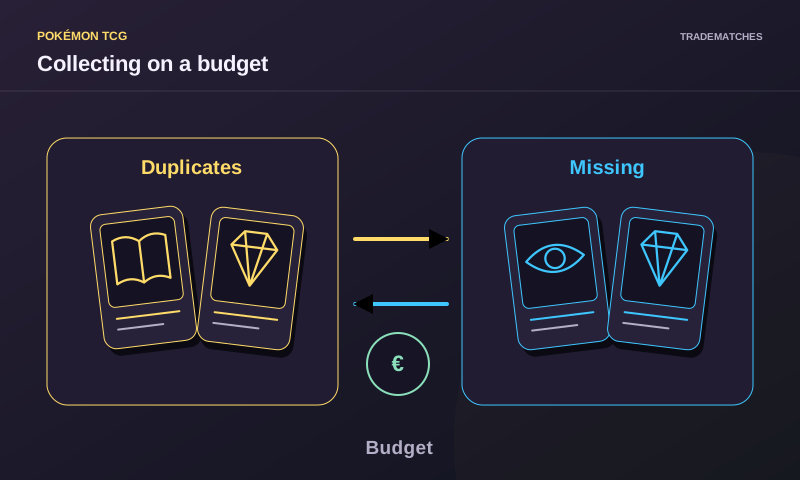
Record cards you no longer need and make a missing-card list. A local trade can avoid shipping costs and turn several small copies into a card you genuinely wanted.
How to apply it step by step
A Pokémon collection on a limited budget progresses better with a priority list, sorted duplicates, and well-documented trades. A limit does not reduce the hobby: it asks you to choose which cards truly add to your goal.
Inventory is the starting point. Record name, card number, expansion when known, language, finish, and condition. You do not need to complete a huge database in one afternoon: begin with cards available to trade or the page you want to sort. Those facts prevent buying or requesting a copy you already own.
Use photos of the actual card when one detail can change a decision. A front image, a back image, and an angled shot for finishes or marks usually resolve more doubt than a broad label. Do not add filters or hide a flaw: clear information lets another person decide whether the card fits their collection.
Keep four questions separate because they are easily confused: what card it is, which printing it comes from, what its finish is, and what condition it is in. Two cards with the same character can differ on the last three. This keeps a trade conversation from becoming a comparison of memories or catalogue photos.
A binder should let you find a card without handling many others. You can sort by expansion, number, character, or language, as long as you keep the rule and mark exceptions. Cards on a trade list are best kept apart, so you do not display a piece you intended to retain by mistake.
To decide whether to keep, buy, or trade, return to the original goal. A duplicate may suit a deck, help another person, or simply add nothing to your collection now. Classifying it by role turns a pile of cards into concrete options and reduces impulse purchases.
In a trade, first offer a small selection related to what the other person seeks. Confirm numbers, language, and condition before discussing balance. If expectations do not match, leave the proposal open or withdraw it calmly; a journey or a conversation never obliges anyone to complete a trade.
Review before trading
Protect cards before transporting and inspecting them. Sleeves reduce friction, but they do not replace a suitable holder or clean surface. Avoid drinks, direct sunlight, and loose stacks. If a piece has special importance to you, bring it only when it genuinely belongs in a proposal.
Do not use condition terms as absolute promises. Describe what you observe: a mark on one corner, scratches visible in angled light, or a clean surface. A careful description and photo let another person apply their own collecting standard without feeling surprised later.
Want lists work better with priority. Mark which card is essential, which version you would accept as an alternative, and which details are not negotiable. A compatible person can then reply precisely, and you can tell when a swap really moves you toward your goal.
Update inventory after opening, trading, giving away, or moving cards. The habit stops you offering a copy you no longer own and makes real gaps visible. In TradeMatches, a match starts a conversation about details; it is not automatic approval of every condition.
If you share the hobby with friends or family, agree in advance which cards are personal and which can move. This is especially useful with duplicates and lots. A simple note or physical separation stops someone handing over a card they thought was available when it mattered differently to its owner.
Avoid presenting availability, prices, platform rules, or product conditions as permanent facts. They can change. When they matter to a decision, check the relevant official source at that time and state which part of a proposal still needs confirmation.
A final review can follow one fixed order: identify the printing, observe condition, confirm the goal, and then decide whether to keep, buy, or trade. This order is not meant to turn the hobby into administration; it prevents a striking image or quick conversation from hiding a detail that mattered to you.
If a card raises doubts, note the doubt and return to it when you have better photos or printed facts. A collection does not lose value because a decision waits. Delaying a swap until both people know which copy is offered usually protects the relationship between collectors better than trying to resolve everything immediately.
Questions that resolve doubt
Must I decide everything now?
No. You can sort first, confirm a version, or ask for a photo before buying or trading. A pending decision that is well recorded is safer than a rushed answer.
What information should I share?
Share card facts and the trade goal; avoid publishing codes, personal data, or availability you have not yet confirmed.
Next step
Choose one concrete action: identify a card, update a list, or prepare a small lot. A collection improves when each next step answers your real goal.
A small goal you can finish
Suppose you choose nine regular Spanish cards of one character without special variants. Write the nine codes before shopping. With a fictional €25 limit, reserve materials and travel first, then compare the full cost of missing copies. Postpone a card that uses all the remaining allowance or consciously change the scope.
Measure progress by received and inspected goals rather than opened packs or money spent. An appealing tenth card is a separate choice; it does not make the original nine-card goal incomplete.