Pokémon Poisoned and Burned: counters and coin flips
On this page
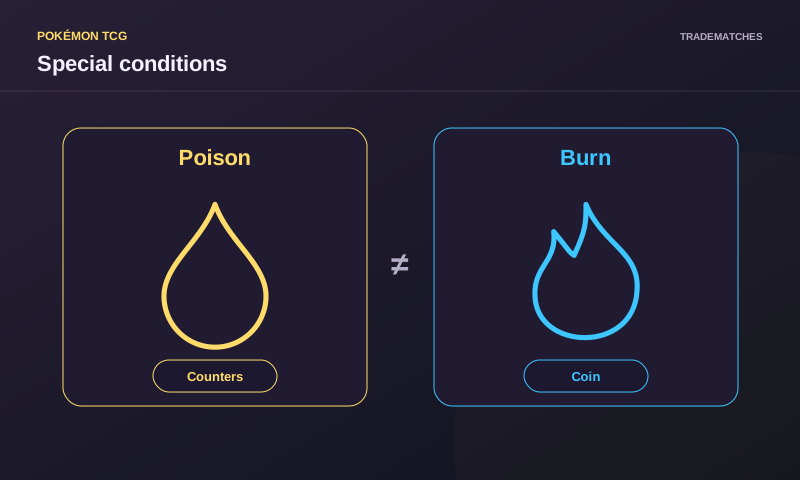
During Pokémon Checkup, a Poisoned Pokémon normally receives one damage counter. A Burned Pokémon normally receives two damage counters, then its owner flips a coin: heads removes the Burned condition. Poisoned and Burned can coexist, so a Pokémon with both normally receives three counters during that Checkup before other relevant effects are considered.
The order matters: the Burn coin does not decide whether the two counters are placed. They come first. These are physical Pokémon TCG rules, and older printed rulebooks may describe a historical Burn procedure that differs from the modern one.
Use condition markers and damage counters for different jobs
A Poison marker shows that the Pokémon is Poisoned. A Burn marker shows that it is Burned. Damage counters record accumulated damage. Removing a condition marker does not remove damage counters already placed, and adding more damage does not automatically add another condition.
Use markers that are visually distinct from your damage counters. If all three are identical dice, a player may mistake “this is the Poison marker” for “this Pokémon has another ten damage.” A colored token, a labeled marker or clearly separated reminders can prevent that ambiguity.
When learning, say the state and the damage total separately: “Poisoned, Burned, with sixty damage.” This makes the next Checkup calculation easier than a crowded stack of unlabeled objects. It also helps when another effect changes the number of counters a condition places.
Checkup happens between every player's turn
Pokémon Checkup is the procedure between turns. It happens after your turn and after your opponent's turn. Poison is not applied only when the affected Pokémon's owner finishes playing. If the condition survives, it can add counters on successive Checkups.
Suppose your attack Poisons the opposing Active Pokémon. At the Checkup immediately following your turn, that Pokémon normally receives one counter. If it remains Active and Poisoned throughout its owner's turn, it normally receives another counter in the next Checkup. No new poisoning attack is required for that second application.
This explains why a Pokémon close to being Knocked Out may not safely wait until a later turn for a solution. Count the next actual Checkup, not just the attacks you expect during the next round of play.
Poison does not use a recovery coin by default
The normal Poison procedure is straightforward: place one damage counter during Checkup. There is no default coin flip that removes Poison. A player who remembers flipping for Sleep or Burn should not add the same recovery test to Poison.
Card text can change the amount of poison counters. An attack may establish a modified condition, and an Ability may add further counters under its stated circumstances. Read whether the instruction replaces the usual amount or adds to it; those words produce different calculations.
The official Pecharunt promo provides an example of an Ability that adds further counters to the opponent's Poisoned Pokémon while Pecharunt occupies the Active Spot. Before applying that extra amount, verify both the required position and the affected Pokémon. The card does not mean every Poisoned Pokémon everywhere in the game receives the same bonus.
Burn places counters before the recovery flip
With the ordinary Burn procedure, place two damage counters and then flip. Heads removes the Burn marker; tails leaves it. Heads does not cancel the counters you already placed. If the Pokémon was close to its HP limit, a successful recovery flip is not a retroactive heal.
Consider a Pokémon with 100 HP and 80 damage that is Burned. Ordinary Burn places two counters, bringing its damage to 100. Flipping heads removes the condition marker, but the Pokémon still has the damage total that can make it Knocked Out when the Checkup procedure checks that outcome.
Do not flip first and then decide whether to add damage. That reverses the procedure and can change a game result. When using older cards, distinguish the current procedure from the historical Burn rule printed in some old teaching materials.
Poisoned and Burned can coexist
The two conditions use separate markers, so applying one does not normally remove the other. They can also coexist with one of the orientation-based Special Conditions, such as Asleep or Paralyzed. Turning a Pokémon sideways does not erase the Poison and Burn markers beside it.
For a Pokémon with ordinary Poison and Burn, apply Poison's one counter, then Burn's two counters and its recovery flip. If Burn is removed by heads, Poison remains unless another instruction removes it. The next Checkup may therefore involve Poison alone.
An effect that gives another Poison marker does not create two simultaneous Poisoned conditions. Likewise, you do not build a pile of Burn markers for repeated applications. The condition is replaced as instructed rather than multiplied by the number of attacks that previously applied it.
Count the whole Checkup before announcing the outcome
The rulebook orders Special Conditions as Poisoned, Burned, Asleep and Paralyzed. Other effects that happen during Checkup must also be handled under the prescribed procedure. Resolve the relevant checks and then establish which Pokémon are Knocked Out.
Avoid stopping halfway through a shared Checkup because one Pokémon appears to have reached its HP. Another applicable instruction may still need to be handled, and both players' affected Pokémon matter. If a complex healing or timing interaction could change the outcome, show the actual cards and consult the ruling rather than improvising an order.
For practice, use a written timeline: end of attack, Checkup conditions, other applicable Checkup effects, Knock Outs, next turn. This separates an attack's damage from counters placed between turns and makes it clearer why both players can have important events in the same transition.
| Condition at Checkup | Ordinary counters | Recovery procedure |
|---|---|---|
| Poisoned only | One | No default recovery coin |
| Burned only | Two | Flip afterward; heads removes Burn |
| Poisoned and Burned | Three total | Burn can recover while Poison remains |
| Either condition with modifying text | Read the relevant effect | Do not invent an extra default test |
Counters are not an attack's damage calculation
Damage from an attack and the placement of damage counters are different instructions. Poison and Burn's normal Checkup procedures place counters. Do not multiply those counters by Weakness or subtract Resistance as though you were calculating the printed damage of an attack.
For example, ordinary Poison places one counter on a Pokémon with a Weakness matching the Poisoning attacker's type. It does not become two counters merely because that attack's damage used Weakness earlier. The condition's later operation follows its own procedure.
Likewise, an effect that prevents a particular kind of attack damage should not automatically be assumed to prevent every later placement of counters. Read exactly what the protection covers, which Pokémon it protects and how long it lasts. A distinction in wording can matter more than the visible counter total.
Removing the condition does not erase its damage
Moving the affected Pokémon to the Bench or evolving it normally removes Special Conditions. An eligible retreat can achieve the Bench movement, and switching effects may offer another route. Poison and Burn alone do not impose the attack and retreat prohibition associated with Asleep or Paralyzed.
However, another simultaneous condition or a card effect may prevent retreating. Check the whole state before choosing an escape route. If an effect switches a Pokémon, read its permission and destination; do not presume that every movement effect works in every board state.
After the condition is removed, damage counters stay unless an effect also heals them. A Pokémon that escapes Poison with ninety damage still has ninety damage. If it later becomes Poisoned again, its existing damage is relevant to the next Checkup.
Plan the next turn using remaining HP
Estimate the next ordinary Checkup before committing to an attack or retreat decision. With both conditions, a Pokémon that has twenty HP remaining is in immediate danger from the three counters normally placed between turns. A Burn recovery coin cannot save it by preventing the two Burn counters.
On the other hand, spending a switching card can remove the conditions without solving every board problem. The new Active Pokémon may be vulnerable to an attack, and the damaged Pokémon on the Bench may remain within range of another effect. Compare those concrete consequences rather than assuming any escape is automatically best.
If your strategy relies on enhanced Poison, keep the relevant modifier visible and explain the calculation. A clear announcement helps the opponent verify the amount while the source Ability or attack text can still be inspected.
Frequently asked questions
Does heads on the Burn coin mean I take no Burn damage?
No. The ordinary procedure places two damage counters first, then flips for recovery. Heads removes the Burn condition; it does not remove the counters already placed.
Can a Pokémon be Poisoned and Burned together?
Yes. They use separate markers and can coexist. Apply each procedure, including any specific effects that modify it, and keep the markers distinct from accumulated damage.
Does evolving cure the damage as well as the conditions?
Evolution normally removes Special Conditions, but the existing damage counters remain unless an applicable effect heals them. Removing a Poison or Burn marker is not the same action as healing damage.