Riftbound Assault and Shield: when might increases
On this page
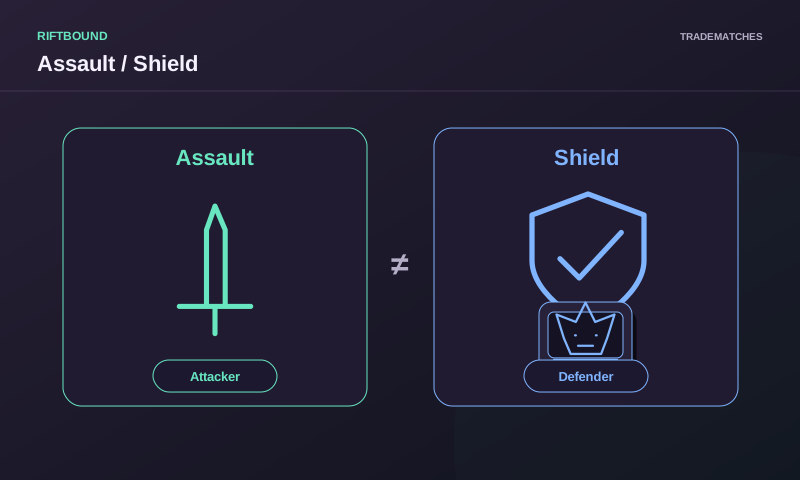
Assault increases a Riftbound unit's might while it is an attacker; Shield increases its might while it is a defender. The number after the keyword gives the bonus, and an omitted number means one. These are conditional might increases, so they affect more than damage output while the relevant combat designation applies.
Shield is not a physical damage-prevention token, and Assault does not grant a free move or automatically start combat. First establish the unit's attacker or defender designation, then calculate the applicable bonus. Outside that designation, the corresponding bonus is inactive.
Read the keyword value correctly
Assault 2 means a two-might increase while the unit is an attacker. Shield 3 means a three-might increase while it is a defender. If the keyword appears without a number, the core rules provide the default value of one. Do not treat an unnumbered keyword as zero or as an unspecified value you may choose.
Record the keyword and its value separately from the unit's base might. A three-might unit with Assault 2 is not permanently a printed five-might unit. It becomes five under the relevant attacker condition, with other applicable effects included in the calculation.
The same reading habit helps with card searches and comparisons. A card mentioning Assault may care whether the unit has that keyword even when its conditional bonus is inactive. Having a keyword and currently receiving its numerical benefit are related but different facts.
Attacker and defender are combat designations
The core rules define when units acquire attacker and defender designations during combat. Do not infer the designation solely from which player moved a card most recently, who controls a battlefield during a quiet moment or which illustration looks aggressive.
A unit can be on the board without currently being an attacker or defender. In that state, its corresponding conditional keyword does not simply add might all the time. Check the relevant encounter and the unit's role rather than carrying a bonus over from a previous battle.
For a practice example, write three positions for the same unit: waiting at base, involved as an attacker and involved as a defender. Calculate its might at each point using the same printed card. The different results come from the conditions, not from replacing the card with a stronger version.
Assault changes the attacker's current might
Suppose a unit has four base might and Assault 2, with no other modifiers. While it has the attacker designation, its current might is six. Its contribution to combat damage and the amount of damage ordinarily needed to kill it both use that current value, subject to other rules such as Stun.
This is why describing Assault as “deal two extra damage” is incomplete. It changes might during the condition, not merely one final damage instruction. Other effects checking current might at that time can also see the increased value.
When the designation no longer applies, remove the conditional increase through the appropriate rules procedure. Do not turn the combat bonus into a permanent counter. A clearly labelled marker such as “Assault +2 while attacking” is safer than changing an unlabelled die and later forgetting why it showed six.
Shield changes the defender's current might
A three-base-might unit with Shield 3 has six current might while it is a defender, assuming no other effects. It can contribute damage using that value and requires damage evaluated against that current might. Shield is therefore not simply a promise to prevent the next three damage.
Contrast that with a separate effect actually preventing damage. Prevention changes a damage event according to its wording; Shield changes the unit's relevant characteristic during a combat condition. The two procedures can produce different outcomes when other effects inspect might or modify damage.
| Unit state | Assault bonus | Shield bonus |
|---|---|---|
| No combat designation | Inactive | Inactive |
| Attacker | Active at its current value | Not active merely from owning Shield |
| Defender | Not active merely from owning Assault | Active at its current value |
| Stunned attacker | Might bonus can still apply | Depends on actual designation |
| After designation ends | Conditional increase ends | Conditional increase ends |
Multiple grants add their keyword values
The rules describe how multiple sources granting Assault combine: add the values. A unit with unnumbered Assault has value one; an additional Assault 3 grant gives a total Assault value of four while that grant applies. It does not replace the original one merely because the new number is larger.
Shield follows the same value-summing principle. A unit with Shield 2 receiving Shield 1 has a total of three under the relevant condition. Check the duration of each grant so that a temporary contribution does not remain after the effect giving it has ended.
This is different from keywords whose multiple instances are redundant. Do not import a universal “keywords never stack” or “keywords always stack” rule across Riftbound. Learn the specific rule for the keyword being checked and keep the individual source of each temporary grant visible.
A unit can have both keywords
Having Assault and Shield together gives the unit bonuses for different roles. It does not ordinarily receive both simply because a combat is occurring nearby. Calculate from its actual designation and each keyword's condition, alongside the other effects relevant to the unit.
For a hypothetical four-base-might unit with Assault 2 and Shield 1, the straightforward attacker case gives six might, while the straightforward defender case gives five. Outside those conditions, begin with four and any unrelated modifiers. Do not write seven as a permanent shortcut for every state.
That difference can matter when choosing a battlefield role. A unit might be better at attacking than remaining as a defender, but its costs, abilities and the rest of the board still matter. The numerical comparison is useful evidence for a plan, not a universal claim that one keyword is superior in every deck.
Stun separates might from damage contribution
A stunned attacker with Assault can still have the increased current might. Stun does not set its might to zero; it prevents the unit from contributing that might to combat damage. Its survival threshold still uses the full current value under the rules.
Consider a four-base-might attacker with Assault 2 that becomes stunned before damage. Under those stated conditions it still has six current might but contributes no might to the damage pool. Treating it as a zero-might object would miscalculate both the combat and effects checking its value.
Likewise, a stunned defender can retain its Shield bonus while the designation applies. It does not contribute damage, but the attacker still needs the appropriate lethal amount to remove it through damage. Use separate records for keyword values, designation and Stunned status.
Doubling might uses the value at the relevant moment
Effects that double might can interact with conditional bonuses in a way that surprises players. The core rules define doubling as an increase based on the current attribute at that moment, for the stated duration. Check the actual effect instead of repeatedly multiplying whatever the value later becomes.
For a simplified example, a three-base-might defender with Shield 2 currently has five might. A suitable effect doubling its might that turn creates the appropriate increase based on that five. When Shield's condition later ends, the temporary increase can still have its own remaining duration.
This example demonstrates a distinction between a conditional bonus and a separately created increase. It does not imply every card reading “double” always ignores all other conditions. Consult the exact effect, current might and duration, and follow the cleanup procedure rather than inventing a permanent ten-might printed stat.
Keep combat arithmetic transparent
Before damage, announce each unit's current might and explain active Assault or Shield values. Identify temporary grants and Stun separately. Both players should be able to reproduce the damage pool and lethal thresholds from the same information without guessing what an unlabelled counter means.
After combat, follow the rules for removing designations, clearing damage and other cleanup. Do not independently improvise the order because you want a particular survivor. If a boundary case depends on when a conditional bonus disappears relative to damage, use the current core rules with the full sequence.
For deck testing, record whether a failed combat came from incorrect arithmetic or a poor decision. The former needs a rules correction; the latter may need a different attacker, defensive assignment or timing choice. That distinction makes a useful improvement without relying on unverified win-rate figures.
Frequently asked questions
Does unnumbered Assault mean Assault 1?
Yes. The core rules give an omitted value a default of one. Apply it when the unit has the attacker designation, rather than treating the card as permanently one might larger.
Is Shield a token that absorbs damage?
Not in this Riftbound keyword's rules. Shield increases current might while the unit is a defender. A physical reminder can represent the bonus, but it is not the damage-prevention token used by another TCG.
Does Stun remove Assault or Shield?
Stun does not itself remove those keywords or reduce might to zero. It stops the unit's combat damage contribution. Evaluate the conditional might bonus and the Stunned state separately.