Riftbound Deflect: paying to choose a unit
On this page
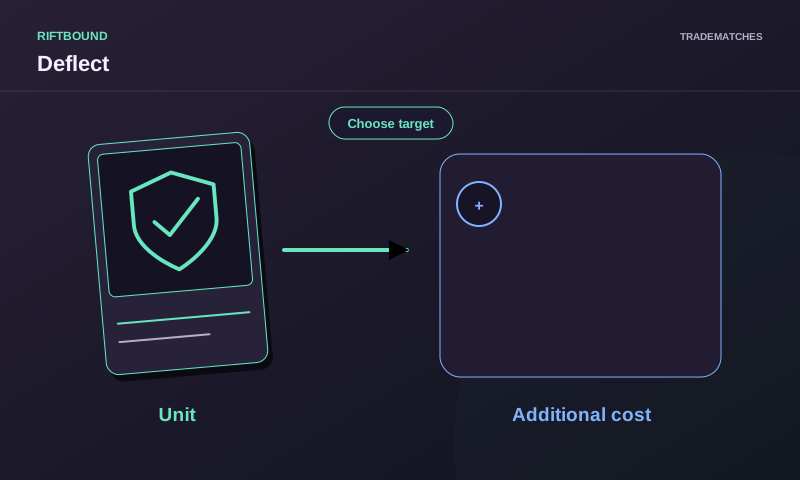
Deflect in Riftbound makes an opponent pay additional Power to choose the protected unit with a spell or ability. It is a cost rule, not a blanket statement that the unit cannot be affected. It also applies per choice under Riot's revised wording, which matters when one spell chooses the same unit several times.
The useful approach is to identify the actual choices, determine which of them concern opposing units with Deflect and then calculate the final cost. This guide separates that calculation from damage, combat and card-specific exceptions, so that a familiar defensive keyword does not become an imaginary immunity shield.
Start with the revised wording
Riot's Spiritforged FAQ explicitly revised the older rule that charged once per spell or ability. The revised rule charges according to each time the unit is chosen. The same FAQ explains that Deflect is a mandatory additional cost when finalising a spell or ability that requires it.
This historical correction is worth recognising because an old explanation can sound plausible. A player might remember paying once for one protected unit, regardless of repeated choices. Under the revised rule, the number of choices can change the amount due even when there is only one protected physical unit.
The official rules hub supplies the current rules and other clarifications. Use the current text of the actual card as well, since errata can change how many choices an effect makes or when they are made.
Count choices, not merely different units
Suppose a hypothetical spell chooses one opposing unit twice, and that unit has a Deflect value of one. Without another effect changing the calculation, those are two choices and therefore two relevant additional Power payments.
Now suppose a spell chooses two opposing protected units once each, with one unit's Deflect value equal to one and the other's equal to two. The illustrative addition is three Power in total. The arithmetic follows the relevant Deflect values and the choices, not a universal one-Power fee attached to every spell.
| Illustrative choices | Deflect values | Additional Power before exceptions |
|---|---|---|
| One protected opposing unit chosen once | One | One |
| The same protected opposing unit chosen twice | One | Two |
| Two protected opposing units chosen once each | One and two | Three |
| An unprotected unit chosen once | None | No Deflect addition from that choice |
These examples describe the calculation, not the printed text of a particular card. The spell's ordinary cost and any other applicable changes must still be included in the final payment.
Power is different from Energy
Deflect's additional payment concerns Power. Having spare Energy does not independently satisfy that requirement. Check the relevant symbols and what your resources can actually produce before committing to the spell or ability.
For a hypothetical removal spell, write down its normal cost first. Then add the Deflect obligations from its choices. If you can pay the normal Energy component but cannot supply the additional Power, the intended protected target may make the play impossible.
This is especially important when planning multiple spells in one turn. Calculate the first spell's full payment before assuming that enough Power remains for the second. A protected unit can change the feasible sequence without preventing you from interacting with it altogether.
Your own effects are a different case
The protection is expressed in relation to opposing spells and abilities choosing the unit. Choosing your own unit with your own effect does not automatically incur its Deflect payment as though you were its opponent.
Suppose you want to enhance your own protected unit. The relevant question is the actual controller relationship and the wording of the effect. Do not charge yourself a fee just because the card displays Deflect. Conversely, when an opponent chooses that unit, they must account for the applicable addition.
If control changes or an unusual multiplayer situation is involved, establish who controls each relevant object before calculating costs. Ownership and current control are not always the same thing. A loose statement such as “that is my card” may not answer the rules question.
Affecting a unit is not always choosing it
Deflect does not impose the same payment on every event that changes the unit's state. Ordinary combat is not automatically a spell or ability choosing the unit. An effect that affects a whole group without choosing individual units also requires a different analysis.
Read the operation rather than inferring a choice from the result. If several units take damage, that visual outcome does not establish whether the effect chose them individually, affected all units in a category or used some other instruction.
For example, a broadly worded hypothetical effect affecting every unit at a location should not acquire individual choices merely because the protected unit is among those affected. The actual text and current rules establish whether Deflect is relevant. This distinction is why the keyword is useful protection without becoming universal immunity.
Triggered abilities do not make the cost optional
Riot's FAQ distinguishes declining to finalise a triggered ability from treating Deflect itself as an optional additional cost. If a triggered ability would require the payment, deciding not to finalise it can be possible under the relevant rules; that does not mean you may finalise it, choose the protected unit and simply skip the fee.
Imagine an ability triggers when an event occurs and would choose an opponent's protected unit. Before assuming the effect happens for free, inspect its finalisation requirements. Triggering, finalising and resolving are distinct parts of the process.
This difference also matters when a separate card refers to optional additional costs. Do not assume that wording helps with Deflect merely because the player had a decision about whether to proceed. The cost's rules category remains mandatory when the chosen play requires it.
Card-specific exceptions must remain specific
The Vendetta rules FAQ discusses Heisho, Shell of the World and an effect that ignores Deflect while paying for a qualifying spell or ability. That is a particular exception with a stated context. It does not erase Deflect from every later play in the turn.
When a card changes the calculation, read how long the permission lasts and which spell or ability it concerns. A player who qualifies for an exception on one play cannot assume that a different play choosing only units elsewhere receives the same benefit.
Use exceptions after establishing the ordinary calculation. That order makes the reasoning visible: identify choices, calculate the usual addition, then apply the specific rule that changes it. Starting with a remembered exception can hide whether its condition was met at all.
What if the unit disappears before resolution?
Costs are determined and paid during the appropriate playing or finalisation process. Do not assume that a later response removing a chosen unit automatically refunds Power already paid. Resolution and the legal treatment of missing targets follow their own rules.
For a complex repeated-choice spell, establish every choice clearly before the response sequence. If the unit later moves or leaves the board, use the current rules for that effect instead of recalculating the original payment from the surviving board alone.
At a tournament, ask a judge when wording, errata or cost modification creates uncertainty. The clearest description identifies the spell, each choice, each relevant Deflect value and the exact exception being claimed. That is more useful than saying the unit is “protected” and leaving the kind of protection unspecified.
Review a repeated-choice spell before paying
For a practice example, draw three boxes for three choices made by one hypothetical spell. Put the same protected opposing unit in two boxes and an unprotected unit in the third. Write the protected unit's Deflect value under each of its appearances, then add those values.
Now change the second box to a different protected unit with a different value. The result changes because the choices changed, not because the spell became a different physical card. Finally, introduce a specific applicable effect that ignores Deflect and identify precisely which play it covers. This makes the ordinary calculation and the exception visible as separate steps, rather than turning the remembered exception into a permanent rule for every later spell.
Frequently asked questions
Do I pay once if the same unit is chosen several times?
Under the revised Deflect rule, calculate the addition for each time that protected opposing unit is chosen. Its Deflect value determines the addition for each relevant choice, unless a specific applicable effect changes the calculation.
Does Deflect stop combat damage?
It is a payment requirement for opposing spells and abilities that choose the unit. It does not independently prevent ordinary combat damage. Check the actual event and card wording rather than treating the keyword as general damage immunity.
Can I ignore the payment because the ability triggered automatically?
Automatic triggering does not make Deflect an optional fee. Follow the finalisation rules for that triggered ability. If you proceed with a play that requires the payment, you must satisfy its applicable additional cost.