Riftbound Stun: might does not become zero
On this page
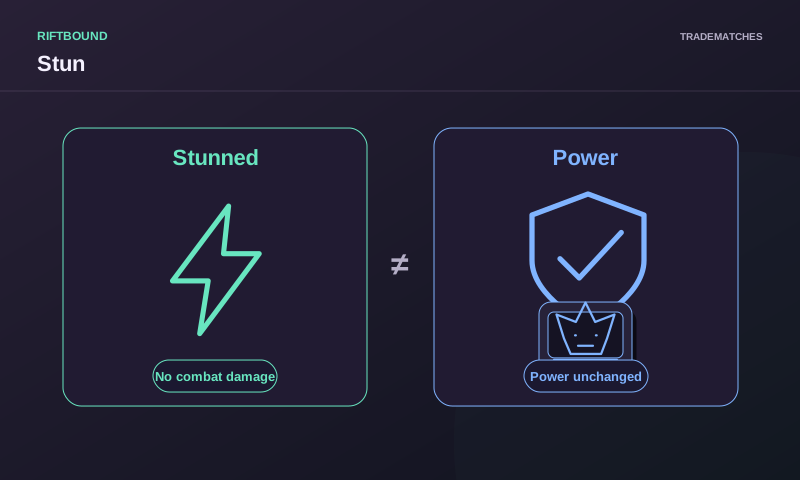
Stun in Riftbound stops a unit from contributing its might to combat damage. It does not set that unit's might to zero, exhaust it or automatically remove it from a battlefield. You still need damage equal to its full current might to kill it, and the Stunned state is cleared through end-of-turn cleanup.
This distinction is why a large stunned defender can survive a small attacker even though it deals no combat damage back. Use separate reminders for might, marked damage, readiness and Stunned status. They are different pieces of information with different consequences.
Stunned is a status rather than a stat reduction
The core rules define Stunned as a binary state: a unit either has it or does not. There is no general stack of stun counters reducing might one point at a time. If an effect instructs you to stun a unit, apply that state through the effect rather than changing the printed or current might.
A unit with five current might still has five current might while stunned. An effect checking its might therefore does not automatically read zero. Likewise, a hypothetical effect restricted to a unit with three or less might does not become eligible solely because the five-might unit has been stunned.
At the table, place a clear marker beside the unit without replacing its might marker. If you represent stun by turning its might die to zero, the next player may calculate both legal choices and lethal damage incorrectly. A dedicated status reminder prevents those errors before they affect a combat.
It contributes no might to combat damage
During the combat damage step, a stunned unit does not contribute its might to damage. This applies to the relevant contribution whether the unit has an attacker or defender designation. Stun is not restricted to only the defender unless the actual effect supplying it has a narrower choice restriction.
Consider a hypothetical attacker with four might facing a defender with six might. If the defender is stunned before the damage step, it does not contribute six damage. The attacker contributes its own four normally, assuming nothing else changes that contribution.
That does not produce an automatic defeat of the defender. Four damage is less than the six required by its unchanged might, so the defender is not killed by that amount alone. Continue the actual combat and cleanup procedure from the resulting board rather than awarding conquest because the defender could not hit back.
Lethal damage still uses full current might
The rule keeping a stunned unit's lethal threshold is explicit. Check its current might after relevant bonuses and modifications, then compare the applied damage. Do not use its missing damage contribution as its capacity to survive.
For a simple second example, the stunned defender has five might and already carries two relevant damage. If the current combat adds three damage and no other rule changes the result, the accumulated damage reaches five. Stun prevented its own contribution but did not prevent damage being applied to it.
The example requires the earlier damage to still be present under the actual cleanup sequence. Keep track of when damage is cleared and do not carry a marker through a step that removes it. Stun itself supplies no permission either to retain old damage indefinitely or to erase it when convenient.
| Information | What Stun changes |
|---|---|
| Current might | Does not automatically reduce it |
| Combat damage contribution | The stunned unit contributes none |
| Damage needed to kill the unit | Still uses full current might |
| Ready or exhausted state | Stun does not itself switch this state |
| Location on the board | Stun does not itself move the unit |
| Status duration | Cleared through the end-of-turn cleanup rules |
Stun and exhaust are different actions
Exhaust changes readiness. Stun changes combat damage contribution. An effect saying only stun does not silently add an exhaust instruction, and an effect saying only exhaust does not give the unit Stunned status. Cards that perform both need both instructions applied.
A ready stunned unit and an exhausted unstunned unit can therefore have different legal options. Check the costs of movement or abilities against readiness, then check the damage step against Stunned status. One marker cannot stand in for both conditions without an explicit explanation.
This distinction is particularly useful when reading an unfamiliar spell quickly. Announce its actual verbs before moving cards. “I disable that unit” is too vague: the opponent needs to know whether you changed readiness, stunned it, recalled it or performed several separate actions.
Stun does not universally prohibit moving or using abilities
The Stunned state itself does not introduce a blanket ban on all actions. Whether the unit can move or use a particular Ability depends on the normal permissions, readiness costs, timing and relevant card text. Do not import a video game's interpretation of stun into the card game's narrower rule.
For example, a hypothetical ready unit with an eligible ability requiring exhaustion still needs its ordinary legal window and payment. Its Stunned status is not automatically the reason that ability becomes unavailable. Conversely, being unstunned does not permit an exhausted unit to pay a cost requiring it to exhaust again.
Avoid calling every stunned unit harmless. It can still possess Abilities, occupy a location and matter to effects checking board state. The damage consequence is substantial, but evaluating the unit's remaining role requires its actual text and the rules governing the proposed action.
A second stun does not create a new stun event
A unit already stunned cannot become stunned again while it remains in that state. The core rules give this distinction significance for abilities that trigger when a player stuns an enemy unit. Choosing an already stunned unit does not necessarily produce a fresh event for that trigger.
You may be able to choose an already stunned unit with a legally worded effect, but choosing and actually applying a new stun event are different questions. Inspect any other instruction on the effect instead of assuming the entire card either works completely or cannot be played at all.
For a practice case, imagine an ability rewarding you when you stun an enemy. Use one spell on an unstunned unit, record the new state and resolve the appropriate trigger. Then use a suitable second spell on the already stunned unit. The second choice does not repeat the event just because another spell was spent.
Use the timing window before damage is contributed
To stop a combat contribution, the unit must be stunned at the relevant damage step. If combat damage has already been applied, stunning it afterwards does not retroactively remove that damage or undo a kill. Effects change the future state unless their actual instructions specifically say otherwise.
That does not grant permission to cast a Stun spell whenever you want. Its own timing category, any Reaction permission, costs and legal choices still determine when you can play it. The tactical desire to prevent damage is not a timing rule.
State your intended window clearly during practice: before damage, through a legal response or action opportunity. If a dispute arises about whether the game had already advanced, stop and reconstruct priority and resolution rather than casually rewinding a completed combat after seeing its result.
End-of-turn cleanup clears the status
The core rules specify the end-of-turn cleanup point for removing Stunned status. Do not assume it ends immediately after the combat in which you first used it. Multiple encounters or effects within the same turn can still involve that unit's existing status.
Conversely, do not carry the marker into later turns indefinitely. Keep it with other temporary-state reminders and remove it at the proper cleanup point. A missing cleanup marker can make the next turn's combat appear safer than the rules allow.
Moving between locations on the board is not by itself an instruction to remove Stunned status. If a card leaves the board and returns, or an effect specifically changes status, consult the full object and zone rules. Do not equate every physical move of the card with the same legal event.
Analyse a combat with separate numbers
Before resolving a complicated battle, list each unit's current might, status and damage. Add only the legal combat contributions to each side's damage pool, then assign damage under the normal requirements. Separating those stages stops the stunned unit's zero contribution from leaking into its lethal threshold.
Afterward, check survivors and follow the remaining combat procedure before scoring. Stun does not itself award a point, recall the unit or satisfy conquest. Those outcomes depend on the actual battlefield state and scoring rules, which deserve a separate check rather than being inferred from the stun marker.
Frequently asked questions
Does a stunned six-might unit die to one damage?
No. Stun does not reduce its might to zero. Its full current might remains relevant to lethal damage, including any other applicable modifications and damage already present.
Can the same unit be stunned twice to trigger an Ability twice?
An already stunned unit does not become stunned again. A legally chosen target and a newly occurring stun event are different checks; do not assume a second spell repeats a stun-trigger reward.
Is Stun the same as exhausting a unit?
No. Readiness and Stunned status are independent. Apply each instruction actually printed on the effect, then check costs and combat contribution against the appropriate state.