Arcane Barrier vs Spellvoid in Flesh and Blood
On this page
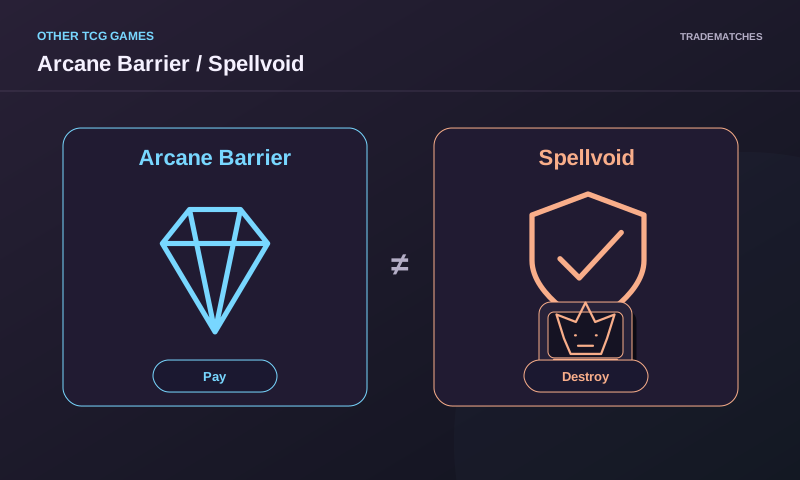
Arcane Barrier and Spellvoid are two defenses against arcane damage in Flesh and Blood. Arcane Barrier N allows you to pay N resource points to prevent N of that damage; Spellvoid N allows you to destroy the object with the ability to prevent N of that damage. The first option consumes resource points and may remain available in a future event if the object stays in play; the second consumes the object itself. Understanding the true cost of each helps determine when to protect the hero's life.
First, identify the arcane damage
These keywords apply when you would take arcane damage. They are not ordinary blocks of a physical attack simply because the attack has a magical illustration. An effect may cause arcane damage outside of an attack, for example through an ability or spell; therefore, you must examine the source and the actual type of damage indicated in the text. If an attack deals combat damage and another ability causes arcane damage, these may be separate events requiring separate decisions.
Example: a card states "deal 2 arcane damage to the opposing hero". Before applying it, the defender may use available defenses if their conditions are met. In contrast, if an attack card has 2 power and does not generate arcane damage, Arcane Barrier and Spellvoid do not prevent that combat damage. The defense printed on a equipment card and its keywords are distinct mechanisms.
How Arcane Barrier N works
The rules define Arcane Barrier N as a static ability: if you would take arcane damage, you may pay N resource points to prevent N of that damage. The number is tied to both the cost and the amount prevented. Arcane Barrier 1 requires one resource to prevent one; Arcane Barrier 2 requires two resources to prevent two. Do not automatically convert a value-2 ability into a series of partial one-point payments.
Example: you are about to take 3 arcane damage and control an object with Arcane Barrier 2. If you can pay two resources, that ability can prevent two of the three, leaving one unblocked, unless another effect covers the remainder. If you do not have the required payment, you cannot use that prevention as if it were free. The card text and other effects may alter the result, but the keyword alone maintains the N-for-N relationship.
Arcane Barrier does not destroy the object
The definition of Arcane Barrier does not include destroying the object that has it. If it's on a unit that remains in play, it may become relevant again against another arcane damage event, as long as you can pay and the rules are satisfied. Its practical limit is usually the availability of resources and the moment you gain them. Spending them to prevent damage means you don't have them for another turn, unless you generate more.
Example: your opponent presents two separate events of one point of arcane damage. With an Arcane Barrier 1 object that remains in play and sufficient resources for both events, you could evaluate paying for each arcane damage event. If you only have one resource available and cannot acquire another when it's your turn, you must decide where to use it. The ability does not function like a pre-paid shield that covers all damage during the turn.
How Spellvoid N works
Spellvoid N allows you to destroy the object with Spellvoid to prevent N of arcane damage you would take. It does not require paying N resource points by its basic definition. Instead, the object is removed from the battlefield when the prevention is applied and cannot be used in a subsequent event. The rules add that if you cannot destroy that object, you cannot apply the optional Spellvoid prevention.
Example: you control an object with Spellvoid 2 and are about to take 2 points of arcane damage. You may choose to destroy it to prevent that damage up to the value of the ability. If you prefer to keep it for later, you accept the damage that other sources do not cover. If another effect prevents the destruction of that object, you do not have access to a free version of the prevention—the destruction is an essential part of the mechanism.
A Resource Defense and a Consumable Defense
The practical comparison is clear. Arcane Barrier demands resource points each time you choose to use it and leaves the object in play unless something else removes it. Spellvoid does not require resource points in its basic text, but it demands destroying the object to activate. Neither is superior in all cases. If you're about to lose the game from arcane damage and have no resources, Spellvoid can save you; if you're expecting several small events and can afford the cost, Arcane Barrier can provide repeated protection.
The quality of the decision also depends on what else the object does. Destroying a piece of equipment with other abilities or stats carries an additional opportunity cost. Spending resources on Arcane Barrier might prevent you from playing a defense reaction or paying another prevention. Don't overlook the strategic value of the card simply because it grants N prevention points. The rule describes what can be done; your decision must consider the specific game situation.
Prevention Occurs Before Life Is Lost
Both abilities are designed to activate when you would take arcane damage. Their effect reduces the damage before the corresponding life loss is applied. You cannot wait until the life marker drops and then pay retroactively. The order is especially relevant if an ability triggers upon taking damage or if reaching zero life ends the game. First, valid defenses are calculated and applied; then, the remaining damage is determined.
For a complex situation, announce the source and amount of arcane damage, ask what defenses the defender is using, and record the resources paid or objects destroyed. Then apply the unprevented damage. This visible sequence avoids debates over whether the unit was still in play when a trigger occurred. The full rule establishes how defenses interact with damage events.
Can I Use Multiple Sources of Prevention?
A player can control multiple objects with Arcane Barrier, Spellvoid, or other prevention effects. Each ability has its own cost and value. If a damage event is large enough, combining sources can be useful to prevent more damage. Do not add all printed values as if they were a single free shield: pay for each Arcane Barrier you use and destroy each Spellvoid object you apply prevention to, according to the relevant rules.
Example: You are about to take 4 points of arcane damage and have Arcane Barrier 1, Spellvoid -2, and resources to pay for the first. You could prevent one by spending a resource and two by destroying the Spellvoid object, leaving one point unprevented if no other effects exist. You could also choose to use only part of those sources to preserve your Spellvoid. The exact choice depends on the sequence of effect application and the damage present; the example illustrates separate costs, not an automatic combined activation.
When N Exceeds the Damage
An ability that prevents N points of damage does not create extra life if the damage event is smaller. If you take one point of arcane damage and destroy a Spellvoid 3, you do not gain two extra life points. The same applies to Arcane Barrier: paying its cost only makes sense if you're authorized to apply it to that event, and the prevention can influence the outcome. Prevention is limited to the actual damage you would have taken.
Example: You have Spellvoid 2 and receive a one-point damage event. If you choose to destroy it to prevent the damage, you've consumed the object to avoid that point; the excess amount of the value is not stored for later. A more prudent decision might be to accept that point and save the defense for a larger event, if your life allows. The cost of using each defense is part of the decision, not just the printed number.
Arcane Barrier in multiple items
In many decks, Arcane Barrier appears on multiple equipment pieces. That does not automatically turn two value-1 abilities into a single value-2 ability: they are separate items and separate costs. You can apply each one if the rules allow and if you can pay its resource cost. This separation matters if an effect removes an item, if you only have one resource, or if the item has another use you wish to preserve.
Example: Two pieces have Arcane Barrier 1 and you will take two arcane damage. If you pay a resource for each, you can prevent both points. If you can only pay one, one of the abilities remains unused and you would take the remaining damage unless another prevention is applied. The total potential value is two, but it does not activate without paying. Tracking individual payments clarifies interaction with any effect that modifies available resources.
Spellvoid and the value of preserving equipment
The cost of Spellvoid is irreversible within the event: you destroy the item that carries it to use the prevention. If the card is equipment useful for defending against physical attacks or activating other abilities, losing it may be more costly than taking part of the arcane damage. If it's a card or an object created specifically for that purpose, the trade-off may be favorable. The rules treat the word equally, but the strategic context changes.
There are also cases where an item cannot be destroyed due to a restriction. The current Spellvoid rule states that in such cases, the optional prevention cannot be applied. Do not attempt to use only half of the ability's benefit. Similarly, if the item has already left the battlefield before the damage arrives, its Spellvoid is not available simply because it once existed.
Common mistakes and a quick method
Common mistakes include using Arcane Barrier without paying, believing Spellvoid requires resources instead of destroying its item, applying either ability to regular combat damage, preventing after losing life, and treating separate events as one. It's also easy to forget that a piece with Spellvoid destroyed no longer protects in the next event. Before resolving, name the type of damage, the amount, each source of prevention, and its cost.
The short rule is: Arcane in N changes N resources for preventing N arcane damage; Spellvoid N changes the destruction of the item for preventing N damage. Both are optional when conditions are met, and prevention applies before damage. Check the actual card and the current rulebook if another ability modifies the event or prevents paying or destroying.
Frequently Asked Questions
Can Arcane Barrier 2 be paid with one resource to prevent one point of damage?
Its basic definition requires paying two resources to prevent two points of damage. Do not split it into partial payments without an effect that changes the rule.
Does Spellvoid 2 cost two resources?
No, according to its basic text. Its cost is the destruction of the item with Spellvoid; if you cannot destroy it, you cannot apply that prevention.
Do both abilities block physical damage from an attack?
No, on their own. Both refer to arcane damage. An attack may generate additional arcane damage through another ability, which is treated as a corresponding event.
Official source: Flesh and Blood Comprehensive Rules, definitions of Arcane Barrier and Spellvoid.